Patrick Chitumba, [email protected]
Deep underground, some 30 metres below the red soil of Turtle 72 mine shafts in Silobela, Kwekwe District, the air is thick and silent.
The only sounds are the scrapes of picks, the coughs of men, and the muffled boom when dynamite splits rock.
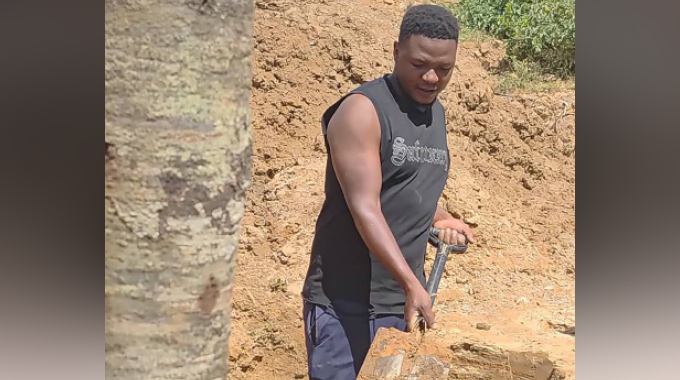
Tafadzwa Moyo (32) wipes dust from his face with a bare hand. He wears a torn T-shirt, shorts, and some old sneakers that show his big toe.
Moyo has no mask, no helmet, no gloves and no safety shoes.
“We call this ‘working naked’,” he said with a humourless laugh.
“If you wait for Personal Protective Equipment (PPE), you will never dig. If you don’t dig, your children don’t eat.”
Moyo is one of thousands of artisanal small-scale miners (ASM) commonly known as omakorokoza who survive on gold mining and are also keeping Zimbabwe’s gold sector alive.
Small-scale miners’ gold output and deliveries to Fidelity Printers and Refiners continue to outshine that of established mines, a development partly attributed to the Government’s supportive policy towards capitalising and decentralising gold buying centres.
In 2025, Zimbabwe’s total gold exports hit a historic record of US$4,61 billion, driven by favourable global prices and increased artisanal mining.
Zimbabwe achieved a historic national gold output of 46,73 tonnes last year, smashing its 40-tonne target.
ASM were the primary drivers of this boom, delivering a record-breaking 34,87 tonnes, which accounted for approximately 74,5 percent of the total gold output.
Yet for miners such as Moyo and thousands of others working across the country, the underground pays a price that does not show up on export figures: their lungs, their lives.
In a dimly lit shaft outside Globe and Phoenix, miners gather during a break.
The air tastes of dust and sweat.
“I have seen friends die here,” said Blessing Zimuto (25), who has been mining since he was 19.
Zimuto said they blast rocks underground and collect the ore for refinement.
“But with each blast comes silent death written in dust, fine dust which we breathe because most of us don’t have PPEs. One of my friends just started coughing. First it was like a cold. Then he could not walk 10 metres without sitting down and now he is dead,” said Zimuto.
That cough has a name: silicosis. It is an incurable lung disease caused by breathing in crystalline silica dust. Silica is everywhere in gold-bearing rock. Every blast, every drill, every hammer releases invisible particles that embed deep in the lungs. The body cannot remove them. Scar tissue builds. Breathing becomes a fight.
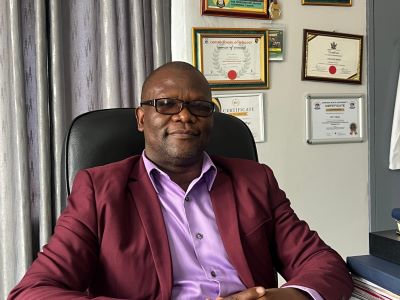
Kwekwe District Hospital is seeing the fallout every week. Medical Superintendent Dr Tinashe Gunda said the hospital is fighting a losing battle.
“Silicosis is a big challenge in Kwekwe. We still have a lot of patients who come with silicosis and we still have challenges managing them,” Dr Gunda said.
“Two weeks ago, we had about two deaths in one week. That is the average number of deaths a week. When it gets to a year, they get up to 50 or 60 deaths, which is not good.”
Between 12 and 15 patients crippled by the disease are admitted at any time.
Since January, the hospital has recorded more than 22 formal silicosis-related admissions.
Doctors believe the real number in the mining community is much higher. Many miners never reach the hospital. They die at home, short of breath, thinking it is tuberculosis (TB).
Dr Gunda is blunt: “Silicosis is incurable. Once the scarring begins, it cannot be reversed. The disease is deceptive — it has a long latency period. Miners can be exposed for years without symptoms, only to develop severe respiratory failure long after they have left the mines. It also heavily predisposes individuals to tuberculosis and heart failure.”
Dr Gunda noted that because medicine cannot cure it, the battle must shift from hospital wards to the pits.
“If we start screening and giving education to the mining community, we may be able to reduce the cases that come to the hospital,” he said.
“Halting the dust at the source is the only real cure Kwekwe has. We need regulation,” he said.
Back underground, the miners’ biggest demand is not handouts. It is recognition and regulation.
“We are not criminals. We deliver gold. Every month we take our ore to Fidelity. The country gets forex from our sweat. But when inspectors come, they chase us, confiscate our tools, and call us illegal. No one talks about giving us dust masks,” said Zimuto.
The small-scale sector has become Zimbabwe’s gold backbone. Production from artisanal miners often outpaces large mines.
Yet most work in shafts with no ventilation, no dust suppression, and no protective clothing.
Another miner, Chenjerai Hove (35), explained.
“We blast rock in a closed hole. The dust is so thick you can’t see your partner two metres away. After a shift, you blow black stuff from your nose. That is our lungs trying to clean themselves.”
Hove pulled out a cheap surgical mask from his pocket.
“This is what I use. It stops nothing. Real respirators cost more than we make in a week. If Government regulated us properly, we could buy proper PPE. We need training, we need to be treated like workers and not thieves,” he said.
Silica is a natural mineral found in sand, rock and mineral ores. In mining hubs like Kwekwe, drilling, blasting, crushing and tunnelling release massive amounts of fine dust. Once inhaled, the microscopic particles embed in the alveolar sacs.
The immune system attacks them constantly, creating inflammation and scarring — fibrosis. Over years, the lungs stiffen.
Breathing becomes like sucking air through a wet cloth.
Dr Gunda said early detection can slow the damage.
Kwekwe District Hospital is pivoting for community-based interventions: testing workers, detecting early-stage lung damage, and teaching dust suppression techniques.
The irony is not lost on them. They risk their lives to pull gold from the earth, only to lose their lives to the dust of that same earth.
“We are not asking for too much,” Moyo said as he prepared to descend again.
“Give us registration. Give us safety training. Make PPE affordable. Then tax us. We will pay because we want to live long enough to spend what we dig.”
For now, they keep working shafts without ventilation, rocks without water sprays and lungs without protection.
Dr Gunda’s warning hangs over Kwekwe: without intervention at the source, the hospital will keep filling with men and women in their 30s and 40s who cannot breathe.
Junior Chamber of Mines Zimbabwe (JCMZ) secretary general Mr Dosman Mangisi said there is a need to formalise operations of the small-scale miners who are contributing towards the country’s billion-dollar mining economy in line with Vision 2030.
“I believe the Government has started training some artisanal miners on safe ways of mining as well as their safety and protection of the environment. The positive development will result in the decline of injuries or deaths that are rampant in the sector,” he said.
The mining industry is one of the major economic mainstays to anchor the country towards an upper-middle-income economy by 2030.
Mining experts say sustained growth of the ASM sector will largely depend on full formalisation, which would improve safety and environmental compliance, while enabling Government to broaden the tax base and ensure miners benefit from coordinated support programmes.
With small-scale miners already forming the backbone of Zimbabwe’s gold deliveries, stakeholders believe targeted reforms and innovative financing solutions could propel the sector to new production highs and further strengthen foreign currency earnings.