admin
admin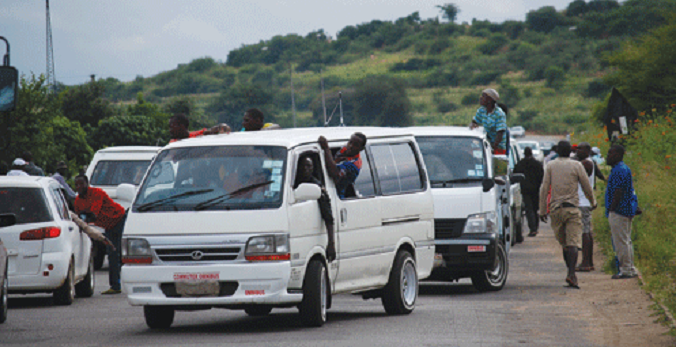
Lenox Lizwi Mhlanga
THE past few weeks have been a revelation of sorts. The transport sector was turned on its head when kombis met their match. I should add here that I have forever advocated for the complete obliteration of the pesky commuter omnibuses that have dominated (and that’s an understatement) our roads for years.
My irritation, and I am sure yours too, with kombi drivers and their touts has been the subject of this column more often than I can remember.
A bit of a reminder: “I am convinced that commuter omnibus drivers (and their obnoxious touts) are born of the same mother. The difference is in the degree of obnoxiousness. Our brand of commuter drivers and touts in Zimbabwe are arguably the worst on the planet.
For lack of a better description, they are rude, crude, vulgar, immature, utterly corrupt and very loud. Their lack of etiquette is legendary and seeing them in their element would convince one that the sun shone from their backsides!
I am of the understanding their bravado makes up for their serious deficit in elementary education.”
I grew up at a time we were ably and punctually served by the local omnibus company. Some of my classmates at primary school would proudly proclaim that they would be bus drivers when they grew up! That is how dignified that occupation was, ranking up there with teaching and nursing. Well, sort of. But the point was that there was an orderliness and cleanliness that typified commuter transportation in that day and age.
Then something regrettable happened. With the steady decline of the public bus system, the authorities were forced to adopt stop gap measures to alleviate the transport crisis. More often than not, commuters found themselves having to scramble for transport.
I recall what I wrote about that period: “A toxic combination of mismanagement and corruption was taking its toll on the Zimbabwe United Passenger Company (Zupco). For years, the backbone of the urban transport network, the company failed to put up any semblance of the organised ferrying of workers in the country.
This called for a temporary solution that would allow Zupco to recover its former glory, a feat that seemed and still looks like an impossibility. Fairy tales have a better chance of coming true.”
Enter the “Emergency Taxi,” never mind the word itself, that quickly gained currency in terms of its accurate description. Allow me to give a bit of a history lesson. The then Local Government Minister, the late Cde Enos Chikowore, through a slight “tweaking” of transport legislation, created a class of pseudo-entrepreneurs whose main brief was to take commuters from point A to point B, eh, never mind how. These guys registered their cars to become part of a temporary measure, hence the complete absence of any standards under which they could operate. So if you had some ramshackle of a vehicle lying somewhere, it could to resurrected to ferry passengers.
In the beginning, we saw the emergence of what was to become the ancestor to the current kombis. These were cars with such ridiculous sounding names such as Commer and converted Austin vans. Besides being hideously ugly, they were spectacularly uncomfortable rides. They huffed and puffed around the city like the steam engines of old. If you are a millennial, I would suggest that you Google these contraptions if you want to appreciate what I am writing about here.
Never designed for the task at hand, they were decked out with wooden benches for seats. This rural homemade furniture caused untold damage to trousers and dresses alike. We are not excluding the immense depletion of the ozone layer by smoking dragons that ferried people to the CBD and the factories in the industrial sites.
Then they were replaced by the then ubiquitous Peugeot 404 station wagons that became the flagship of commuter taxi operators. If one thought that this was the first sign of progress in the post-independence transport sector, we were mistaken. The condition of the vehicles left a lot to be desired.
This was what I wrote then: “Peugeot 404s immediately appeared on the radar of increasingly corrupt traffic police officers. They were literally mobile traffic offences. It was very easy to find something wrong with them at any road block worth its salt.
Add to the fact that in order to break even, the otshova, as they were affectionately known, would be packed beyond redemption. The name itself has a story. These vehicles were so notoriously slow they seemed to match the slowest bicycle in terms of speed!
The slogan of the day was, Utshova kawugcwali! (The taxi is never seen as full). We were packed like sardines. At one notorious roadblock at the Nguboyenja flyover, police counted no less than 20 people crammed into one 404 station wagon. Enough to qualify them for the Guinness Book of World Records.
It will also be assumed that the cat and mouse relationship between traffic cops and emergency taxi drivers surely started then. What followed was a complete breakdown of sanity in the urban transportation. And the government seemed paralysed to deal with it.
As the otshova deteriorated, so did the driver’s treatment of their passengers. We then saw the ominous appearance of touts or owindi. The touts were introduced ostensibly to make things easier for the driver. They claimed they wanted to concentrate on driving for the safety of the passengers. Yeah, right!
This is what I wrote of owindi: “The role of touts was to ensure the car was full. They also collected the agreed fare from the clients. The problem was the absence of any standard qualification for the job of a tout.”
Because of the need to cut costs and maximise profits, taxi drivers employed anything that the cat dragged in. The unfashionable job of a tout attracted the scum of the earth that included pickpockets, thugs, vagrants . . . just take your pick.
The obvious gap between commuters and touts soon led to inevitable clashes with the latter asserting authority by virtue of being able to determine who among those desperate for transport could climb on board.
If it came to the worst, an individual could be barred from boarding any other taxi just because uyimbulu (arrogant). I won’t attempt to define ubumbulu in the eyes of a tout at this stage.”
The Peugeots died a natural death. The roomier and far smarter kombis took their place. One would have assumed that the drivers and their touts would clean up their act. The situation became worse as competition for passengers reached desperate proportions.
Fast forward to 2019 and the fuel crisis. Commuter omnibus operators unilaterally hiking fares as they usually oft to do. Well, they never saw it coming. Neither did I. The emergence of Zupco like a phoenix rising out of the ashes. Well, sort of.
My comment is on the fascination about how stop gap measures like the one the transport ministry made by “seconding” private bus operators to Zupco has brought sanity to the urban transport sector.
Kombi drivers and their crews have all of a sudden seen the value of good customer care in winning passengers. It was easy then, as it is now. If only they would listen nje kuphela. Perhaps I have spoken too soon?


 Online Reporter