Sundaymail Editor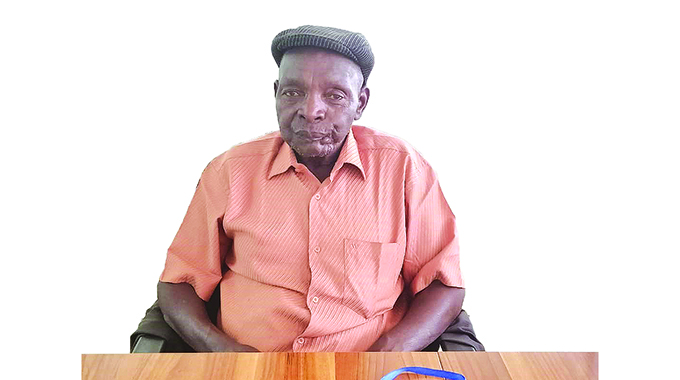
THIS is the last instalment of our discussion with CDE BARAKA TOUGHGUY born Morgan Maondo (MM), who has, for the past four weeks, been narrating to us his war experiences.
Last week, the Zimunya-born former freedom fighter spoke about his participation in the Grand Reef attack. He concluded last week’s discussion by narrating how he was shot and seriously wounded during an ambush by the Rhodesian army.
Read on as Cde Baraka concludes his narration to our Senior Reporter TENDAI CHARA (TC) by telling us how he survived the ambush which forever changed the course of the guerilla fighter’s life.
******
TC: We ended our discussion with you narrating to us that you had been shot and seriously wounded during an ambush. How did you escape the seemingly well-planned onslaught?
******************
MM : Like I said previously, I had given up hope of survival after I had been hit by a bullet. I stood up and began firing wildly towards the direction of the Rhodesian forces. The small bag that I used to carry bullets and other personal belongings was full of blood.
I was thinking that my neck had been slit open. I was no longer breathing normally and blood was everywhere. I had my RPK gun. I fired 41 rounds before I ran out of bullets. I lost two of my close buddies during the fighting. I had to step over them as I was firing wildly.
We lost Madhanzi, he was given that name because he was a very good dancer. He often entertained the masses during the all-night vigils. Pisa Pisa was also shot dead. Like I said, I had given up on life and was prepared to die. My chin had been sliced open. I was waiting for death. I staggered towards the nearby river and threw myself into a pond. I was still clutching my gun. I could not untie the bag since my left hand had been shot and was, therefore , not functional. I gulped a lot of water. I did not care much about life.
All I wanted was to die. I didn’t want to be captured.
After spending time in the shallow pond, I started to feel hopeful. I gathered enough courage and left the pond and staggered towards a nearby homestead. The homestead had been deserted following the battle. I entered the kitchen hut hoping to find water. I was feeling very thirsty.
I grabbed a cup and tried to drink water, but I couldn’t do that since my jaw had been ripped apart. After failing to drink the water, I left the homestead and hid in a nearby trench which was a bit far from the homestead. I was feeling much better and I had set aside the thoughts of dying. I had resolved that I was not going to die, at least not on that day.
I heard the sound of helicopters coming from the direction of the base where we had been ambushed. I then fell into a deep slumber, only to wake up around 7 in the evening. Some of the villagers who were now coming back to their homes after they had deserted them later on stumbled upon me.
They carried me to a nearby anthill. Some of my fellow comrades who were still around were notified of my presence. I was re-united with them.
TC: Tell us about the extent of the injuries.
MM: The bullet entered my body through my upper arm and came out through the shoulder blade. It went on to rip my jaw, slashing my mouth into two.
TC: What happened after that?
MM: We were ambushed in 1979 and from there, I was taken to Chimoio and from there, I was taken to the Maputo Military Hospital where I was operated on by a team of Bulgarian surgeons. The Bulgarians had been awarded a contract to treat those with serious injuries like mine.
I was promised that I would receive specialist treatment in an independent Zimbabwe. However, when independence finally came, I was not attended to.
I remember I was being given bandages that helped keep my shattered jaw in place. The bandages worsened the situation as they pushed the jaws further into my face, causing the serious deformities that you are seeing now.
I spent months on end in Maputo. I was only skin-grafted and the rest was to be done after independence.
I was then kept in the department we called duente, where injured cadres were kept and nursed.
TC: Where were you when independence was proclaimed?
MM: From Maputo, I was transferred to Base 2 Goromonzi and we were then taken to the Repatriation Centre at the then Harare Hospital. From the centre, we were transferred to the Ruwa Rehabilitation Centre where we stayed briefly and then discharged.
TC: Where did you go from the rehabilitation centre?
MM : I received my demobilisation payments for two years. We were then given our pensions. I then took an active interest in the land redistribution exercise and acquired a farm in Mashonaland West province.
TC : Cde, thank you very much for your time.
MM : You are most welcome.


 Online Reporter