Online Reporter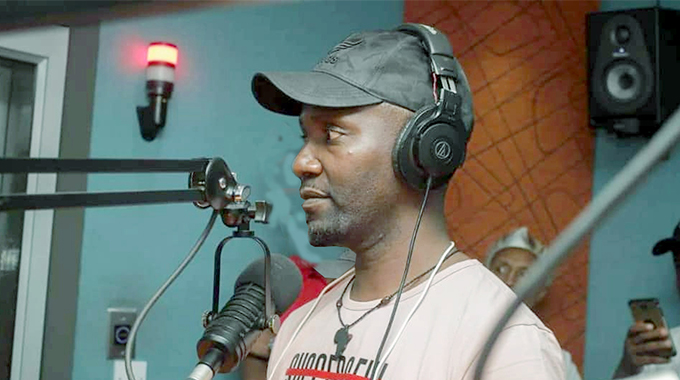
Limukani Ncube, Intake Editor
IN a city once defined by smoke-belching factories and industrial might, a different kind of industry is now rising from Bulawayo’s streets.
It is powered not by machines, but by music, choreography, storytelling and vision. And at the centre of this cultural resurgence stands an increasingly influential creative partnership between producer Saimon Mambazo Phiri and choreographer Mehluli “Gomez” Dube — two men quietly redefining the scale, ambition and economic potential of Bulawayo’s arts sector.
From commanding some of the country’s largest national stages to orchestrating productions involving more than 100 performers, the duo is emerging as one of the most important creative forces shaping modern Zimbabwean culture.
Their fingerprints are now visible across major national events, from the glittering stages of the Zimbabwe International Trade Fair to the Bulawayo Arts Awards and to the recently held National Culture Month launch officiated by President Mnangagwa. And industry observers say what makes the pair exceptional is not simply the quality of their productions. It is the scale of their imagination.
Permanent Secretary in the Ministry of Sport, Recreation, Arts and Culture Nicholas Moyo applauded Bulawayo arts leaders, and the participation of artistes in large numbers, saying this was significant as it reflects unity, inclusivity and Matabeleland’s rich cultural diversity.
“Bulawayo being chosen to host the National Culture Month celebrations is a strong recognition of the city’s rich cultural heritage and its contribution to the growth of Zimbabwe’s arts sector. Hosting these celebrations gives the city and its creatives a platform to showcase their talent, identity and cultural pride on a national stage. This is the time for the city to show off that it is indeed a cultural hub,” said Moyo.
Beyond performance — Building a cultural industry
For years, Bulawayo has proudly carried the identity of Zimbabwe’s cultural capital, producing some of the nation’s finest musicians, actors, dancers and writers.
Yet despite its immense talent base, the city has often struggled to convert creativity into sustainable economic power. That is where Mambazo and Gomez appear determined to shift the narrative.
Rather than treating the arts merely as entertainment, the pair is increasingly positioning culture as industry — capable of creating jobs, attracting investment, developing tourism and exporting Zimbabwean stories to global audiences. Their productions are no longer small artistic showcases. They are becoming large-scale cultural operations.
The recently staged National Culture Month launch offered perhaps the clearest demonstration of the pair’s expertise and ambition. Bringing together approximately 120 artistes from different ensembles, disciplines and communities across Bulawayo required not only artistic coordination, but industrial-level planning, logistics and leadership.
The production blended dance, music, poetry, symbolism and national identity into a synchronised celebration of Zimbabwean heritage and spoke to the country’s economic Vision 2030. For many observers, it represented more than performance. It represented organisational power.
“What we have seen is top-notch. This is a brilliant piece of art, and it shows that a lot of work has been put in to make sure that such a large group of people dance and act in such a coordinated manner. The traditional dances were different and showed how diverse we are as Zimbabweans,” said Bruce Sithole from Nguboyenja.
Walking in the footsteps of a giant
Within arts circles, Mambazo is increasingly spoken of as a spiritual successor to the late cultural icon Cont Mhlanga. Like Mhlanga, he possesses the unusual ability to move seamlessly between creative vision and institutional strategy.
His journey from Nguboyenja township to international arts platforms has become part of Bulawayo’s modern creative folklore. From humble beginnings, he has gone on to work on international stages including London’s West End while also serving as a visiting lecturer at some international universities.
What makes his rise particularly remarkable is that many in the arts sector view him not simply as a producer, but as an “artspreneur” — someone who understands that creativity without economic systems cannot sustain itself.
“I’m a businessman. Part of my portfolio includes creating value for my craft. So, I don’t come cheap, and neither do I come for free. I have to build a legacy for my children. My business is to make stories and sell them. Our craft should be able to pay our bills and sustain our lives,” Mambazo is on record as saying.
Colleagues say Mambazo belongs to a generation of cultural leaders attempting to reposition Bulawayo from being merely a “talent reservoir” into a fully-fledged creative economy hub.
His productions such as the Ibumba Festival and the “50 Dates at the Theatre” programme increasingly reflect that philosophy — blending art, tourism, youth empowerment and commercial sustainability.
The choreographer who gives productions their pulse
If Mambazo supplies the architecture, Gomez provides the movement and heartbeat. Widely respected for his ability to translate emotion and identity into choreography, Gomez has become one of the city’s most sought-after movement directors. His work transforms large ensembles into cohesive visual experiences capable of carrying powerful national and cultural messages.
During the National Culture Month launch, Gomez faced the enormous task of synchronising over 100 performers into one rhythmic production without losing emotional depth or authenticity. The result was a performance many described as cinematic in scale. Their production at the Culture Month launch was aptly called “Together, Sonke, Tose”. The crew also worked with renowned choreographer and dance teacher Richard Ndlovu, who is a master of traditional dances.
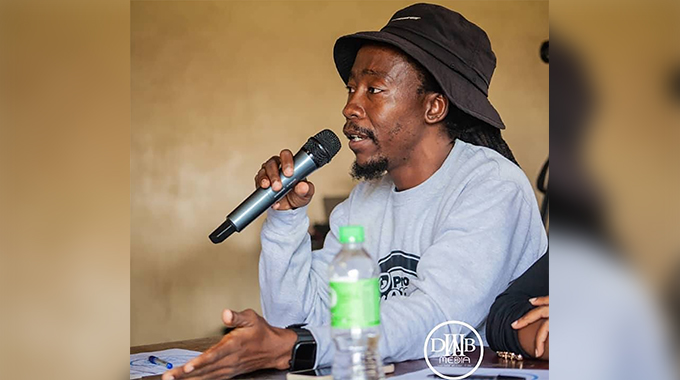
“As Bulawayo, we are very excited to host such a big event. As you know Bulawayo is the capital of arts and culture. I am the choreographer of this production with over 120 artistes that present all the dances found in Zimbabwe. Our theme this year says ‘Cultural diversity, advancing Vision 2030’, and we are grateful that the person gracing this event is none other than President Mnangagwa,” said Gomez.
Reimagining Bulawayo’s future
Their rise also comes at a critical moment for Bulawayo. For years, the city’s economic decline has left many young creatives struggling for opportunities in an environment where formal industries continue to shrink. Yet within that decline, some artists now see opportunity.
Increasingly, Bulawayo’s creative sector is positioning itself as part of the city’s economic future rather than merely its cultural identity. The emergence of festivals, large productions, digital content creation and performance economies suggests the arts may become one of the city’s most important engines for youth employment and urban renewal.
The new Lion Kings
For many young creatives watching from Bulawayo’s townships, the success of Mambazo and Gomez carries symbolic significance. It proves that global-standard productions can emerge from local streets. That international relevance does not require abandoning local identity. And that Zimbabwean stories still possess premium value when packaged with ambition, discipline and vision.
In many ways, the duo represents a broader transformation taking place within Bulawayo itself. A city once known mainly for factories is slowly reinventing itself as a factory of culture.
And if these trends continue, the next generation of Africa’s great storytellers, producers and creative entrepreneurs may very well emerge not from Nollywood or Johannesburg — but from the townships of the City of Kings and Queens.
The city may no longer dominate manufacturing, but it still produces stories, music, choreography, identity and cultural capital at a remarkable scale.