admin
admin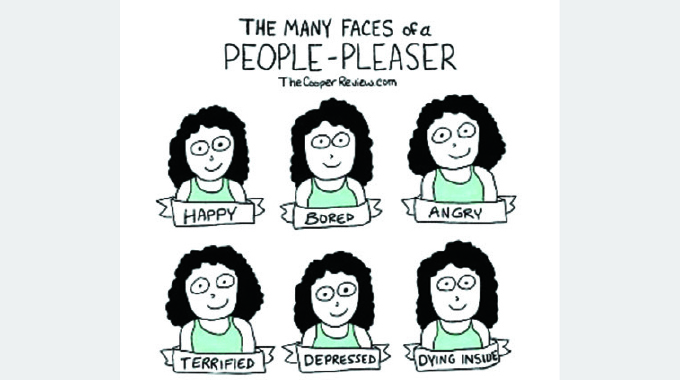
Loice Vavi-Health Matters
Mental health watch
A need for external validation is learned early in our lives, often when unrealistic expectations and a need to be “perfect” outweighs any authenticity or emotional connection.
In this case when one does not experience the validation, they resent living.
Who validates an individual?
School teacher
Friends
Spouse
Management
Men of the cloth (Pastor, priest)
Growing up in this type of environment conditions a child tends to become hyper-observant in learning micro-behaviours, that is assessing for the slightest differences in expression or nuances in their parents’ approval or disapproval.
These micro-behaviours become the gauge for how people pleasing attitude is learned.
Behind the scenes, what is being taught is a toxic combination of intermittent positive and negative reinforcement; the child learns that they receive praise for making others happy, so the bar is raised in continuing to please others.
On the flip-side, if they are seen as imperfect and scolded or shown indifference, the child tries harder to please, which can negatively reinforce this type of traumatic bond of people pleasing.
Children, turn to our caregivers to validate our sense of direction and self-advocacy. This is how children learn to navigate the world and eventually build a solid self-identity.
Yet, when a child’s reality is denied or dismissed, it can result in that child growing up feeling unsure of who they are, unable to advocate for themselves, and completely dependent on others for a sense of validation.
Invalidating or abusive environments in childhood can be internalised as negative self-beliefs that wind up limiting the ability to trust in themselves.
The result is that we develop a mind-set that to be “perfect” we need to turn to others for approval and validation. If validation has not been done, children off late have terminated their own lives leading to child suicide on the rise from ages of 8 years in Zimbabwe.
Adults with a history of people pleasing behaviour are more vulnerable to being manipulated in narcissistic relationships.
Many have wrongly learned that to feel valid and worthy, they must be seen as perfect and must put everyone else before their own needs where they wind up victimising themselves.
Instead of showing anger for feeling manipulated or taken advantage of, many people pleasers turn their anger and resentment inward at themselves thus leading to suicide.
Many who identity as being stuck in a pattern of seeking external validation also struggle with depression, fears of abandonment, and a fawning response which may include the use of flattery, being overly helpful or accommodating and having a lack of personal boundaries.
Over time, constant people pleasing behaviour negatively affects many areas of a person’s life including:
Deep sense of guilt and shame
Negative impact on self-worth and self-esteem
Questioning who they “are” outside of seeking approval from others
Difficulty to manage relationships, tasks, or duties because of over-obligation
Inability to make decisions on their own
Having their boundaries constantly overstepped, or an inability to create healthy boundaries
Eventually suicidal ideation
Stopping the pattern
Stopping a pattern of seeking external validation can be challenging, often because it’s deeply ingrained and because those who have histories of people pleasing struggle with seeing their value and worth outside of others’ opinions.
Suggestions that can assist to evade the people pleasing behaviour include:
Increasing your sense of self-discovery and learning who you are outside of others.
Recognising when you are turning to others for advice, approval, or out of habit.
Becoming more in tune with the motivations behind people pleasing behaviour and whether it’s based on a low sense of self-worth, a fear of rejection, or an inability to trust yourself in making healthy choices.
Seek out a therapist who can support you in unpacking your needs and who can facilitate your empowerment through self-discovery
For more information, contact [email protected] OR 0772224231.



 Online Reporter