malvernmugadzikwa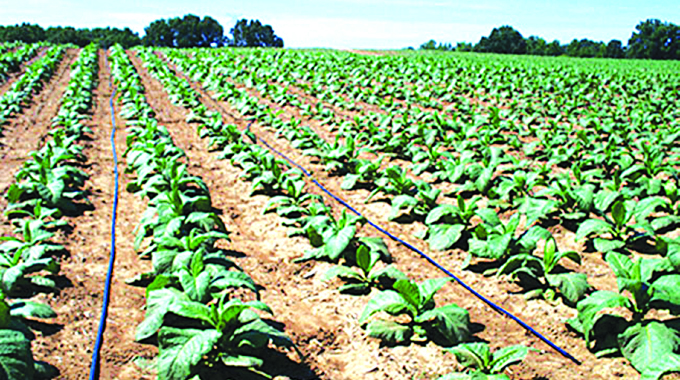
Unlike large-acreage government irrigation schemes, small-scale irrigation is typically farmer led. Farmers decide what technologies to use to extract water, be it manual lifting or solar water pumps. They also choose the mode of irrigation, whether by buckets or drip kits. Farmers purchase, run and maintain the operation themselves on their own farms or as part of small groups of farmers.
Small-scale irrigation can help smallholder farmers to increase agricultural productivity and incomes. It can be scaled quickly and without large public investments. For these reasons, it can contribute more rapidly to the achievement of national agricultural and development goals, compared to large irrigation schemes.
Currently, less than 5 percent of cultivated of land in sub-Saharan Africa is irrigated. The reliance on rain-fed agriculture prevents farmers from cultivating high-value nutritious crops that often need large amounts of water that are applied more frequently. Some vegetable crops consist mostly of water, for example, tomatoes or cucumbers, and their yield and quality deteriorate rapidly under water stress.
Production and profit limitations
Rain-fed agriculture limits smallholder production and profitability, particularly under climate change. It is therefore associated with higher food insecurity, poor diet quality, and high seasonal variability in diets.
Small-scale irrigation can improve nutritional outcomes in several important ways. It increases food production in the dry season, and raises incomes. Extra income enables the purchase of healthy and diverse diets all year round.
However, evidence for the nutritional benefits of irrigation in Africa is limited. One reason is that irrigated agriculture covers only small areas. In addition, nutritionists have largely focused on micronutrient supplementation, or infant and young child feeding practices. Also, irrigation systems are mostly developed and analysed by engineers who do not consider linkages to nutrition in their work.
Our recent research, drawing on data from Tanzania and Ethiopia, has developed richer evidence of these important linkages.
Our work, part of a broader project, provides the first strong evidence of the relationship between small-scale irrigation, food security, diet quality, and nutrition. Small-scale irrigation contributes to the resilience of smallholder producers by preserving their food security and nutrition during times of drought.
These findings provide reasons for policymakers to support small-scale irrigation expansion.
What we found
We started by exploring the relationship between small-scale irrigation and women’s dietary diversity in northern Ethiopia. Women’s dietary diversity is a measure of quality of food access, defined as the consumption of different food groups over the previous 24 hours including:
Grains, white roots and tubers and plantains;
Pulses;
Nuts and seeds;
Dairy;
Meat, poultry and fish;
Eggs;
Dark green leafy vegetables;
Other vitamin A-rich fruits and vegetables;
Other vegetables; and
Other fruits.
Increased dietary diversity is an intermediate indicator of nutrition. We found that women’s diets in that region were generally poor and identified high seasonal fluctuations in diet quality. We also found that compared to non-irrigators, women in households with small-scale irrigation had better dietary diversity, and irrigation can help offset the seasonality in dietary quality of women.
In a further study we focused on larger areas in Ethiopia and Tanzania. We found that the effects of irrigation on women’s diet adequacy were even stronger among households that had faced at least one drought in the previous five years. In Tanzania, drought-affected households that used irrigation also had higher household dietary diversity.
Currently, less than 5% of cultivated of land in sub-Saharan Africa is irrigated.
The reliance on rain-fed agriculture prevents farmers from cultivating high-value nutritious crops that often need large amounts of water that are applied more frequently. Some vegetable crops consist mostly of water, for example, tomatoes or cucumbers, and their yield and quality deteriorate rapidly under water stress.
Production and profit limitations
Rain-fed agriculture limits smallholder production and profitability, particularly under climate change. It is therefore associated with higher food insecurity, poor diet quality, and high seasonal variability in diets.
Small-scale irrigation can improve nutritional outcomes in several important ways. It increases food production in the dry season, and raises incomes. Extra income enables the purchase of healthy and diverse diets all year round.
However, evidence for the nutritional benefits of irrigation in Africa is limited. One reason is that irrigated agriculture covers only small areas. In addition, nutritionists have largely focused on micronutrient supplementation, or infant and young child feeding practices. Also, irrigation systems are mostly developed and analysed by engineers who do not consider linkages to nutrition in their work.
Our recent research, drawing on data from Tanzania and Ethiopia, has developed richer evidence of these important linkages.
Our work, part of a broader project, provides the first strong evidence of the relationship between small-scale irrigation, food security, diet quality, and nutrition. Small-scale irrigation contributes to the resilience of smallholder producers by preserving their food security and nutrition during times of drought.
These findings provide reasons for policymakers to support small-scale irrigation expansion. —The Conversation



 Online Reporter