Chronicle Editor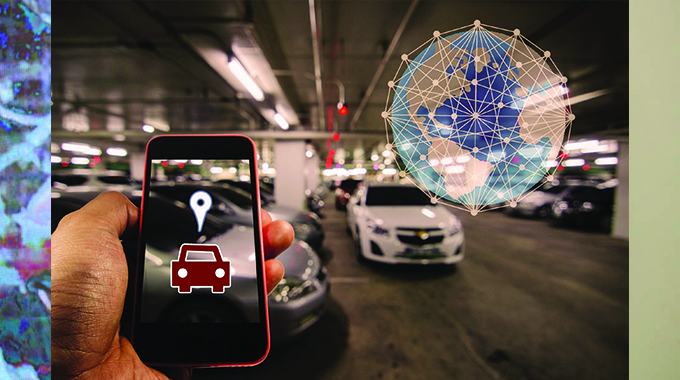
Jacqueline Ntaka
TTI, the company that manages the vehicle parking system for the Bulawayo City Council, has faced a lot of criticism and backlash from the public since it started operating. Many motorists have complained about the high parking fees, the harassment by the enforcement officers and the poor condition of the roads and parking bays. Some have even questioned the legitimacy and transparency of the contract between TTI and the council and accused TTI of being a foreign entity that exploits the local resources.
However, TTI has defended itself by stating that it is a Zimbabwean-registered company and that it has invested a lot of money and technology to improve the parking system in the city. TTI chairman Lizwe Mabuza said that his company met the requirements of the council, which wanted someone with the capacity and up-to-date technology to manage the parking system.
But what kind of technology does TTI use, and how can it benefit both the company and the city? In this article, I will explore some of the smart parking innovations that are available in the market and how they can enhance the efficiency, convenience and sustainability of the parking system.
Smart parking technology refers to the use of sensors, cameras, software and mobile applications to monitor, control and optimise the parking process. Smart parking technology can help drivers find vacant parking spaces, pay for parking fees and avoid fines and clamping. It can also help parking operators collect and analyse data, optimise the use of space and resources and reduce operational costs and environmental impact.
There are different types of smart parking systems, depending on the type of sensors and technologies used. For example, ground sensor technology uses sensors embedded in the pavement to detect the presence or absence of vehicles in each parking bay.
Counter technology uses sensors at the entrance and exit of the parking lot to count the number of vehicles entering and leaving. Overhead sensor or camera-based technology uses sensors or cameras mounted on poles, walls, or ceilings to scan the parking area and identify the location and status of each parking bay.
Each type of smart parking system has its own advantages and disadvantages, depending on the cost, accuracy, reliability and maintenance of the sensors and technologies. However, the common benefits of smart parking technology are:
λ It can reduce the time and fuel wasted by drivers looking for parking spaces, thus improving the traffic flow and reducing the congestion and pollution in the city.
λ It can increase the revenue and profitability of the parking operator by enabling dynamic pricing, increasing the occupancy rate and reducing the payment evasion and enforcement costs.
λ It can enhance the customer satisfaction and loyalty by providing a convenient and hassle-free parking experience, with features such as online reservation, mobile payment and navigation.
λ It can provide valuable data and insights by collecting and analysing information such as parking demand, occupancy, duration, turnover and revenue. This can help the parking operator and the city planner to make informed decisions and improve the parking system and the urban mobility.
Therefore, smart parking technology can benefit both TTI and Bulawayo by making the parking system more efficient, convenient and sustainable. However, to achieve these benefits, TTI and the council need to work together to address some of the challenges and issues that may arise such as:
λ The high cost and complexity of installing and maintaining the smart parking technology, especially in a developing country like Zimbabwe where the infrastructure and resources may be limited or unreliable.
λ The resistance and distrust from the public, who may perceive the smart parking technology as a way of exploiting them or invading their privacy rather than serving them or improving their lives.
λ The lack of awareness and education among both the drivers and the enforcement officers on how to use and benefit from the smart parking technology and how to avoid or resolve any problems or disputes that may occur.
These challenges and issues can be overcome by engaging and communicating with the stakeholders such as the motorists, the residents, the businesses and the media.
These stakeholders should be provided with clear and accurate information, feedback and incentives. TTI and the council also need to ensure that the smart parking technology is compatible and integrated with the existing parking system and the urban environment and that it complies with the relevant laws and regulations.
In a nutshell, smart parking technology can be a powerful tool to improve the parking system in Bulawayo thereby creating a smarter and greener city. However, it requires a collaborative and strategic approach from TTI and the council as well as a supportive, participatory attitude from the public to make it a success.
For feedback you can contact Jacqueline Ntaka on Jackie.ntaka — @mviyo.com



 Online Reporter