daniel chigunwe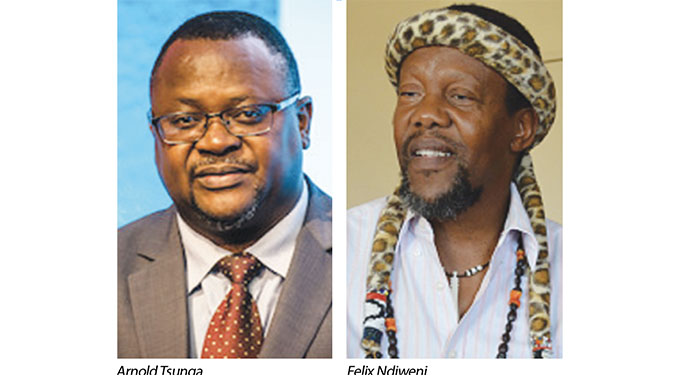
Nobleman Runyanga
Correspondent
Angola and Kenya are set to hold general elections next month, so are Chad and the Equatorial Guinea in September and November, respectively.
The Western buzz and narratives around these important democratic processes always centre on unproven charges of uneven electoral playing field, alleged poll theft, repression, non-observance of the rule of law and unequal coverage by state media among others against incumbent Governments.
Put differently, the West deliberately misinforms the world that African sitting governments wilfully give their opposition raw deals ahead of major polls to improve their own chances of retaining power.
The West has used the media to saturate the world with this blatantly false narrative to the extent that most of the globe has been blinded to its (West) own ugly hand in African politics and plebiscites.
The West has become so involved in local elections to the extent that African ruling parties know that when going for elections, they will be facing the West wearing the local opposition mask in the ballot booth.
The West has become so involved in African elections to the point of rigging polls in its favour using various means such as foreign policy, willing minions such as civil society organisations (CSOs), opposition politicians, opposition parties and embassies of its own countries.
Other key players in the mix include the private media. Zimbabwe serves as a very classical example of the West’s shamelessly meddlesome diplomacy and election rigging.
Most of the Western countries were built using African resources, which include minerals and slaves. A very poignant example of this is the Royal Library in Copenhagen, Denmark, which was built in 1999. The building is clad in a black granite façade, which was sourced from Mutoko District in north eastern Zimbabwe.
According to newzwire.live, a researcher established that the Italian company which supplied the stone earned US$9,12 million, while Mutoko Rural District Council earned just US$45,000 as tax royalties.
Government has since banned the exporting of unprocessed granite. It is this exploitative access to natural resources which drives Western countries to attempt to influence the outcome of elections in African countries.
They use underhand schemes and machinations to ensure that their preferred presidential election candidates win.
The aim is to use elections to supplant and replace sitting governments with their own preferred ones to ensure unfettered access to the continent’s resources.
The process normally starts with the Western countries identifying willing individuals and organisations who they fund using bodies such as the United States Agency for International Development (USAID).
Others include the National Endowment for Democracy (NED) and the National Democratic Institute, which are both based in Washington.
Both claim to be in place to support democracy in the world, but it is a public secret that they are used to fund and drive the US’ imperialistic designs and objectives such as regime change agenda.
The NDI, for example, is very key in the US’ quest to closely monitor, influence and play a key role in Zimbabwe’s electoral processes.
It is used to fund elections-related civil society organisations like the Zimbabwe Elections Support Network (ZESN) and ZLHR in the name of providing technical assistance.
Many will remember ZESN for introducing the parallel tabulation initiative which was meant to buttress the opposition’s perennial charges of vote rigging by Zanu-PF.
Like the opposition itself, ZESN has failed to provide any unassailable and concrete proof of poll theft by Zanu-PF since its establishment in 2000.
The West uses local individuals to mind and push its electoral interests in targeted African countries.
In this regard, former Zimbabwe Lawyers for Human Rights (ZLHR) executive director, Arnold Tsunga was appointed NDI Zimbabwe country director to ensure that rogue running dog organisations like ZESN get all they need in the US’ bid to use elections to unseat Zanu-PF and replace it with a pliant opposition government.
As I write, as early as November 2021, the USAID had already set aside US$5 million to fund local NGOs in the name of promoting democracy ahead of the 2023 polls.
The world knows that the phrase “promoting democracy” when coming from the mouths of the US government and its organisations, is a political euphemism meaning regime change in targeted countries.
More is set to be released using other outlets such as the NDI and NED ahead of the 2023 watershed polls.
These funds will be spread to all anti-government organisations as they, in their various ways, mobilise for the West’s elections front, the Citizens Coalition for Change (CCC).
Some act as funding conduits for the opposition in view of the Political Parties (Finances) Act, which precludes local political parties from accepting foreign funding.
The case of the formation of the MDC in 1999 demonstrates how the West picks issues and individuals in African countries in efforts that culminate in them using polls to advance their imperialistic objectives.
When the early 1990s Economic Structural Adjustment Programme (ESAP) austerity measures caused socio-economic challenges, people complained. The West used the late Morgan Tsvangirai, then secretary general of the Zimbabwe Congress of Trade Unions (ZCTU), to spearhead the food riots of January 1998 to demonstrate disaffection for Government in the name of socio-economic challenges.
In September 1998, Government convened the Land Reform Donor Conference in Harare, which was attended by 48 major countries and donor organisations such as Britain, the United States, South Africa, Middle Eastern and Asian countries.
Also in attendance were main world organisations such as the United Nations (UN), African Union (AU), the International Monetary Fund (IMF) and the World Bank.
Government published its policy framework for the Land Reform and Resettlement Programme Phase II (LRRP II) as it sought financial support for the project. No country or global organisation pledged any funding.
Even Britain, which in 1979 as part of the Lancaster House Agreement, had pledged to support efforts to address Zimbabwe’s land ownership imbalance by funding its land reform efforts refused to do so. This was driven by its misguided and misplaced hope that denying Zimbabwe funding would cause the people to pile grievances and political pressure on Government, which would result in them voting Zanu-PF out of power in the 2000 general elections and 2002 Presidential polls.
To take full advantage of the signs of disgruntlement which had been displayed during the January 1998 food riots, the West gathered most anti-government organisations and individuals under the banner of the National Working People’s Coalition.
This group, which was funded by Britain’s Westminster Foundation, held series of meetings that year and next resulting in the formation of the MDC in September 1999 to front the West against ZANU PF during the 2000 elections.
Perhaps the grandest and most brazen electoral heist ever undertaken in Africa by the West is the imposition of illegal sanctions which the US government imposed on Zimbabwean people in 2001 through the legislation of a whole law targeted at the tiny, harmless, innocent and inconsequential Southern African country.
This was in response to Government and Zimbabweans’ reaction to the outcome of land conference by embarking on the Land Reform Programme without compensating the 400 000 white farm owners.
The Zimbabwe Democracy and Economic Recovery Act (ZIDERA), which was crafted with the assistance of CCC senior members Tendai “Friend of the Congress” Biti and David Coltart, was named in a way that presented the law as meant to foster democracy (that euphemism again) in Zimbabwe and promote economic recovery, but nothing is further from the truth.
If anything, it aims to achieve the opposite.
In March, the Minister of Finance and Economic Development indicated that Zimbabwe had lost US$42 billion because of the sanctions since 2003.
To ensure that the sanctions regime against Zimbabwe was effective, the US government roped in the United Kingdom and the European Union (EU) block to impose their own rafts of punitive measures against the innocent people of Zimbabwe.
Former US Assistant Secretary for Africa, Chester Crocker explained the major aim of the legislation when he said: “To separate the Zimbabwean people from Zanu-PF, we have to make the economy scream and I hope you, senators, have the stomach for what we are about to do,”.
A screaming economy was meant to force Zimbabweans to scream at Zanu-PF and boot it out of power through violence as the late Tsvangirai once threatened or through the ballot.
UK-based former Ntabazinduna Chief, Felix Ndiweni has been at the forefront of a campaign for the diaspora voting rights. The disgraceful dethroned traditional leader and fugitive from the law, Ndiweni is a hatchet man doing the bidding of his hosts by pressing for Zimbabweans to vote from their diaspora bases where Zanu-PF leaders are barred by sanctions from travelling to address campaign meetings thereby creating an uneven electoral playing field.
While the constitution assures every Zimbabwean of the right to vote, Government has been hamstrung by sanctions to finance the roll-out of a diaspora voting mechanism.
The Ndiweni-driven campaign is calculated to boost the opposition (read the West)’s electoral fortunes in 2023 by harvesting votes from the diasporans who are estimated to number about 3 million.
The West and the opposition stupidly and without proof assume that they are all opposition supporters.
Full story on www.herald.co.zw
Another way that the West uses to rig elections in Africa is by making and amplifying claims of poll theft against the ruling parties using the opposition and other anti-government elements.
In Zimbabwe, this is a common feature of almost every election since 2000. Fortunately, both the West and the opposition have failed to adduce any evidence of their claims either in courts of law or in elections discourse.
One cannot write enough about the West’s meddlesome brand of diplomacy which sees some foreign envoys especially those from the US and the UK openly taking sides with the opposition and shamelessly telling governments how they should deal with opposition figures or anti-government elements like Hopewell Chin’ono when they fall foul of the law.
Many will not forget how the last US ambassador to Zimbabwe, Brian Nichols would shamelessly reduce himself to the level of an MDC Alliance/CCC political commissar to the extent of using local running dogs to tweet in local languages against Government on various issues.
All this is in a bid to influence the outcome of the 2023 elections in line with their objective of unseating Zanu-PF using the democratic process of elections.
As Zimbabweans countdown to the 2023 Harmonised General Elections, the West is expected to do more through its representatives and local hatchet men to rehash old issues and narratives like the claims of electoral reforms, alleged repression, human rights abuses and non-observance of the rule of law among a slew of many others.
The West’s best efforts have dismally failed to undo the political bond which binds Zimbabweans to Zanu-PF for over two decades now.
No amount of issue raising against Government and besmirching of Zanu-PF by the West and its minions should shake Zimbabweans ahead of next year’s polls. No amount of poll rigging by the West on behalf of the opposition using various methods have worked in past and 2023 is no different.


 Online Reporter