Chronicle Editor
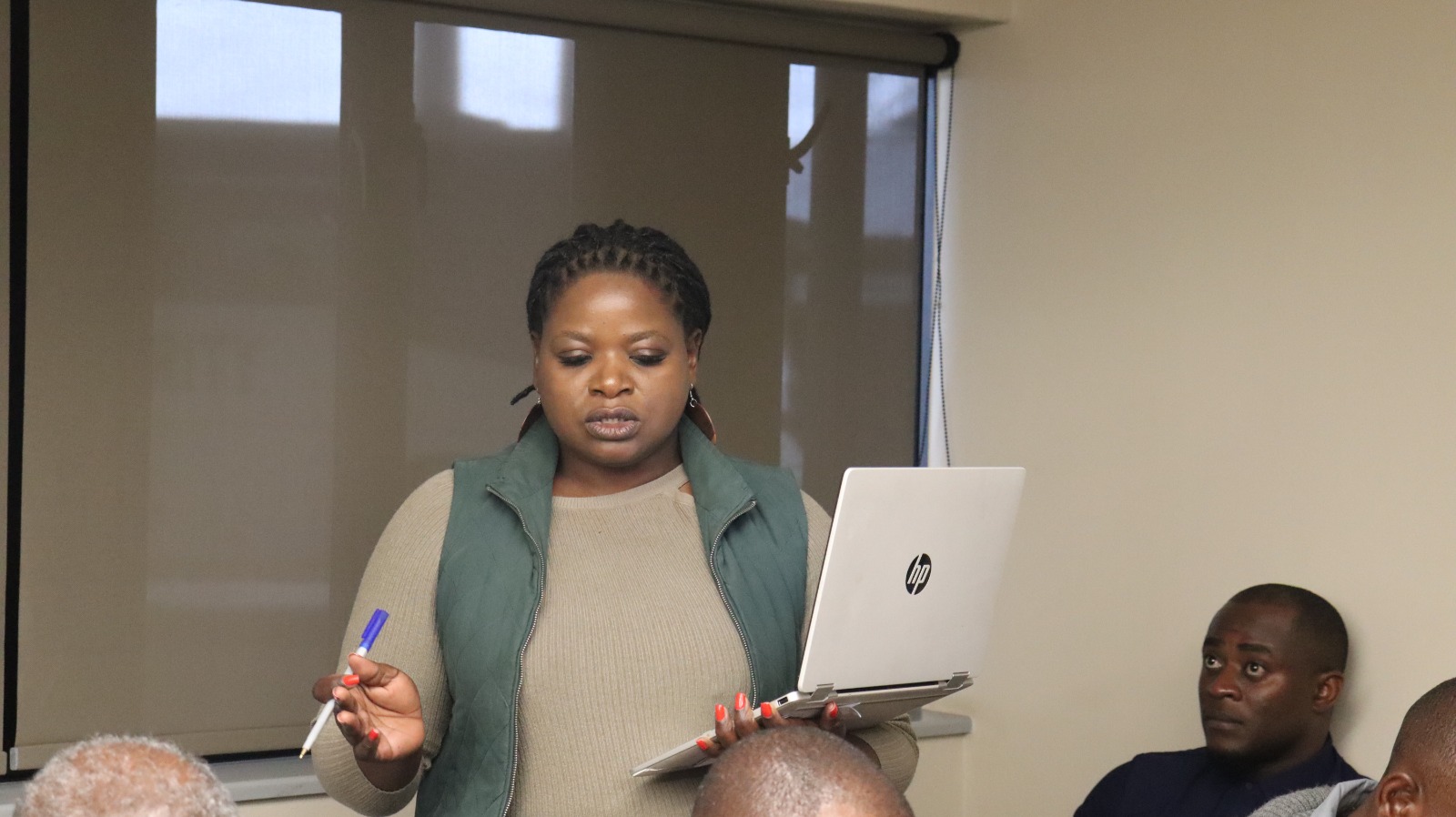
Talking Relationships with Nolwazi Mnikwa
We have for the past two weeks discussed red flags, what they are as well as the types of red flags to look out for in relationships. Having laid the foundation on defining red flags and the various types of red flags one can come across, it only seems right that today we look at how to deal with red flags in relationships. Just knowing and having the ability to identify red flags doesn’t necessarily equate to dealing with them. Having the knowledge on how to deal with red flags in relationships is an antidote to heartache, stress and depression.
First things first; if you’re considering entering a new relationship whether romantic, business or interactions with a new set of colleagues, it’s prudent to take your time to get to know your love interest, business associates and colleagues. In a romantic kind of relationship, it’s important to get to know the person of interest prior to fully committing to them. The same applies to new business associates and new colleagues – it’s important to get to know them first, to know their thoughts, beliefs and value systems.
In getting knowledge and understanding of these, you will most likely be able to pick up red flags from the individual if there are any. In taking your time to get to know someone, you’ll be able to assess their thoughts, speech, actions and general behavior and from these different aspects, if the individual has any red flags, they will be made manifest.
There are some people who can pretend in order to charm that love interest or business partner, but the truth of the matter is that one can only pretend for so long. So taking your time to get to know someone is ideal in that time will expose the person for who they truly are.
If you see any red flags while getting to know the individual, you’re at an advantage of either promptly putting an end to the relationship before things get out of hand or proceeding with the relationship at your own risk.
If the relationship is one that has gone deep but red flags begin to pop up, it’s important to talk to your partner, business associate or colleague about them. It’s important to openly express the type of red flag you have identified, how you feel about it and the consequences you think it will have on the relationship. This is true for family relationships as well.
Sometimes family members overstep their boundaries, take advantage or even use emotional blackmail by reason of being family and it’s important to openly communicate how you feel about all these red flags to bring them to an end. When openly communicating how you feel, I would encourage that you share your thoughts in a loving and kind manner, exercising patience as you communicate and also actively listen when the individual you’re communicating to responds. Important to note is that when you communicate your feelings on the red flags, use the first person narrative “I”, so as to avoid making the person you’re communicating with defensive.
Using the first person narrative helps the individual you’re communicating with have an understanding of how you feel. It helps the person develop a sense of compassion towards you. So communicating your feelings and boundaries openly and honestly is one of the methods you can use in dealing with red flags in relationships.
Another way in which you can deal with red flags in relationships is by setting boundaries and sticking to them. Yes, relationships require a level of compromise from all parties involved. Yet at the same time there are some things which are non-negotiable for you and as such those should be respected. Those are the boundaries you set for yourself and should anyone try to violate your boundaries, it’s important that you communicate that what they’re doing is not acceptable.
Should they ignore this and try to violate your boundaries again, that shows that they simply don’t respect you and they don’t place any value in your set boundaries which is a cause of concern. Boundaries are there for your protection, peace and mental health and anyone who violates them is not prioritising your peace, protection and mental health. In such a situation, it’s advisable to distance yourself from the individual but if you choose not to distance yourself then you ought to prepare for a stressful relationship with that individual.
So, in essence, setting boundaries, communicating them to your relation as well as sticking to your boundaries is one way of dealing with red flags in relationships.
If you recall, one of the red flags we touched on looked at the element of possessiveness and control whereby a partner or relation would want you to talk, act, behave and do things in a manner that tickles their fancy. With this in mind, it’s important to stay true to yourself and not allow yourself to be controlled or forced to change to someone’s idea of you.
Imagine a world where we all thought, behaved, acted and did things in the same manner; that would be quite boring right? In the same manner, you’re uniquely designed to be you, you have a purpose to serve as the you that the Almighty God ordained you to be and there’s no way you can fulfill this person behaving as someone else. So it’s important to stay true to yourself. Please don’t get me wrong, there are some toxic behaviours which are not right, those are not a part of you. Therefore, when someone asks you to get rid of toxic behaviours such as lying, dishonesty, gaslighting and so forth, you should not hide behind a finger, “ungacatshi ngomunwe” by saying those behaviors are a true reflection of yourself as that will not be true. When I talk about being true to yourself, I mean being true to your values and beliefs which don’t infringe on the rights of the next person.
If you’re faced with the red flag of a relation who lies to you, it’s important to clearly communicate to them that you don’t tolerate lying. Communicate your feelings on lying, help your relation to see things from your point of view, help them understand the impact lying has not only on your relationship but on other spheres of influence as well. In doing so, you would have addressed the red flag of lying.
A very important way of dealing with red flags in relationships is to stand up for yourself. It’s important not to allow yourself to be bullied by anyone, so stand up for yourself by saying no to abuse or the violation of your boundaries.
This article did not exhaust the methods of dealing with red flags in relationships as there are a lot more methods one can use. However; having looked at how to deal with red flags in relationships, we wrap up our series on red flags as we start on a new topic in the coming week.
I would love to hear your thoughts, comments and feedback as well as relationship topics you would like to have covered. You may send these to [email protected] or WhatsApp +263775978857. Keep safe and be blessed.



 Online Reporter