


 Online Reporter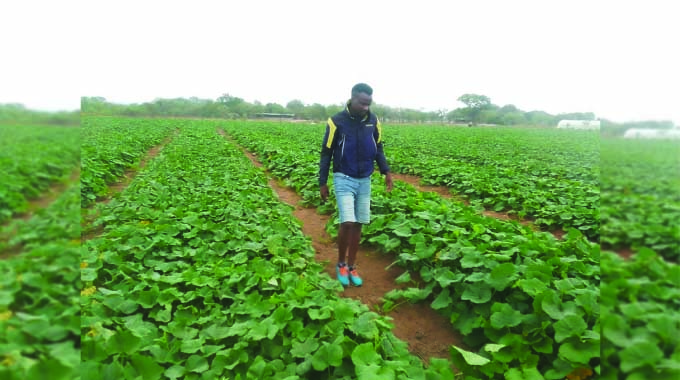
Sikhulekelani Moyo, Zimpapers Writer
WITH the onset of the rainy season, agronomic conditions favour rapid vegetative growth and high yield potential; however, they simultaneously increase biotic and abiotic risks such as high soil moisture, nutrient leaching, and accelerated pest and disease proliferation, an agronomist has said.
Historically, farmers who maintain adherence to Good Agricultural Practices (GAP) during this phase capitalise on reduced market supply later in the season, thereby achieving favourable market premiums during the February to May window.
For horticulture crops, the rainy season is a crucial period for farmers. While rain is essential for crop growth, excessive rainfall can lead to flooding, soil erosion, water logging and fungal diseases, causing massive losses in produce.
Responding to questions sent to him by Zimpapers, Umguza Rural Development Council agronomist Mr Leo Maphosa said for producers in Matabeleland and the broader Southern Region, priority interventions should include proper field drainage architecture, such as planting crops on raised beds or ridged systems, and early and continuous weed suppression to minimise competition for nutrients, moisture, and photosynthetically active radiation.
He said nitrogenous fertilisers in particular should be applied using fractionated (split) application strategies to mitigate leaching losses under high rainfall conditions.
“In maize, micro-dosing or frequent low-dose top-dressings are recommended, with foliar sprays serving as a corrective or supplementary nitrogen source under excessive leaching conditions, which are caused by persistent rains. Most of our soils drain heavily,” said Mr Maphosa.
“Routine field scouting and crop health monitoring are essential, as warm, humid conditions during this season significantly enhance the epidemiological favourability for foliar fungal diseases and sap-feeding arthropods.
“Functional surface and subsurface drainage should be maintained continuously to prevent prolonged soil saturation and hypoxic stress in root zones.”
Mr Maphosa said a preventive crop protection programme is strongly recommended with the help of tools from a technical person from the Agriculture and Rural Development Advisory Service or a district agronomist.
He said applications should occur at 7–10-day intervals, reducing to 5–7 days under high disease pressure or persistent precipitation.
“Active ingredients must be rotated according to Irac Mode of Action guidelines to avoid resistance selection,” added Mr Maphosa.
“A logical rotation sequence may progress from neonicotinoids to ivermectins, then pyrethroids, concluding with biologicals or ryanodine receptor modulators.
“Repeated pyrethroid applications should be avoided due to their negative impact on beneficial arthropods and rapid resistance development in target pest populations.”
Where feasible, biological inputs such as Bacillus subtilis, Trichoderma spp., or Beauveria bassiana may be integrated into the programme to reduce chemical dependency; however, Mr Maphosa said these must be applied preventively at 14-day intervals, as curative efficacy is limited.
Regarding crop selection, Mr Maphosa said cucurbits such as watermelon and butternut are now approaching the sub-optimal planting window, as they require high solar radiation and low pathogen pressure for optimal performance.
“Current recommendations for open-field systems include determinant to semi-determinant tomato hybrids and early to medium maturity green maize cultivars, with remaining species selection informed by site-specific factors including agro-ecological zone, rainfall distribution, soil characteristics and irrigation capacity,” said Mr Maphosa.



 Bongani Ndlovu