admin
admin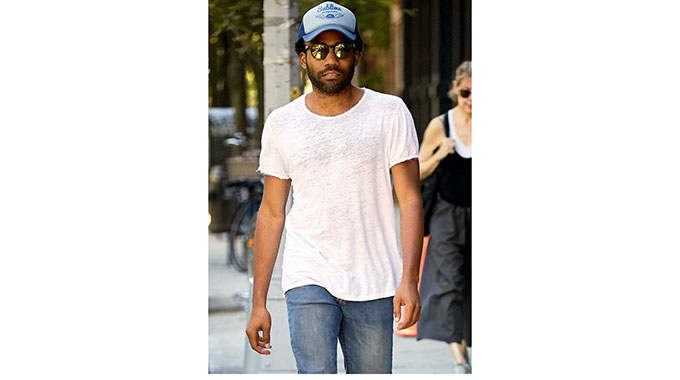
Tafadzwa Zimoyo
Fashion 263
Happy weekend and as we conclude the month of January, I hope you are staying at home and keeping safe.
Nothing has changed on the fact that the deadly Covid-19 is real and prevention is better than cure.
Now, with most people at home, it is still difficult to dress up as some might just say, ‘why bother?’
And again there are certain clothes that you can’t ignore while at home.
Have you thought about your t-shirts, the most loved and the general t-shirt.
Hollywood actor, Ashton Kutcher once said your best t-shirt should be like your bed.
“It should just feel like you are home when you are wearing it,” he said.
No argument that t-shirts are a must in anyone’s closet as they are a great option if you’re looking for a low-key vibe, but you can also dress them up too.
But do you really know much about your t-shirt, from styling to fitness.
My friends always say when it comes to t-shirts and style, opinions often fall differently.
For example, there are those men, the vast majority of them, who see the t-shirt as a wardrobe staple that is appropriate for nearly every occasion, and can be worn with little to no thought.
While others feel t-shirts are utterly juvenile and sloppy-looking, and should never be worn outside a gym or away from the beach.
Like I always say, in fashion you are free to invent your own style.
According to some different gurus, there are first things to consider when buying a t-shirt:
Fit
Fit is the cornerstone of good style, but while we often think of this dimension in regards to garments like the suit and dress shirt, it is important to get a good fit in your t-shirts too.
Size and tightness
A t-shirt should be neither too baggy nor too tight. If it is too big, it will drape and sag like a pillowcase and be unflattering.
Too tight and you will look like a stuffed sausage — a look that can read as some combination of narcissistic, flamboyant, and or douchey. If you are in shape, and have a good build, you can lean towards tighter over looser.
If you are carrying extra weight, leans towards a looser fit — but don’t go too far, as too much extra fabric will only make you look larger rather than smaller.
Shoulder seams
The seams where the sleeves attach to the body should ideally exactly align with where your shoulder ends rather than lower on your arm or towards your neck.
Sleeves
A t-shirt’s sleeves should hit about halfway up your upper arm. Sleeves that extend a little further down can look proportional if you are very tall.
Length
The bottom hem of tee should hit no higher than your hips, at least cover your waist band, and ideally extend a few inches below it.
Any shorter and you are heading into midriff territory, and run the risk of showing your back or butt, belly when you bend over. Longer than that and the shirt starts trending into a night gown.
Shape
Avoid boxy t-shirts that wear like a sandwich board with sleeves.
You want the t-shirt to be cut so it follows the shape of your body a little.
A well-fitting t-shirt that hits all these metrics can be hard to find but is worth looking for.
With all this in place, the trick is simply knowing when donning a t-shirt is both appropriate and well-advised, a determination which can be made by thinking through a few factors:
What is the dress code?
One thing you need to know is that t-shirts are not appropriate for formal situations all the way down to “casual Fridays” at work unless you work in a very casual office.
Well, my bosses can testify that some t-shirts which some workmates were bringing to work were inappropriate.
Just know that anything that feels like an “event” is not the place for a t-shirt.
How active will you be?
T-shirts were made for sports, and generally getting things done. The more you’ll be moving and sweating, the more appropriate wearing a t-shirt will be.
How old are you?
This is not arguable, definitely there are some t-shirts not suitable for your age. Imagine a 50-year-old wearing a Sponge Bob t-shirt, unless you are more of the celebrity side, yes you can get away with it.
T-shirts are better suited for young men, than those in their post-college years.
What’s your build?
Nearly all clothes look better on a fit physique, but this is especially true of t-shirts.
If you are overweight or thin, the t-shirt will either cling to and emphasize your belly, or drape lifelessly over your skinny frame. So too, the contrast between the sleeve and your skin will draw attention to your alternately pudgy or bony arms.
Thus thin and overweight men always look better in garments like dress shirts and sports jackets that add some structure to their frame, build out their shoulders, take in their waist, and form a more masculine v-shape.
Even casual tops like short-sleeved henleys and polos are more flattering for large men, as they include details around the neckline that draw attention towards the face and away from the belly.
These are some of the guidelines, courtesy of Art of Maniless. Options are just as easy and comfortable as t-shirts, and are nearly always a better choice for most men, even those who are fit and can more readily get away with wearing tees.



 Online Reporter