Chronicle Editor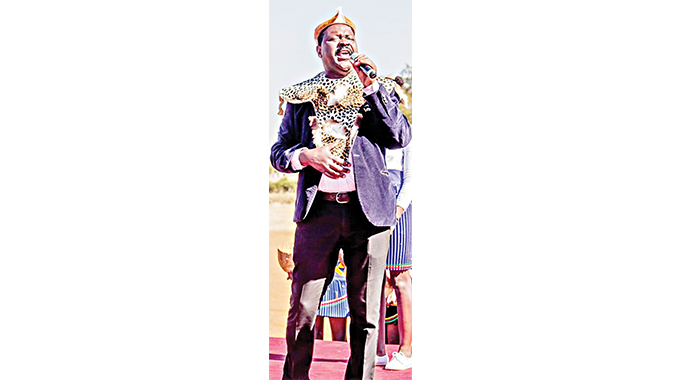
Mthabisi Tshuma, Showbiz Correspondent
IN the history of independent Zimbabwe, The Chronicle newspaper printed two editions on 1 July 1999 and the second edition announced the death of a giant — Dr Joshua Nkomo and the paper sold out.
Where did the copies all go? To the people because he was a people’s man.
Joshua Mqabuko Nyongolo Nkomo who served as Vice-President from 1990 until his death in 1999 was a great man who was a lover of the arts too. He was a writer in his own right and artistes in the country knew they had a “father” to call on as he always had time for them.
Due to this connection with artistes, it was not surprising to see artistes do all they could, including gate-crashing funeral proceedings to pay tribute to Father Zimbabwe.
Dr Nkomo was buried at the National Heroes Acre in Harare on July 5, 1999, and a coterie of poets used the spoken word to tell the world that the icon was no more.
The sombre day saw his body being driven through Mbare en-route to the iconic Stoddart Hall. The poets were not officially part of the programme and that did not deter them from attending the burial to bid farewell to their hero.
Saturday Leisure caught up with poet Albert Nyathi who narrated how they managed to be part of the proceedings and showcase their artistry in honour of the legend.
Below are excerpts of the interview between Saturday Leisure Correspondent Mthabisi Tshuma (MT) and legendary poet Albert Nyathi (AN).

MT: You led the proceedings of Father Zimbabwe to his final resting place. How did you manage to do this?
AN: When Ubaba Nkomo died, Noel Sibanda, a guy who was a cameraman at ZBC called me and said “umdala kasekho”. He said they didn’t have anything to pay tribute to Nkomo with and asked me to do something. So I sat down and wrote the poem A Tribute to Joshua Nkomo. After writing the poem, I made my way to ZBC studios in Harare to record it. By the time the burial took place, everyone knew the poem and loved it not knowing it was hastily written.
Come burial day, when I heard he (Father Zimbabwe) was being taken to Mbare, I drove there clad in amabhetshu. I was unstoppable and everyone just looked at me — the military, police and no one had the guts to stop me.
I went in and saw him lying in state and I just performed the poem. Following my performance, Dumiso Dabengwa whispered to me saying “you are coming to the Heroes Acre right?” and I said yes.
From there, I met Lwazi Tshabangu, Shashe and my group Imbongi and we rehearsed a song as we drove to the Heroes Acre. We were singing loudly and when we got to the place, the police stopped us and said they needed to confirm if we were supposed to be at the venue. We continued singing by the gate and after some time, we were then allowed to go inside and people went wild when they saw us. Dabengwa then asked me to lead the procession when the coffin came.
We had so much energy as we sang and it was amazing. I sang until my voice vanished as people kept clamouring for more. Each time another group went on stage to perform, people demanded that we be brought back on stage.
MT: Can you give us a breakdown of the performance?
AN: We did acapella and poetry. There was no time to set up instruments hence acapella was the most befitting.
MT: Clearly, this was an orchestrated showcase, had you rehearsed the songs prior to the burial?
AN: To be honest, I don’t remember us rehearsing. There’s a song called Ngiyamazi ubaba. This is the song the groups who were with me were singing. Another song that was sung was Mqabu Mdala which was Lwazi’s idea.
MT: How many artistes were part of the procession?
AN: I think they were around 20 to 25. There were the likes of Busi Mhlanga, Memory Mzondo, Siphathisiwe Moyo, Lwazi Tshabangu and Shashe boys were all around.
MT: Did this performance have an impact on your career?
AN: I’m not sure if I can say this changed my career because I was already a performer and it was way after the Senzeni Na? hit which was released in 1994 and this happened in 1999. But, I noticed that the performance did spread quite a lot across the country. I remember being recognised by some old woman in Mberengwa who said she remembered me from that performance at Nkomo’s funeral. That was quite fascinating. It meant a lot to me as I always wanted to do that kind of thing for a man of that stature.
MT: What was the highlight of the performance?
AN: It was when the hearse arrived. It was like the Heroes Acre was going down. I was chanting on the microphone and the crowd was going crazy. I kept hearing Dabengwa saying “Bantu bakithi akelithule bakithi,” as he tried to contain the crowds. I also remember that there was a snake which fell off a tree and people ran away.
Another highlight was me performing until my voice was gone. People felt pity for me but I am really proud to have done that as it is not every day that you get to honour somebody whom you always admired. I was pleased to say goodbye while at the same time, I was sad. But mostly, I was pleased that I had the opportunity to say “thank you for the work that you did”. Up to now, I still remember him as a man full of love just like Kenneth Kaunda. – @mthabisi_mthire


 Online Reporter