MacDenias Moyo
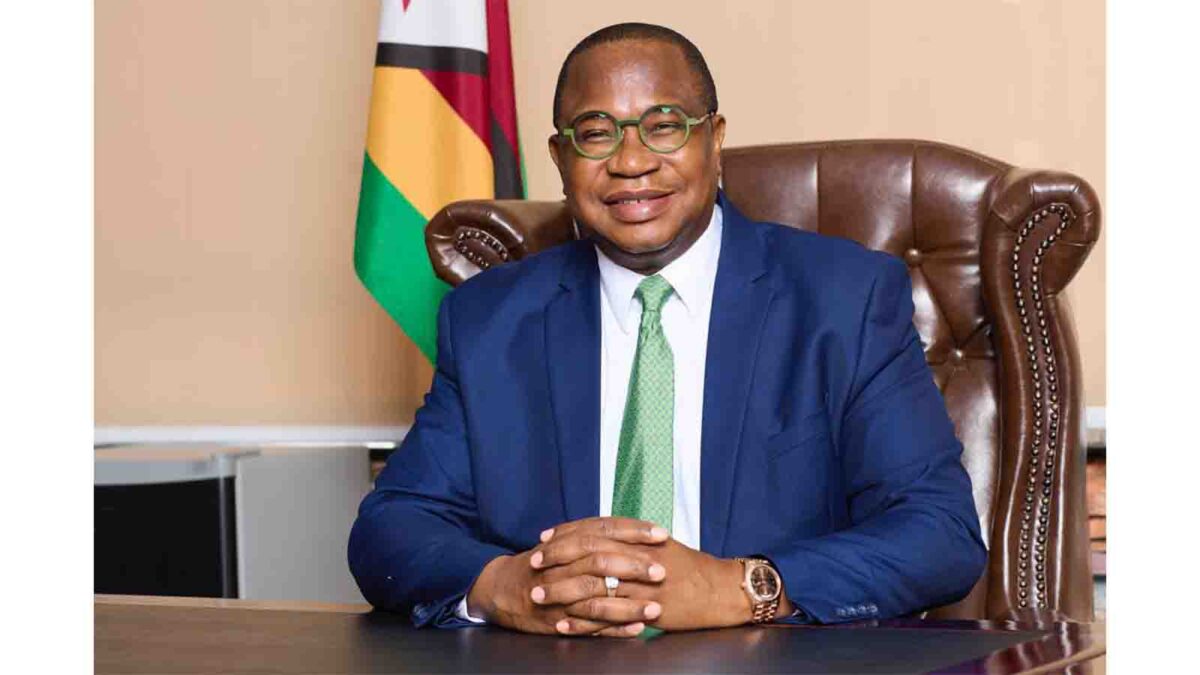
As Finance Minister Professor Mthuli Ncube presented the country’s economic outlook at the 2027 Pre-Budget Seminar in Bulawayo recently, the figures that emerged painted the picture of a nation that continues to move forward despite the scepticism that has so often surrounded its developmental journey.
The projections indicate that Zimbabwe’s Gross Domestic Product will grow from US$66,4 billion in 2026 to US$69,1 billion in 2027, exports will rise from US$14,9 billion to US$15,7 billion, diaspora remittances will increase from US$3,2 billion to US$3,4 billion and gold and foreign currency reserves are expected to reach US$2,2 billion.
These are not merely statistical projections. They are indicators of an economy that is steadily broadening its productive capacity while strengthening the foundations necessary for long-term growth.
What makes these projections particularly significant is that they do not exist in isolation. They emerge against the backdrop of growing international acknowledgement of Zimbabwe’s economic progress.
The International Monetary Fund recently projected Zimbabwe’s economy to expand by five percent in 2026, a growth rate substantially higher than the projected global average of 3,1 percent.
The IMF further commended progress achieved under the Staff Monitored Programme, noting that all end-June quantitative targets and structural benchmarks had been successfully met.
Inflation remained at a low 3,7 percent in September, the exchange rate remained broadly stable, revenue collections exceeded expectations and macroeconomic management continued to improve. These observations matter because they come from an institution whose assessments are often used by investors, governments and financial markets as benchmarks for evaluating economic performance. They therefore carry a level of credibility that transcends domestic political contestation.
For years, a persistent narrative portrayed Zimbabwe as a country trapped in permanent decline, incapable of implementing meaningful reforms or sustaining economic recovery.
According to this narrative, every Government initiative was destined to fail, every policy intervention would collapse under its own weight and every positive development would eventually prove unsustainable.
Such assertions generated headlines and attracted attention, but they increasingly struggle to withstand scrutiny when confronted by the evidence that continues to accumulate.
The reality emerging from both domestic and international assessments is that Zimbabwe has spent the better part of the Second Republic laying foundations that are now beginning to produce measurable results. Economic transformation is rarely dramatic or instantaneous.
It is often a gradual process characterised by patient institution-building, infrastructure development, policy consistency and incremental gains in productivity. Zimbabwe’s recent performance suggests that this process is increasingly bearing fruit.
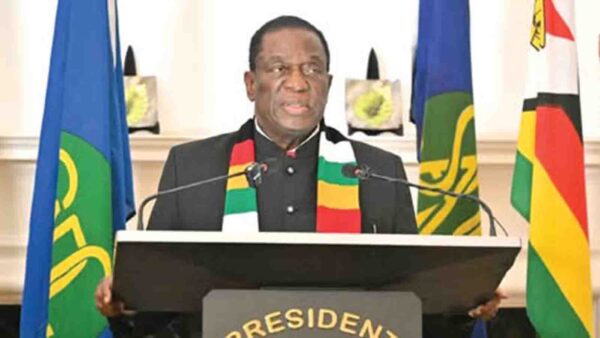
President Mnangagwa’s administration has consistently advanced the idea that development must be anchored in practical delivery rather than political theatre.
The philosophy underpinning the Second Republic has emphasised modern infrastructure, agricultural productivity, mineral beneficiation, industrialisation, social development and fiscal discipline as the essential ingredients of national progress.
Unlike approaches that seek quick political victories through short-term populism, this developmental model has focused on strengthening the productive sectors of the economy.
The significance of this strategy lies in its recognition that nations do not become prosperous through slogans. They become prosperous through production. They grow through investment. They advance through sustained improvements in the capacity of their people and institutions to generate value.
Agriculture remains one of the clearest illustrations of this developmental philosophy. Historically, Zimbabwe’s agricultural performance was heavily dependent on rainfall patterns, making both rural livelihoods and broader economic growth vulnerable to climatic shocks. The current administration has sought to change that reality through extensive investments in irrigation infrastructure, dam construction, mechanisation and climate resilience programmes.
Across the country, major dam projects have expanded water security while irrigation schemes have enabled increasing numbers of farmers to produce throughout the year. This has helped shift national agricultural planning away from dependence and towards productivity.
Although Government has prudently acknowledged the risks posed by a potential Super El Niño event in 2027, the fact that these risks are now being confronted through preparedness rather than panic demonstrates how significantly the agricultural landscape has evolved.
The objective is no longer merely to survive droughts. It is to build systems capable of withstanding them.
The importance of this agricultural transformation extends far beyond farming itself. Agriculture sits at the centre of a broad economic ecosystem that includes manufacturing, transport, logistics, retail, banking and exports.
Every successful farming season stimulates activity across multiple sectors of the economy. Food security reduces import dependence, strengthens foreign currency retention and enhances national resilience.
More importantly, a nation that can feed itself safeguards one of the most important dimensions of sovereignty. Economic independence is ultimately built upon productive capacity, and productive capacity begins with the ability to sustain one’s population while creating surpluses that drive industrial and commercial growth.
Equally significant has been the continued expansion of the mining sector, which remains one of the most important pillars supporting Zimbabwe’s economic trajectory.
Blessed with substantial reserves of gold, lithium, platinum, chrome and other strategic minerals, Zimbabwe occupies a position of considerable importance within the global minerals economy. The emergence of lithium as a critical resource in the global transition towards renewable energy technologies has provided the country with opportunities that were scarcely imaginable a decade ago. At the same time, traditional mining sectors continue to generate export earnings, employment opportunities and foreign currency inflows.
The projected US$2,2 billion in gold and foreign exchange reserves underscores the growing strength of the country’s external position and reflects the contribution that the mining sector continues to make towards macroeconomic stability.
However, what distinguishes current policy from previous approaches is the growing emphasis on beneficiation and value addition.
The vision guiding economic planning increasingly recognises that true prosperity does not lie merely in extracting resources but in processing them.
The exporting of raw materials, while important, captures only a fraction of the value embedded within natural resources.
Sustainable economic transformation requires the development of industries capable of refining, processing and manufacturing products that command greater value in international markets.
It is, therefore, encouraging that manufacturing investment is projected to reach US$3,56 billion, signalling continued confidence in Zimbabwe’s industrial potential and demonstrating the commitment to building an economy that produces more than it consumes.
Infrastructure development has been another defining feature of the Second Republic and continues to play a central role in economic expansion.
Across the country, roads have been rehabilitated, border posts modernised, airports upgraded and energy projects expanded. While infrastructure projects are often judged by their physical appearance, their true significance lies in their economic impact. Infrastructure reduces transaction costs, improves efficiency, enhances market access and increases national competitiveness.
Every road connecting farming communities to markets improves productivity. Every upgraded border facility accelerates trade. Every new electricity project strengthens industrial output. Infrastructure is therefore not simply about construction. It is about creating the conditions necessary for economic activity to flourish.
The contribution of Zimbabweans living abroad also deserves recognition within this broader story of national progress. Diaspora remittances are projected to increase from US$3,2 billion in 2026 to US$3,4 billion in 2027, highlighting the enduring commitment of millions of Zimbabweans to the development of their homeland.
These remittances support families, finance education, stimulate entrepreneurship and contribute significantly to foreign currency inflows. More importantly, they reflect confidence in the country’s future. People invest where they see possibility, and the continued growth in diaspora contributions suggests that many Zimbabweans abroad remain deeply connected to national development and increasingly willing to participate in building that future.
Perhaps one of the most under-appreciated achievements of recent years has been the strengthening of fiscal discipline and macroeconomic stability. Government projects revenue of US$9,4 billion in 2026 against expenditure of US$9,5 billion, while targeting a fiscal deficit below three percent of GDP in 2027.
These figures may appear technical, but they carry profound implications for economic stability. Throughout the developing world, fiscal indiscipline has repeatedly undermined growth by fuelling inflation, eroding investor confidence and weakening state capacity.
Prudent management of public finances is therefore not simply an economic objective. It is a development imperative.
The maintenance of relatively stable inflation, improved revenue performance and stronger fiscal controls points towards a Government increasingly committed to safeguarding the gains that have been made.
The broader significance of these developments lies in the fact that they collectively reinforce Zimbabwe’s position within the international community.
The country’s ongoing re-engagement efforts, dialogue with international financial institutions and pursuit of debt resolution have all been strengthened by evidence of policy consistency and economic management.
The IMF itself has acknowledged the role of the Staff Monitored Programme in supporting Zimbabwe’s arrears clearance and re-engagement strategy. This matters because modern economies thrive not through isolation but through constructive participation in the global system. Investment flows where confidence exists.
Trade expands where stability prevails. Partnerships develop where credibility is demonstrated.
Ultimately, the story emerging from Zimbabwe’s economic projections is not merely about a GDP figure rising to US$69,1 billion. It is a story about momentum.
It is a story about a nation steadily strengthening the foundations of its economy despite global uncertainty, climate challenges and years of sustained scepticism. The journey remains incomplete.
Significant challenges remain. Poverty reduction, job creation, industrial expansion and social service improvement must continue to occupy the centre of national policy. Yet it would be intellectually dishonest to ignore the substantial progress that has been made or to dismiss the indicators pointing towards continued growth.
The debate about Zimbabwe can no longer be confined to outdated assumptions or inherited pessimism.
The evidence increasingly suggests a country that is building, producing, investing and growing. Agriculture is becoming more resilient. Mining is expanding.
Manufacturing investment is rising. Infrastructure is modernising. Fiscal management is improving. Export earnings are increasing. International confidence is strengthening.
Against a difficult global backdrop, Zimbabwe is charting a course that increasingly reflects ambition, resilience and determination. If the current trajectory is sustained, the projected US$69,1 billion economy of 2027 may not represent the culmination of a journey, but merely the beginning of a far larger national transformation