admin
admin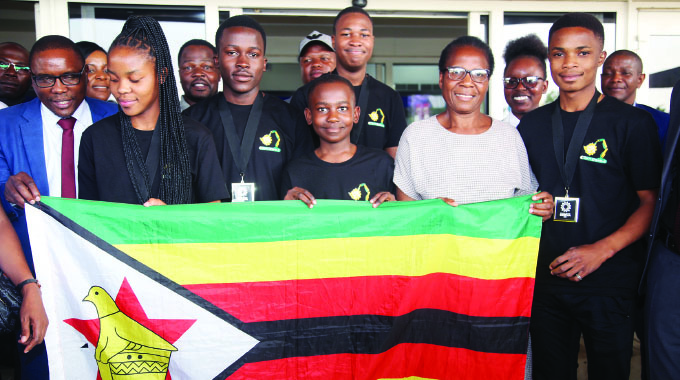
Special Correspondent
A team of Zimbabwean science students scored a major win at the just-ended 2022 First Global Challenge in Geneva, Switzerland, where they clinched the Gold Medal in the XPrize Innovator Award category, cruising-in ahead of Greece and Indonesia who bagged the silver and bronze medals respectively.
The annual event is designed “to promote science and technology leadership and innovation in young people through the sport of robotics”.
Event organisers were effusive in their praise for the young Zimbabweans throughout the 4-day event which saw teams of students from 180 countries both competing against and collaborating with each other as they demonstrated their respective solutions to combat climate change by way of innovative carbon counter-measures.
The six team members — Tanatswa Taremba (12 yrs), Makanaka Chimiso (17 yrs), Blessed Kutyavripo (17 yrs), Michael Mkwahwami (18 yrs), Marlone Chipfakacha (18 yrs) and Rukudzo Mare (19 yrs) – who hail from Prince Edward Boys High School, Bernard Mizeki College and Tynwald High School — together with their two Mentors, Ms Charles Matanga and Ms Trish Nyarumbu — impressed the event judges not only with the innovative brilliance of their project but with the energy and enthusiasm with which the entire team conducted itself throughout the event.
The innovative concept behind Team Zimbabwe’s entry is the use of cassava starch to make a bio-degradable plastic material thereby cutting back on if not altogether eliminating the CO2 emissions generated by the disposal of plastic materials through burning.
Plastic has become a major source of global pollution, contaminating life both on land and in the oceans, even infiltrating marine sea-food chains.
Many countries have introduced measures to reduce the use of plastic bags and single-use plastic materials such as straws and the type of plastic cutlery associated with fast-food outlets across the planet — much of which ends up adding to the already very high levels of plastic pollution across the globe.
By pioneering this innovative, eco-friendly use of cassava-starch, the students believe that they might also be providing possible alternative options for today’s tobacco-growers in Zimbabwe — i.e. the possibility of more current tobacco-growers migrating towards the cultivation of cassava as an alternative livelihood and source of sustainable income.
The tobacco-industry world-wide is coming under increasing pressure from a variety of sources — including the Geneva-based World Health Organisation (WHO) — which is advocating a move away from tobacco and tobacco products on the basis of the proven link between tobacco and certain forms of cancer and other respiratory diseases.
In parallel, environmentalists and climate activists are becoming increasingly critical of the use of coal or wood in the tobacco flue-curing process, stressing that the use of coal contributes to global warming whilst the use of wood has led to widespread deforestation which, in turn, also has a negative impact on climate change.
By way of their innovative use of cassava-starch, the students believe their ideas can make a significant contribution to the global battle against carbon counter-measures and climate change more broadly.
Speaking in Geneva on Monday, Charles Matanga praised the student team for their hard work and dedication.
He stressed the cooperative rather than competitive nature of the event and said that the underlying ethos was for young scientists to work together to develop practical, responsible solutions to global problems.
Thanking the three schools, together with the parents of the team-members, for the support they had provided to enable the team to participate in the event, Mr Matanga said that he hoped the gold medal win would serve as an incentive for Government to seriously consider supporting the introduction of robotics and associated scientific research programmes in other schools, and making such programmes accessible to all those interested in using science and technology to solve real life problems.
“Our hope would be to introduce such programmes in other schools or even to introduce them as part of the national education curriculum, and as an examinable educational discipline”.
“We certainly have the minds and the expertise amongst our youth : what we lack is adequate funding : if we were able to address that issue, we would be able to retain much of our scientific talent at home, rather than see it depart elsewhere in the region or overseas”.
Stressing that robotics is very much “the future”, Mr Matanga said he would wish to see robotics-kits benefiting from duty-free status when being imported into the country.
Ms Trish Nyarumbu, who accompanied the team in the role of mentor, expressed her full support for the comments made by Mr Matanga. An agricultural specialist, Ms Nyarumbu remarked that the use of robotics and advanced IT in agriculture would certainly contribute towards environmental protection and more cost-efficient production by way of helping farmers to avoid over-watering or over-using fertilisers in their activities.



 Online Reporter