Vusumuzi Dube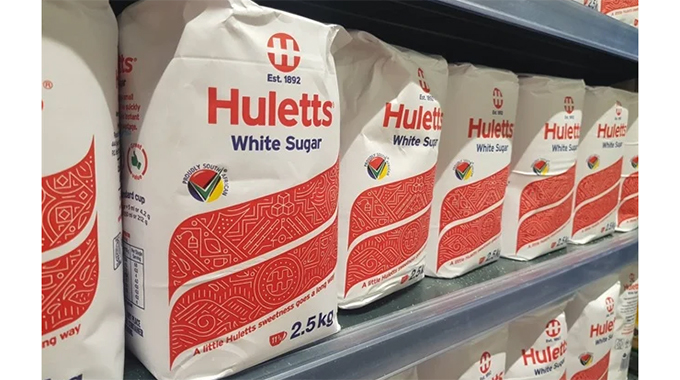
Marshall Ndlela, [email protected]
FOR much of the past decade, Tongaat Hulett’s Zimbabwean operations — principally the wholly owned Triangle Limited and the 50,3 percent stake in listed Hippo Valley Estates — have served as a crucial financial stabiliser for the South African parent company.
Amid recurring governance scandals, mounting debt, and operational setbacks in KwaZulu Natal, the Zimbabwe unit consistently produced profits, strong cash flows, and substantial contributions to group adjusted EBITDA.
These gains helped offset losses in South Africa, supported debt servicing through remittances, and reinforced the low-cost, resilient profile of Zimbabwe’s sugarcane production — often regarded as the most cost-efficient in Southern Africa.
As the South African entity now faces provisional liquidation, the Zimbabwe operations remain robust and self-sustaining, highlighting a decade-long pattern in which the “southern arm” repeatedly stepped in to stabilise the struggling core.
A decade of divergent fortunes: Zimbabwe’s consistent contribution
Between 2015 and 2025, Tongaat Hulett’s group performance reflected widening disparities across its regional units. Group revenue typically fell between R13 billion and R18 billion annually, but cumulative headline losses, impairments, and debt pressures mounted sharply, aggravated by persistent operational and governance failures in South Africa.
Zimbabwe, by contrast, routinely contributed between 40 and 85 percent of group adjusted EBITDA in peak years, underpinned by strong operating profits and dividends that supported the parent company.
Zimbabwe’s Profit Track Record
(Key Highlights from Hippo Valley and Group Reports):
l Pre 2020: Strong results, with Hippo Valley recording inflation-adjusted operating profits (e.g., ZWL1,6 billion in FY2020) and EBITDA growth aligned with annual production of around 200 000 tonnes of sugar.
l 2021: Zimbabwe dominated group adjusted EBITDA (approximately 85 percent of the R2,5 billion total), offsetting South African under-performance through fair value gains on biological assets and strong domestic sales.
l 2022: Although adjusted EBITDA was impacted by currency depreciation, the Zimbabwe unit remained profitable, with dividends and fees helping to support overall group liquidity.
l 2023–2024: Hippo Valley revenue increased (e.g. ZWL7,509 billion in 2024), with adjusted EBITDA remaining positive (US$13,7 million in 2025 equivalents), while production held steady at roughly 194 000 to 219 000 tonnes.
l Recent (2025/26): Hippo Valley demonstrated resilience with 10 percent revenue growth to US$113 million in 1H26, alongside operating profit increases of 79 percent to US$24,5 million in earlier periods and surging export volumes despite rising costs.
Cumulatively, Zimbabwe’s contributions likely exceeded R5 billion to R8 billion (Rand equivalent) over the decade, driven by efficient estates with 27 000 to 30 000 hectares under cane, high yields of 80 to 100 tonnes per hectare in optimal conditions, and strong supply partnerships with private growers.
The operations also benefitted from advanced irrigation infrastructure — supported by Tugwi Mukosi Dam — and projects such as Kilimanjaro, which support broad-based empowerment.
Mozambique provided supplementary recovery (R300 million to R500 million annually in later years), but Zimbabwe remained the group’s primary stabiliser.
By contrast, South Africa incurred significant losses (estimated at R3 billion to R7 billion over the period), weighed down by cheap imports, the Health Promotion Levy, infrastructure failures, civil unrest, flooding in KwaZulu Natal, and the 2019 PwC audit that uncovered R3,5 billion to R4,5 billion in overstated profits stemming from governance irregularities.
The “life saver” mechanism: How Zimbabwe offset South Africa’s decline
Zimbabwe’s contributions sustained the group through several critical mechanisms:
Profit neutralisation
In key years such as 2021, Zimbabwe’s R1 billion to R1,5 billion+ earnings offset South Africa’s negative EBITDA and impairments.
Cash remittances
Dividends and management fees (e.g. R139 million in 2022, following higher historic flows before policy restrictions) supported debt reduction in South Africa.
Asset resilience
Zimbabwe’s low-cost production base, dominant domestic market share (exceeding 50 percent in many years), and export capacity helped cushion the effects of hyperinflation and currency volatility.
Economic buffer
Despite challenges such as the 2022 currency devaluation, strong domestic demand (often exceeding 66 percent of total volumes) sustained margins and operational stability.
These factors provided essential support as the group navigated post 2019 restatements that converted previously reported profits into annual losses ranging from R121 million to R442 million, alongside debt levels that escalated to R11,7 billion.
South Africa’s difficulties were rooted in executive misconduct at KwaZulu Natal headquarters, which inflated earnings to secure bonuses and ultimately eroded up to R12 billion in equity. External pressures — including low economic growth, high unemployment, and fierce competition — deepened the decline, while Zimbabwe capitalised on structural efficiency and regional demand.
Current context: Liquidation threat and Zimbabwe’s independence
As at February 2026, Tongaat Hulett Limited in South Africa faces provisional liquidation after the collapse of the Vision Group takeover deal. Business rescue practitioners approached the Durban High Court on 12 February, citing failed funding commitments and creditor demands linked to the R11,7 billion debt load. Legal proceedings continue, but Zimbabwe’s operations (Triangle and Hippo Valley) remain ring-fenced, financially healthy, operationally autonomous, and unaffected.
They continue to drive production, exports, and community development, supporting around 20 000 jobs and associated livelihoods.
The decade-long trend underscores Zimbabwe’s strategic importance: a profitable, asset-rich unit that repeatedly stabilised the wider group. With South Africa’s chapter nearing closure, focus now shifts to Zimbabwe’s future.
A compelling opportunity has emerged for the Mutapa Investment Fund — the sovereign wealth entity overseeing key national assets — to acquire Hippo Valley and Triangle.
Such a move would secure strategic control over more than half of the country’s sugar production, strengthen food security, boost export earnings, meaningfully contribute to GDP (potentially 1-2 percent through expansion and job creation), and align with Vision 2030’s agro-industrial transformation goals.
Government signals increasingly favour local ownership over foreign bids, positioning Mutapa as a strong candidate to modernise operations, empower communities, and ensure long-term national benefit from these critical assets.
The Tongaat Hulett saga demonstrates how regional excellence can sustain a troubled parent company for years — until deep structural failures become insurmountable.
As Zimbabwe’s operations stand firm, Mutapa’s potential involvement offers a chance to transform historic support into future sovereignty and growth.
*Marshall Rufura Mupazi Ndlela is a PhD Candidate (Fintech, Rural economics and eDIS).



 Online Reporter