Online Reporter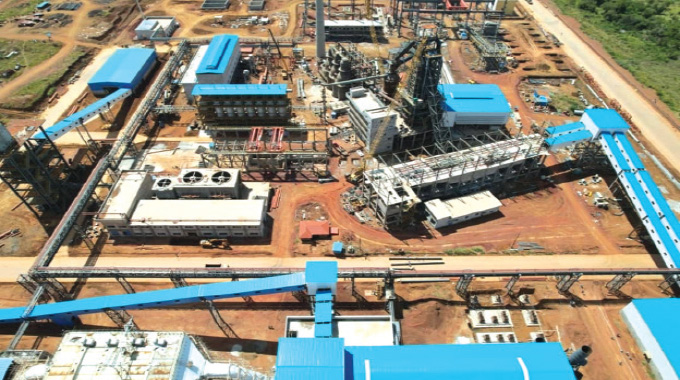
Oliver Kazunga, Features Writer
FOR countries within the Common Market for Eastern and Southern Africa (Comesa), where high steel import costs and long supply chains have slowed infrastructure delivery, Zimbabwe’s US$1,5 billion Manhize steel plant is emerging as a potential game changer for regional industrialisation.
Located in Zimbabwe’s mineral-rich Midlands Province, the Dinson Iron and Steel Company (Disco) plant is one of the most significant industrial investments in the Comesa region in recent decades.
Beyond its scale, the project reflects a broader shift towards localised production, value addition, and strengthened intra-Comesa supply chains.
The expansive complex, marked by towering chimneys, conveyor systems, and a constant hum of machinery, has transformed the once-quiet Manhize area into a hub of heavy industry.
Importantly, it signals the return of integrated steel production not just for Zimbabwe, but for a regional market that has relied heavily on imports for years.
From Zisco to Manhize: Reviving regional steel
Zimbabwe last operated a fully integrated steel plant in 2008, when the Zimbabwe Iron and Steel Company (Zisco), once the largest of its kind, north of the Limpopo, ceased operations during the peak of the country’s hyperinflation crisis.
At its height in the late 1990s, Zisco produced up to one million tonnes of steel annually, supplying both domestic and regional markets.
Its closure reverberated across Comesa. Member states faced higher project costs, foreign currency outflows, and delays in cross-border infrastructure development.
The absence of a regional steel supplier created dependence on overseas imports, often at high cost and with long delivery times.
The Manhize plant addresses this gap.
With capacity to supply multiple markets, it offers an opportunity to deepen intra-Comesa trade, reduce exposure to global supply shocks, and stabilise input costs for regional projects.
Scaling production in phases
Disco is widely regarded as Africa’s largest integrated steelworks under development.
At full capacity, it is expected to produce up to five million tonnes of steel annually, supporting tens of thousands of jobs and underpinning downstream industries.
Disco project director Mr Wilfred Motsi said Phase I targets an annual output of 600 000 tonnes.
Production will rise to 1,2 million tonnes in Phase II, and 3,2 million tonnes in Phase III, and eventually reach five million tonnes in the final phase.
“Phase I is nearing completion, and we are already producing products such as pig iron, steel billets, deformed bars, wire rods, and mining mill balls,” he said.
Current output already exceeds Zimbabwe’s estimated annual demand of 400 000 tonnes, creating scope for regional exports.
“We are now exporting steel billets and pig iron to South Africa, a Sadc member, and Zambia, which is part of both Sadc and Comesa,” said Mr Motsi.
A regional industrial hub
Constructed by China’s Tsingshan Holdings Group Limited, the Manhize plant is increasingly viewed as a regional asset.
Raw materials such as coking coal from Hwange, iron ore from nearby deposits, and limestone from Masvingo Province are processed locally, feeding construction, mining, and manufacturing industries across southern and eastern Africa.
Policy developments have also supported regional trade.
Mr Motsi noted that Zambia’s removal of a 20 percent surcharge on steel imports from Zimbabwe has opened that market for Disco’s reinforcing bars and structural steel.
Further north, the Democratic Republic of Congo, both a Sadc and Comesa member with expanding mining and infrastructure needs, is emerging as a potential growth market.
“Our products are certified by the Standards Association of Zimbabwe and the South African Bureau of Standards, enabling regional and international marketing,” he said.
Strengthening intra-Comesa trade
Industry analysts highlight that Manhize could shorten supply chains, improve price stability and reduce transport costs, especially for landlocked Comesa countries.
Former Comesa Business Council secretary general, Mr Trust Chikohora, said the project aligns with Comesa’s industrialisation agenda, moving member states up the value chain and promoting regional production networks.
“For years, African economies have depended heavily on imported steel, often at high cost and with long delivery times.
“This project allows Comesa countries to localise supply chains, stabilise input costs, and strengthen regional manufacturing ecosystems,” he said.
Impact on local enterprises
The benefits extend beyond large-scale production. Redcliff-based engineering entrepreneur Ms Ruth Kugara said access to regional steel could unlock opportunities for small and medium-scale manufacturers.
“If Comesa countries source steel locally, it expands the market for finished products from local firms like ours and allows small manufacturers to participate in intra-African trade,” she said.
She said continued expansion at Manhize could allow for specialised and flat steel production, scarce in the region.
Similarly, the Zimbabwe Institute of Foundries chief operating officer, Mr Dosman Mangisi, noted that stable steel supply is critical for long-term planning.
“Manhize gives the engineering and construction sectors confidence to plan larger projects without material shortages,” he said.
A pillar for regional industrialisation
As production scales up, the Manhize steel plant is poised to play a defining role in strengthening regional value chains, reducing import dependence, and supporting Africa’s long-term industrialisation agenda.
For Comesa, this plant represents more than steel production — it is a tangible step toward self-reliance, regional integration, and industrial growth across member states.