Online Reporter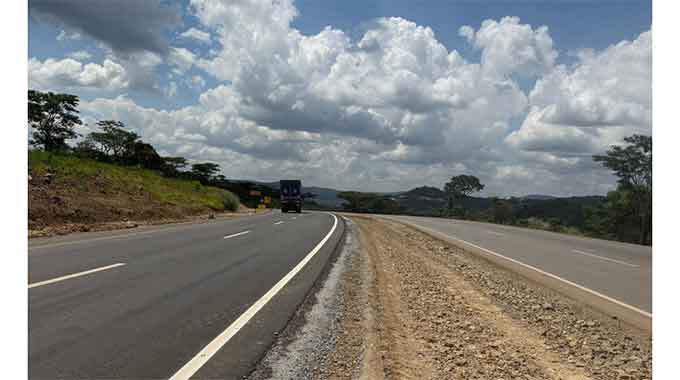
Herald Reporter
progress has been made on the Harare-Kanyemba Highway, which is being rehabilitated under a public-private partnership over a three-year period.
The full scope of the project includes the construction of new toll plazas and weighbridges.
To date, 18,3 kilometres of the newly-dualised Harare-Mazowe section is now open to traffic, while surfacing of a 3,7km section leading to Blue Ridge shops is underway.
The Harare-Kanyemba Corridor will enhance connectivity to Zambia and southern Tanzania and includes the refurbishment of Kanyemba Border Post.
Meanwhile, the Beitbridge-Bulawayo-Victoria Falls Highway will also be rehabilitated for US$1,2 billion between 2026 and 2030, also through a PPP model.
Besides supporting tourism, the corridor carries a large volume of freight destined for central and northern Zimbabwe.
Other major road projects include the US$262 million Harare-Nyamapanda Road, scheduled for completion by 2029, which incorporates the modernisation of the Nyamapanda Border Post to strengthen the eastern trade corridor with Mozambique.
The Gweru-Zvishavane-Rutenga-Boli-Sango Road will be rehabilitated at a cost of US$450 million by 2030, improving access to the Lowveld and strengthening links to northern Mozambique.
In a statement, the Ministry of Transport and Infrastructural Development confirmed that progress was being made on the rehabilitation of the Harare-Kanyemba Road and other roads countrywide.
“Significant progress has been recorded on the Harare-Kanyemba Road construction and upgrading project. To date 18,3km of the newly dualised Harare-Mazowe section is now open to traffic, improving connectivity and easing travel. Surfacing of 3,7km section leading to Blue Ridge shops is in progress,” read the statement.
“The contractor is now actively focused on the essential drainage systems and pedestrian walkways, ensuring a durable and safe road for everyone. This upgrade is a key step towards better infrastructure and economic growth for the region.”
Zimbabwe intensified its infrastructure development drive last year, undertaking large-scale projects across the country as part of Government’s broader push to attain a prosperous and empowered upper middle-income society in the next four years.
Central to this transformation has been sustained investment in road rehabilitation and modernisation under the Emergency Road Rehabilitation Programme 2 (ERRP2), alongside flagship infrastructure projects that are reshaping the country’s transport network, easing congestion and improving regional trade connectivity.
Since the launch of ERRP2 in 2021, more than 50 000km of road have been rehabilitated nationwide, while over 2 000 bridges and road structures have been repaired or upgraded.
This has significantly improved road conditions across a network estimated at 84 000 kilometres, the bulk of which was previously classified as being in fair to poor condition.
Building on these gains, Government is preparing to roll out a US$3 billion road rehabilitation and upgrading programme targeting four key national highways between 2026 and 2030.
The ambitious programme, outlined in the National Development Strategy 2 (NDS2), will be implemented largely through PPPs and is expected to modernise critical trade corridors while stimulating economic growth.
Among the most significant projects nearing completion is the Harare-Masvingo-Beitbridge Highway, Zimbabwe’s principal north-south artery linking the country to South Africa, its largest trading partner.
The highway forms part of the broader regional corridor connecting Southern Africa to markets in the north and has been instrumental in facilitating the movement of goods, people and services.
Rehabilitation works are also progressing on the Harare-Chirundu Highway, which links Zimbabwe to Zambia and serves as a vital gateway to the northern SADC corridor.
The route is critical for cross-border trade, regional integration and the transport of agricultural and mining exports.
Similarly, the Beitbridge-Bulawayo-Victoria Falls Highway is being upgraded to support freight movement and tourism, connecting South Africa to Zimbabwe’s prime tourist destinations and export routes in the north-west.
Good road infrastructure along this corridor is essential for reducing transit times, lowering transport costs and enhancing Zimbabwe’s competitiveness as a regional logistics hub.
In urban infrastructure development, Government last year commissioned the multi-million-dollar Trabablas Traffic Interchange in Harare, located at the intersection of Simon Mazorodze, Chitungwiza and High Glen roads.
The interchange replaced the old Mbudzi Roundabout, which had long been a major traffic bottleneck in southern Harare.
The project, comprising 15 bridges, has transformed traffic flow, reduced congestion and accidents and improved connectivity along the North-South corridor.
It also enhances regional trade linkages, given Zimbabwe’s position as a transit country between South Africa and the rest of the region.