

 Online Reporter
Blessing Ticha Karubwa
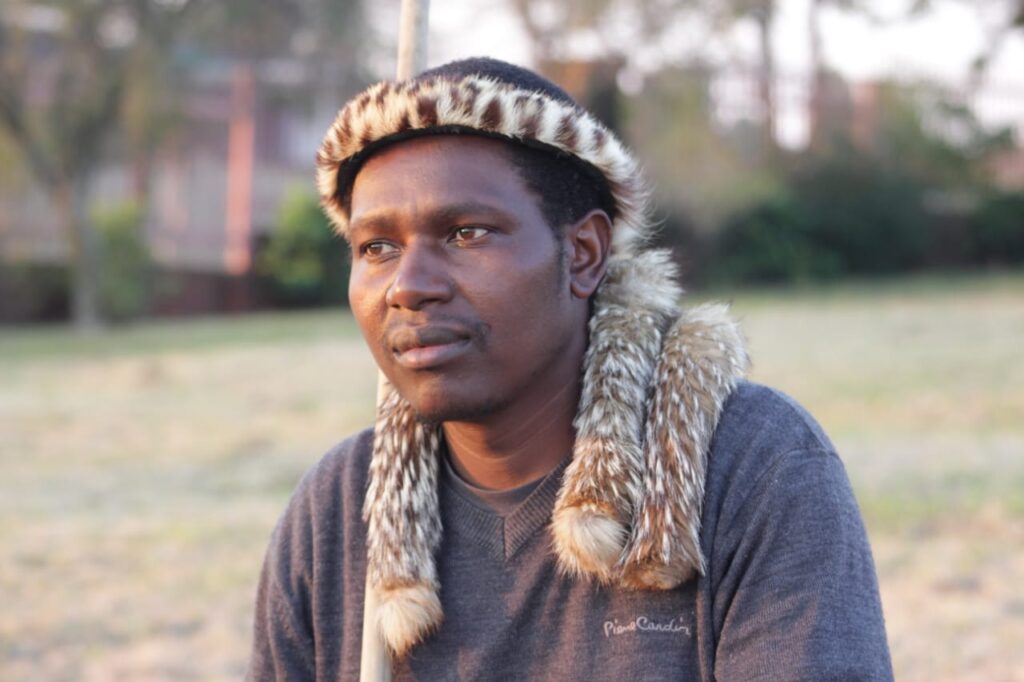
THE use of the title “His Royal Highness” (HRH) for Chief Mbusi Dakamela has opened a fascinating debate over bloodline, African royalty, traditional leadership and the limits of royal protocol in modern Zimbabwe.
What began as a social media argument has now raised a bigger question: Can a person be recognised as royalty because of ancestral bloodline without occupying a throne, and who has the authority to make that recognition?
The debate was sparked by a historian, author and Chief Dakamela’s biographer Arnold Mayibongwe Nkala, who questioned whether referring to the chief as HRH diminished rather than elevated his standing.
Nkala pointed to Dakamela’s role as a continental director within the African Kingdoms Diaspora Alliances (AKDA), an organisation bringing together African royalty and influential figures involved in cultural heritage, unity and development.
He also cited the royal necklet presented to Dakamela by Zulu Prince Thulani Zulu during his awards ceremony earlier this year, arguing that the gesture carried symbolic significance.
For Nkala, however, the controversy should not be reduced to a contest over who has the right to a throne.
“It’s not like he is going to take away someone’s claimant as King or some Kingdom. His position of royalty is on a different league,” he said in an interview.
AKDA, meanwhile, says its use of HRH is not intended to make Dakamela a King or create a new traditional leadership position.
AKDA Global CEO, Princess Pretty Mncube, speaking on behalf of the organisation, said the title was being used because of what the organisation says is Dakamela’s royal ancestry.
“The Royal Highness title is for anyone that comes from a Royal House. It does not mean that the person is a King, it’s any member of a Royal House,” she said.
Mncube said AKDA’s research into African royal histories had led the organisation to recognise Dakamela as coming from a royal house in KwaZulu-Natal, adding that his royal identity was based on ancestry rather than his appointment as a traditional leader.
“So he is not Royal because of appointment, he is Royal because of blood. Royal blood runs in his vein so as an organisation we recognise that,” she said.
The CEO added that AKDA was interested in historical royal houses that existed before colonial rule and before the eras associated with Tshaka and Mzilikazi, saying the organisation could recognise royal bloodlines even where historical kingdoms or political structures no longer exist.
But not everyone is convinced that ancestry settles the question.
Historian Nkalipho Mathema said Ndebele traditional leadership had its own historical hierarchy and forms of address, warning against automatically importing English royal terminology into African institutions.
“Ndebele traditional leadership is historically rooted in ubukhosi, with its own hierarchy and forms of address,” Mathema said.
He said HRH was an English royal honorific and should not automatically be understood as changing Chief Dakamela’s traditional position. If AKDA uses the title according to its own protocols, he said, it should be understood within that particular context.
Public policy analyst and culturalist Effie Ncube took the legal argument further, saying an honorific could not create a constitutional office.
“A title does not create an office, and an honorific does not amend the Constitution,” Ncube said.
Zimbabwe’s Constitution recognises the institution and functions of traditional leaders under Chapter 15, including chiefs, headpersons and village heads. It sets out their cultural, traditional and community functions, as well as the constitutional framework governing their appointment and succession. It does not, however, prescribe “His Royal Highness” as a formal constitutional title for chiefs.
That distinction is important because, in established English royal protocol, “His Royal Highness” is generally a style used for princes and certain members of a royal family, while a reigning king is styled “His Majesty.”
On social media, the debate has produced everything from calls for restraint to outright arguments over Ndebele kingship.
Some users argued that HRH was harmless because it did not necessarily make Dakamela King, while others questioned why the chief needed a royal title at all.
One commenter urged people to allow Dakamela to continue with his work rather than “invite antagonism”, while another argued that traditional leadership should not be confused with imported English royal terminology.
Others brought the wider and long-running Ndebele kingship question into the discussion, invoking competing claims to the Mthwakazi throne and asking why the language of royalty was being attached to Dakamela.
Chief Dakamela declined to take a position on the debate, saying he was not yet in a position to comment on the matter.
For now, the controversy appears to be less about whether Dakamela is doing the work of a chief and more about what exactly constitutes African royalty in an age where bloodline, traditional authority, cultural recognition and modern institutions increasingly overlap.
And perhaps that is why the two words ‘His Royal Highness’ have proved powerful enough to start a debate far bigger than a title.
Follow @TeamKarubwa


 Bongani Ndlovu