admin
admin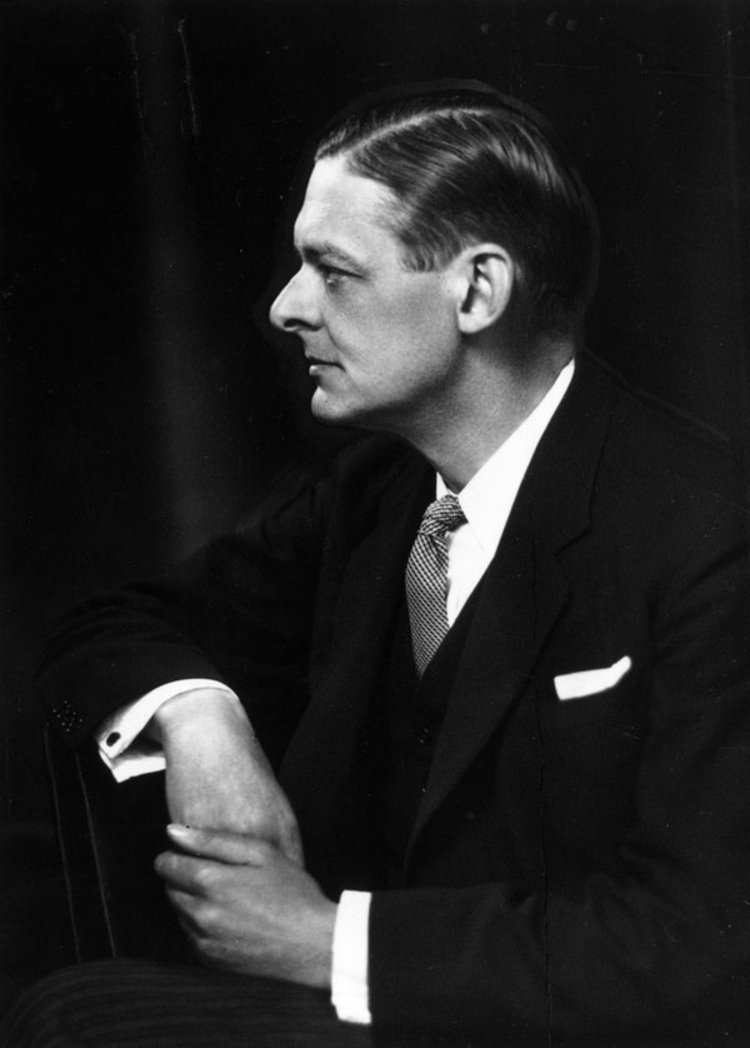
Stanely Mushava Literature Today
T.S. Eliot’s unsettling collage of post-war images, “The Waste Land”, is, perhaps, the foremost poem of the 20th century. “The Waste Land”, written while the poet was nursing a nervous breakdown, is a defining moment in modernist literature. Uploading “a heap of broken images” into the poetic canon, and cutting away from synthetic and formal templates, Eliot signals the arrival of modernism, the movement anticipated by his imagist contemporaries. The avant-garde poem builds on “Prufrock and Other Observations” to seal his reputation as one of the most important figures of the modernist movement.
Eliot’s work as a poet, playwright and literary critic is duly featured on the flagship stand of modern literature yet a major element remains elusive; the writer himself. While other writers are readily foregrounded in their work, Eliot sought to maintain a safe alienation from his writing, insisting on the impersonality of the poetic voice.
To double-lock his closet, he did not want a biography written on him and personally destroyed material which should have been instrumental in such a project.
“Having managed to make lasting poetry out of his most stinging humiliations, he wished those humiliations to be afforded the grace of oblivion. Consistent with a good deal of his criticism, which stressed poetic ‘impersonality’, his efforts to suppress his own biography were sometimes devastatingly successful,” writes Eliot’s latest biographer Robert Crawford.
His widow, Valerie, further red-taped efforts to immortalise Eliot in biography, either restricting access to content or offering limiting terms to prospective biographers. Deliberately or inadvertently, the image of an ascetic, polished, even saintly, man of letters emerged as the essential T.S Eliot as a result of this firewall.
He is complicit, in a minor poem, in mediating an image of himself: “With his features of clerical cut/ And his brow so grim . . . / And his conversation, so nicely/ Restricted to What Precisely/ And If and Perhaps and But.”
Posthumously, though, he could not hold out this airbrushed man of letters for too long. Emerging perspectives cast Eliot as an anti-Semitist, misogynist and fascist sympathiser, strands that have come to detract the Nobel laureate’s reputation.
Recently, Israeli Prime Minister Benjamin Netanyahu called out Eliot, Fyodor Dostoyevsky and several other writers as belonging to an anti-Semitic coterie. He is just as central to another coterie: Christian converts in a movement that, by and large, either casts religious sentiment as an anachronism or bête noire.
The polar extremes of saintly vs alternately appropriated by admirers and detractors as the whole, obscure the real Eliot, not so much a static narrative but a complicated life.
Crawford is out to restore the whole in his 2015 biography, “T.S. Eliot: From St Louis to The Wasteland”. The biography is privileged by access to previously unavailable material.
Valerie was not entirely obstructive in her desire to protect her husband’s contentment with obscurity.
With some of the unofficial biographies bordering on caricature and taking positions on uncertain controversies, she set the stage for a more authoritative account by retrieving some of Eliot’s correspondence from different individuals.
Crawford feeds these into his thread to create a close-up portrait of the hesitant legend, by turn feeble, flawed, self-conscious and omnivorously read.
Some of the newly retrieved content, including over a 1 000 letters to a crush-worthy actress who friend-zoned him in light of his uncertain financial prospects, will be only available for publication in 2020.
Given that his troubled marriage to Vivien, parodied by Ernest Hemingway in “Mr and Mrs Elliot” and reconstructed in the movie “Tom and Viv” seems borne out of miscalculated convenience rather than enduring affection, the notes to his early muse can shed more light on the cross-pollination of romantic sentiment and poetic genius.
However, Vivien’s part is not to be played in Eliot’s development as a poet is never to be played down. Their troubled life together, before she was locked up in a lunatic asylum, created the background for his disturbed and disturbing masterpiece, “The Waste Land.”
It was Vivien who burnt the poet’s boat to his native U.S, as it were, where he was scheduled to take up a philosophical vocation at Harvard University. As Ezra Pound noted, she saved him for poetry.
Crawford’s book, in its faithfulness to detail and coyness of judgement, tends to occasionally major on the minute and insignificant but this is all part of an attempt to be nuanced rather than biased towards a particular strand.
Interrogating a prospective biographer, Amazon founder Jeff Bezos inquired how the former would avoid falling into the narrative fallacy, that is, the inclination to simplify the complex web of existence into a single thread.
Crawford seems to be taking a tedious route to be skirt around the narrative fallacy.
“T. S. Eliot was never young. That, at least, is the impression many readers get from his work. ‘I grow old . . . I grow old . . .’ complains the voice of ‘The Love Song of J. Alfred Prufrock’, written when the poet was at the start of his twenties,” Crawford begins his biography.
“A few years later Eliot began another poem with the words ‘Here I am, an old man’. Still in his early thirties when he published The Waste Land in 1922, he argued that the ‘most important personage in the poem’ was Tiresias, who has already ‘foresuffered’” Crawford observes.
This old soul in a young body owed his early maturation to his strict religious upbringing, which involved memorialisation of a Puritan family tree and figures of asceticism and martyrdom.
While not nearly as violent as Adichie’s fanatical and patriarchal caricature in “Purple Hibiscus,” Eliot’s father embraced views of an equally fundamentalist sort.
“I do not approve of public instruction in sexual relations. When I teach my children to avoid the devil I don’t begin by giving them a letter of introduction to him and his crowd,” the older Eliot said.
“I hope that a cure for syphilis will never be discovered. It is God’s punishment for nastiness. Take it away and there will be more nastiness, and it will be necessary to emasculate our children to keep them clean,” he said.
The anxiety facilitated by such an upbringing is not only the motivation of “Prufrock” but contributed to his bookish isolation from infancy.
His ill-health, for which he could not participate in ordinary pastimes of his age or sporting activities in school ensured that he was already reading John Milton’s “Samson Agonistes” in his tenth year and dabbling in verse not long after.
Bloom suggests that poets set out by admiring a predecessor of a sympathetic drift but soon enough, on realising that all they wanted to say has been already said, they antagonise, misread and subvert the predecessor, originating something distinct in the process.
Eliot’s map of misreading unravels rather early: “Browning was more of a hindrance than a help, for he had gone some way, but not far enough, in discovering a contemporary idiom,” he tears into one of his early idols.
A taste for the disruptive, with the underlying convergence of Italian notables like Dante, French innovators, English predecessors, Eastern thought and the Christian canon, are part of Eliot’s modernist achievement.
jitknowledge.blogspot.com



 Online Reporter