Online Reporter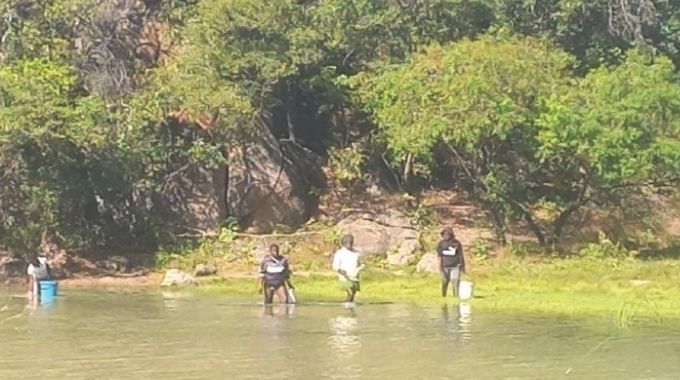
Ronald Mpofu, [email protected]
WHAT should be a source of life for communities in Mangwe District has quietly turned into a source of danger.
Mhlanga Dam in Macingwana Village, Ward 12 — best known as the water catchment for nearby Plumtree town — is at the centre of a troubling trade. Along its shrinking banks, a dangerous survival practice is taking hold, as desperate residents collect dead fish and sell them to unsuspecting buyers.
The activity, which has grown steadily in recent months, reflects both deepening poverty and a worrying lack of health awareness. It is a stark reminder of how economic hardship can push communities into risky choices, with consequences that extend far beyond the dam itself.
At first glance, the dam looks calm. But a closer look reveals a disturbing reality. Along the shallow edges, especially during colder days, dead fish float or lie belly-up in the muddy water. These fish — mostly Siamese mud carp and small catfish — have become an unlikely source of income for some villagers.
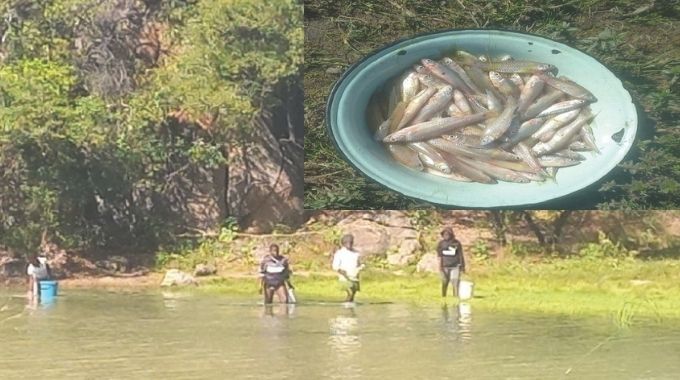
What started as an occasional find has now become a daily routine for a growing number of people, particularly young girls and school dropouts who have few other options to earn a living.
During a visit to the dam at midday, this publication found four girls wading through shallow water and mud, carefully picking up dead fish and placing them into five-litre and 20-litre buckets. The work is dirty and unpleasant, but for them, it is necessary.
Among the group was a Form One dropout who said poverty had forced her out of school.
“I have to make a living somehow. We sell a bowl for US$1 or R20. People buy because fish is expensive at the shops. They don’t ask where it comes from,” said the girl.
Her words reflect a harsh reality. For many families in the area, options are limited. School fees, food and other basic needs remain out of reach, leaving young people to find whatever means they can to survive.
The price of the fish makes it even more attractive to buyers. In Plumtree’s busy Mkhokheli Market, a bowl of fresh kapenta costs about the same amount — around US$1 or R20. For customers trying to stretch every cent, the cheaper alternative appears to be a good deal.
However, what many do not realise is the hidden danger behind this bargain.
According to information gathered on the ground, buyers are not told that the fish they are purchasing were already dead when collected. Nor are they informed about what caused the fish to die in the first place. This lack of transparency raises serious health concerns.
Environmental health experts say most of the fish die due to cold stress when temperatures drop suddenly — a common occurrence at Mhlanga Dam during winter and early spring. Young fish are particularly vulnerable to these abrupt weather changes.
But the greater concern is not only why the fish die, but how long they remain in the water before being collected.
Once a fish dies, its flesh quickly becomes a breeding ground for bacteria. These bacteria multiply rapidly, producing dangerous toxins such as histamine and other biotoxins. What makes the situation even more alarming is that these toxins cannot be removed, even with thorough cooking.
In simple terms, cooking the fish does not make it safe.
Consuming such contaminated fish can lead to serious health problems, including food poisoning, vomiting and diarrhoea. In severe cases, it may cause neurological complications, especially among vulnerable groups like children and the elderly.
“The danger is that you cannot see, smell or taste these toxins. By the time someone falls sick, the bacteria would have already done damage. Children and the elderly are most at risk,” said a health official in Plumtree who requested anonymity.
This warning highlights the silent nature of the risk. Unlike spoiled food that smells or looks bad, contaminated fish can appear normal, making it easy for unsuspecting buyers to consume them.
Beyond the immediate health risk, there are growing concerns about how some of the fish are being killed.
While natural causes such as cold weather account for some of the deaths, residents in the area allege that illegal fishing practices may also be contributing to the situation. Some claim that individuals are using traditional herbs or chemicals to poison or stun fish, making it easier to collect them in large numbers.
If true, this would point to a more organised and deliberate activity, rather than simply opportunistic scavenging.
The Environmental Management Agency (EMA) has since taken note of the issue. Its Matabeleland South manager, Mr Decent Ndlovu, confirmed that investigations are now underway.
“We have just heard about this recently, our department was not aware. I have sent a team from Plumtree border town to go and do investigations. After that I will share a comment. But I believe those sellers sometimes use traditional herbs to kill the fish so they fetch them easily. However, we are still to do investigations, hence there are juveniles involved,” Mr Ndlovu said.
EMA officials say that if it is confirmed that fish poisons are being used, those responsible could face serious consequences, including fines or prosecution under the Environmental Management Act.
Such practices would not only threaten human health but also damage the natural ecosystem of the dam, affecting fish populations and water quality in the long term. For now, however, the situation remains unresolved.
At its heart, this is not just an environmental or health issue — it is a human story. It is about young people forced out of school, families struggling to survive, and communities making difficult choices in the face of poverty.
The girls collecting fish at the dam are not criminals. They are victims of circumstance, trying to find a way to survive in an environment where opportunities are scarce.
Yet their actions, while understandable, carry risks that could harm others who are equally vulnerable.
For authorities, the challenge is twofold: to protect public health and the environment, while also addressing the underlying economic pressures driving the trade.
Awareness campaigns may be needed to educate both sellers and buyers about the dangers of consuming dead fish. At the same time, alternative livelihood opportunities could help reduce reliance on such risky practices.
As the investigation continues, one thing is clear — what is happening at Mhlanga Dam cannot be ignored. What should be a source of life is slowly becoming a source of harm. And unless urgent action is taken, the cost of this quiet trade may be far greater than anyone realises.