admin
admin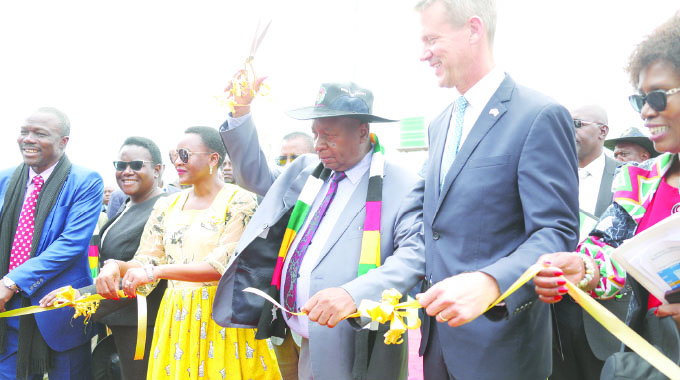
Zvamaida Murwira recently in Chipinge
Government’s rural industrialisation and modernisation policy has transformed Hwakwata village in Chipinge, following the installation of a 200 kilowatts solar mini grid that has seen 12 500 people benefiting immensely through provision of electricity and potable water.
Hwakwata Village, nestled near the Mozambican border, 60 kilometres east of Checheche Growth Point in Chipinge now boasts of the 200KW solar mini grid containing batteries, inverter and metering system to supply 80 homesteads together with 14 shops at the business centre, clinic and a primary school.
The project has also seen the installation of 100 solar home lighting systems for the extremely vulnerable households, 90 biogas digesters for smart cooking, 30 solar community flood lights, three solar boreholes and a nutrition garden.
The garden, which is communally owned, will help generate revenue, part of which will be used to maintain the infrastructure.
The Government, through the Rural Electrification Fund and the United Nations Development Programme, are implementing the project with financial support from the United Kingdom’s Foreign Commonwealth and Development Office.
Life has been transformed for the community, now accessing potable water and electricity through solar and biogas, consistent with the Second Republic’s thrust to provide clean energy
Provision of clean energy and smart communities will save the country not only its import bill in electricity but from carbon emissions which have been a thorn in the flesh because of climate change induced droughts.
Energy and Power Development Minister, Edgar Moyo, represented President Mnangagwa in commissioning the project last week, at a colourful ceremony attended by several senior Government officials and diplomats accredited to Zimbabwe among, other stakeholders.
They all hailed the thrust of smart villages saying that was the way to go in uplifting poor and remote communities, in line with President Mnangagwa’s trajectory of leaving no place and no one behind.
Several villagers commended the Government for transforming their lives.
Hwakwata traditional leader Headman Zamchiya was bereft of words saying the project was testimony of President Mnangagwa’s good leadership qualities.
“We have never seen this kind of development since independence.
“Our area is one of those places that has been lagging behind in terms of development and today’s event has come courtesy of the leadership of President Mnangagwa and his administration.
“We can now stand shoulders high to be counted among other communities,” said Headman Zamchiya, who stood in for Chief Musikavanhu.
Hwakwata primary school pupil, Virginia Khumbula said problems of water and electricity were now a thing of the past.
“We are now able to do our garden, the solarised borehole will now give full meaning to the agriculture subject that we are doing here at school,” she said.
A villager, Ms Loraine Hlatshwayo said having electricity and boreholes in the village will open more doors of development.
“We expect downstream benefits, we can buy electric sewing machines and start our tailoring projects.
“The beauty about it is that there will be no fear of loadshedding since the energy will be derived from solar,” she said.
Another villager, Mr Gondesai Muchagumisa said small to medium enterprises will now thrive as youths and women will take up various income generating projects.
“I am a welder but I could not fully realise my potential because of electricity.
“With the project, the sky will be my limit,” he said.
Mutema Musikavanhu Member of Parliament, Cde Angeline Gata, said she was excited about the project.
“I want to commend our listening leader, President Mnangagwa.
“We are quite happy as a constituency with this project,” said Cde Gata, who is also Primary and Secondary Education Deputy Minister. Rural Electrification Fund acting chief executive officer, Mrs Felistus Makumbinde said at least 259 youths had been trained in vocational skills for them to utilise the installed infrastructure for economic benefit.
“Some of the skills that they have been trained in include carpentry, welding, solar maintenance, plumbing, building and bricklaying.
“The technical training will be followed by entrepreneurship training to facilitate the formation of viable business,” she said.
With potable water and electricity now available at Hwakwata Village, nothing will stand in the way of the community’s desire to realise its dreams in pursuance of Vision 2030, as the Second Republic moves to replicate the project in other rural communities consistent with its rural industrialisation agenda.


 Online Reporter