Chronicle Editor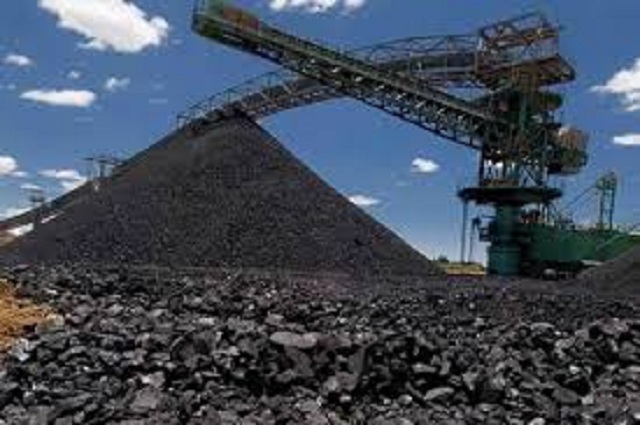
Lindani Dube, Hwange Correspondent
VERY few people would have thought there was any value in coal dumps dotted around Hwange mining town.
It has, however, taken a group of enterprising locals to discover there was opportunity to make money from old colliery dumps. Call it panning or artisanal mining, a new company by the name Hwange Coal Mine Town Ventures (CMTV) has ventured into an unusual territory by reclaiming old dumps to get coal, which they sell to businesses.
Using hand tools like rakes, wheel barrows, picks and shovels and by chance hired front-end loaders and bull dozers, the group is able to generate about $45 000 to $65 000 per month with an average worker taking home around $200 and supervisors about $500 and the highest earner getting $600.
The enterprise has been operating for nearly two-months now and sells its coal to merchants who buy on behalf of industry. Business Chronicle spoke to the group leaders who said they were seized with marketing themselves to customers in small smelters and foundries.
About 70 jobs have been created for locals under the project, which operates from a 100-year-old Hwange Colliery Company Limited (HCCL) No 1 dump site. The project seeks to reclaim coal related products for small scale supply to industry. CMTV managing director, Mr Jacob Ilunga, said the project has generated a lot of interest as many unemployed people see opportunity in it.
“With the high unemployment in our town we decided to engage local people across the gender divide, mainly youths and middle aged people from No 1, No 2 and No 5 villages with or without formal educational qualifications to receive on-the-job training.
“Our aim is to employ more people as we grow and if more dumps for reclamation and rehabilitation are granted to our small enterprise,” said Mr Ilunga.
“We thank Hwange Colliery’s Company management team for accommodating us as a small local business on mutually beneficial terms as well as the community for their buy-in to our vision as we had been trying to get started from 2008.”
He said he had witnessed reclamation of chrome and gold from slag in the Midlands province and thought it possible to replicate the model for coal and coke products.
“We have seen reclamation taking place from dumps in other areas for minerals like chrome and gold in the Midlands province. Being in Hwange we saw many dumps where old machines were used to mine coal meaning that some good products considered out of specification for markets then were dumped.
“We approached HCCL in 2008 and have been trying to convince them of the benefits the project could bring to the community as well as to Hwange Colliery. After long period we got approval to commence on May 5 this year.
“Our activities will also complement the mining policy, which stipulates that dumps should be reclaimed and rehabilitated,” said Mr Ilanga.
He said the No 1 dump, for instance, was last used more than 50 years ago as a dumping site for old coke works, brick making as well as the old thermal power station.
“Due to spontaneous combustion, there would be sporadic fires at the dump, which saw three quarters of usable coal burnt due to self-ignition.
“Our focus is on foundries but the quantities we dig out are low for full scale supply. In our operations we dig out coke for small smelters like nuts, peas, and coal fines used by brick makers.
“We also churn out coal ash, slurry and clay for land filling by constructors and land developers,” said Mr Ilunga.
He said while the dump had previously been an eye sore, plans were underway to level and rehabilitate it to create space for usable land.
“For a long time the dump has been an eye sore, we would like to level it and move to other areas.
“Areas affected by coal mining are vast, we would like to make sure our area of operation is brought to a more natural state at no cost to the miner,” Mr Ilunga said.
He said their young business was inspired by the desire to empower locals and create jobs using available resources in line with the government’s blue-print, Zim-Asset.
“As a company we want to be involved in community development, sports and arts. We will be supporting one football team, various drama groups in the villages and complement HCCL’s many corporate social responsibility (CSR) initiatives,” he said.
Mr Ilunga said their business was determined to abide by safety standards to ensure workers were protected.
“HCCL strongly emphasised the safety component in the set up process and we have taken all measures necessary to ensure compliance at all times. We have also engaged a safety activist and monitor to continually train our employees on safety,” he said.
Ms Diana Malita an employee at CMTV said the project was a good development that benefited unemployed people in the community.
“We can now as young people make a living and many will now be in a position to take care of their families and save to pay for further education,” she said.



 Online Reporter