admin
admin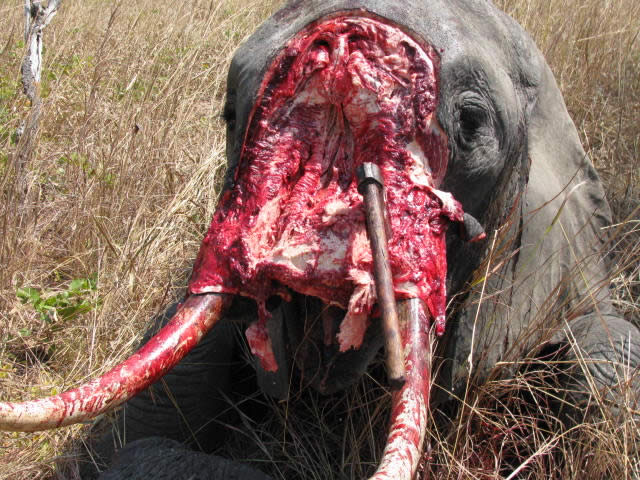
 Dingizulu Mahlathini Moyo
IN his book, The Price of Inequality, Joseph Stiglitz, argues: “If the rich were growing richer and if those in the middle and at the bottom were also doing better, that would be one thing, especially if the efforts of those at the top were central to the success of the rest. We could celebrate the successes of those at the top and be thankful for their contributions.”
The million dollar question that arises in our midst today as we ponder on the words by Stiglitz is where we stand as Zimbabwe, more so in the wake of the unfortunate ecological disaster which is unfolding in Hwange National Park.
In the same book Stiglitz warns: “Decreases in income and decline in standards of living are often accompanied by a multitude of social manifestations.”
These observations become very crucial and of great importance to us Zimbabweans as we seek to untangle and make sense of the ecological disaster that hit Hwange National Park.
In as much as we do not condone criminal activities and would love to see the culprits of the ecological disaster face the wrath of the law, it is equally vital to reflect on what could have led these men to partake in such a horrendous act. This will go a long way in ensuring that such acts do not revisit us in future.
Central to this piece are the following words of Stiglitz: “… if the efforts of those at the top were central to the success of the rest. We could celebrate the successes of those at the top and be thankful for their contributions.”
With reference to the people of Tsholotsho, has this been happening? Who are those at the top and those at the bottom?
Simply put those at the top represent the safari operators holding hunting concessions stretching from Tsholotsho cutting through Lupane and Hwange right to Victoria Falls. Included here is the Government of Zimbabwe through the Zimbabwe Parks and Wildlife Management Authority. Another important player is the Ministry of Local Government, Public Works and National Housing represented by the local authorities of Tsholotsho, Lupane and Hwange.
If the link between those at the top and those at the bottom were grounded on a common cause, the cyanide which is said to be in every homestead of the area under Chief Siphoso would not have been there in the first place.
Actually those at the top and bottom would have celebrated this year’s World Conservation Day in style remembering together that wildlife was their source of livelihood. But there is one partner enjoying the benefits here.
Without mentioning names, there is one man who is one of the Matetsi Unit Concession beneficiaries who has always bragged on how he built an “A” school some distance from where he got his wealth. The point here is let us remember the communities in which we create our wealth.
Any Zimbabwean is free to invest where he or she wants across the breadth and length of our lovely country but business should always value the principle of ploughing back to communities.
The story of the people of Tsholotsho is sad to say the least. The hunger crisis facing the one-time hunter-gatherers in the Mazibula and Dlamini villages in Tsholotsho have also become a permanent feature. This is despite the stubborn fact that Hwange National Park and private hunting concessions which have been racking hundred thousands of the green backs since 1980 share the border with Tsholotsho to the south.
Additionally Tsholotsho district runs a hunting concession which over the years was run by Gariya Safaris. Do the people of Tsholotsho have anything to show for as meaningful development emanating from their marriage with Gariya Safaris? We are told Gariya Safaris who had their long lease terminated, is fighting tooth and nail to be reinstated!
Another point of interest here is the composition of the business community which has taken a lead in the anti-poaching drive. The team comprises Econet Wireless Marketing Director, Isaiah Nyangari; ZIMOCO Chief Executive, Bob Crossley; Major Mahlangu from Mbada Diamonds; Dumisani Mthombeni of Venturas and Samkange Legal Practitioners; Environment Africa Executive Director, Charlene Hewett; Steward Bank CEO, Kwanele Ngwenya; Clive Stockhill from Save Valley Conservancy and Phibion Gwatidzo, the managing partner of Baker Tilly and Gwatidzo.
The biggest question here is where are the safari operators? Anti-poaching can only be meaningful if the safari operators work in harmony with the communities that they operate in. This means that some of the proceeds from the hunting operations should filter to the people.
The inequalities that applied before Independence are the major reason why our heroes of the liberation struggle took arms to free our country, which indeed they achieved and we salute them.
Whereas, those suffering inequality today will not take up arms against their own, if the inequality issue is not addressed then as a nation we have to brace ourselves for more social manifestations such as the Hwange ecological disaster.
l Dingizulu Mahlathini Moyo is a social and political commentator with an interest in black economic empowerment and sustainable community development.


 Online Reporter