Online Reporter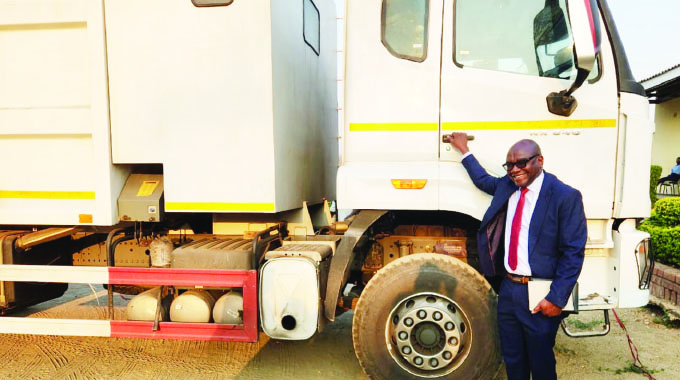
Fairness Moyana in Hwange
HWANGE Local Board (HLB) has received a new refuse compactor under the Ministry of Local Government and Public Works’ capacity-enhancement programme — a development expected to significantly improve waste collection efficiency and ease pressure on the council’s overstretched fleet.
Town Secretary, Mr Ndumiso Mdlalose, confirmed the acquisition, noting the high-elevated machine will complement the local authority’s only other compactor, which has long struggled to cope with the growing volume of waste.
“The new compactor will play a pivotal role in supporting our existing unit by reducing its workload.
“At one point, the old compactor was servicing over 3 000 households on its own and frequently broke down due to the strain,” said Mr Mdlalose.
He added that the new unit will also be deployed to previously hard-to-reach areas, thereby expanding coverage and strengthening waste management across the town.
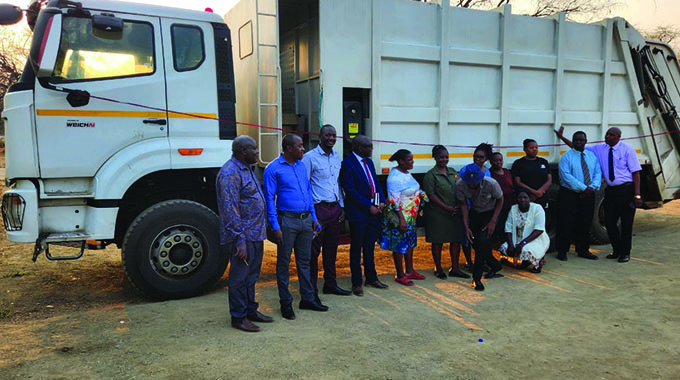
The delivery forms part of a Government initiative aimed at helping local authorities meet Minimum Service Delivery Standards in line with Vision 2030.
Nationally, the ministry has so far commissioned 17 refuse compactors and three tipper trucks out of 85 service-delivery vehicles ordered under the programme.
In recent years, Hwange Local Board has made notable progress in improving service delivery, particularly in refuse collection, sewer repairs, street lighting, and infrastructure development through devolution funds.
The council has constructed and furnished an early childhood development block at Nechibondo Primary School, installed a perimeter fence and water supply at Empumalanga Clinic, and commissioned a medical incinerator.
Revenue collection has also improved, with officials attributing the gains to growing community confidence in council services.
However, challenges remain. Waste collection is still irregular in some suburbs, with illegal dumping and overflowing bins a common sight.
A shortage of heavy machinery — including graders, road rollers and water bowsers — has also hampered the board’s ability to maintain roads, upgrade sewer systems, and open new service stands.
Further complicating service delivery is the fragmented administration of Hwange, where “concession areas” under parastatals such as Hwange Colliery Company, National Railways of Zimbabwe, and Zimbabwe Power Company fall outside the council’s direct control. Critics argue this has created service disparities and “ghost wards” where residents often struggle to access consistent municipal services.
The new refuse compactor is expected to reduce breakdowns, improve the frequency of refuse collection, and extend coverage to underserved areas.
Nonetheless, residents continue to call for further investment in equipment, unified administration of all wards, and sustainable funding mechanisms to ensure consistent and equitable service delivery.