Online Reporter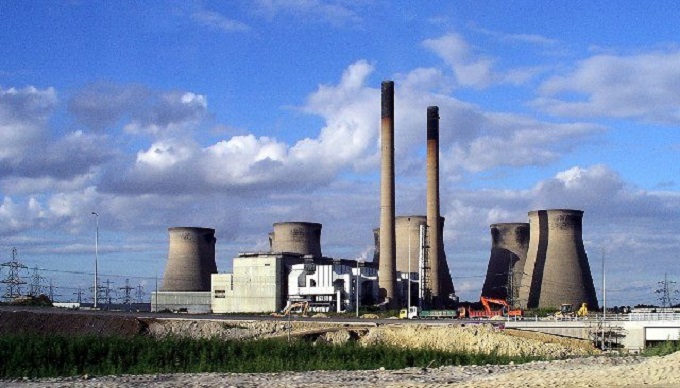
Rutendo Nyeve, Victoria Falls Bureau
POWER generation at Hwange Thermal Power Station has seen a marked improvement following steady progress in restoring units affected by a recent technical fault. The fault, which occurred last month, was the result of an acid ingress incident that disrupted operations, reducing the station’s output to just 498 megawatts (MW) at the time.
In a recently issued statement, Zesa Holdings confirmed that repairs on the affected units had been completed.
“Hwange Power Station experienced a technical fault on May 4, 2025 following an acid ingress incident affecting Units 1, 2, 3, 4 and 6. At the time, the station was generating 498MW of electricity,” the statement read.
Zesa reported that Units 1, 2 and 3 have since been restored and are now producing a combined 212MW, with Unit 3 still ramping up. The total output from these three units was expected to reach 260MW by midday on May 14.
“Unit 4 has successfully passed all safety and performance tests after repairs and is scheduled to be reconnected to the grid on Thursday, May 15, around midday,” Zesa said.
Unit 6, which had initially been brought back online on May 9, developed a separate and unrelated fault shortly afterwards and is offline. It is expected to return to service by May 27.
As of Thursday, national daily power generation had reached 1 370MW, with Hwange Power Station contributing the bulk of the electricity at 929MW, according to the Zimbabwe Power Company (ZPC).
Meanwhile, addressing the National Assembly on Wednesday, Energy and Power Development Minister July Moyo, reaffirmed the Government’s commitment to ensuring that energy supply meets national demand, particularly in light of the country’s drive towards industrialisation.
He stated that the Government is actively engaging Independent Power Producers (IPPs), to help bridge the supply gap, with several already operational in the solar and mini-hydro sectors.
“The aim is to make sure that we bring in independent power producers, who can supplement what the Government is doing. So far, we have several independent power producers — some in solar and others in mini-hydro schemes.
“Others have gone even further by establishing off-grid power systems to localise electricity production for specific industries.
In addition to independent power producers, we also have what we call captive power producers,” said Minister Moyo.
Minister Moyo noted that some producers have gone off-grid to meet localised industrial needs. He highlighted that captive power producers — large industries such as Ngezi and Dinson — now generate electricity for their own operations.
These industries, he said, contribute surplus power to the national grid through the Government’s net metering policy, which allows producers to sell excess electricity to Zesa.
Minister Moyo also pointed out that homeowners can install solar systems and sell surplus electricity to the grid.
“At present, we have 33 megawatts coming from homesteads — those who have sufficient solar capacity for their own use and are now selling the excess to the power grid,” he said.
He encouraged individuals and businesses to take advantage of these opportunities to contribute to national power needs, including potential investment in wind energy.
“We hope that Zesa will continue to encourage homeowners to sell back what they cannot use. We also believe Zimbabwe has significant potential to increase from the current 33 megawatts to over 100 megawatts, just from people who have installed solar systems and other power-generating systems such as biogas and biomass. We encourage them to do so,” said Minister Moyo.
He concluded by stating that the Government welcomes all forms of renewable energy — solar, wind and biogas — to help power the country’s industries, agriculture, mining, tourism and social sectors. — @nyeve14