Online Reporter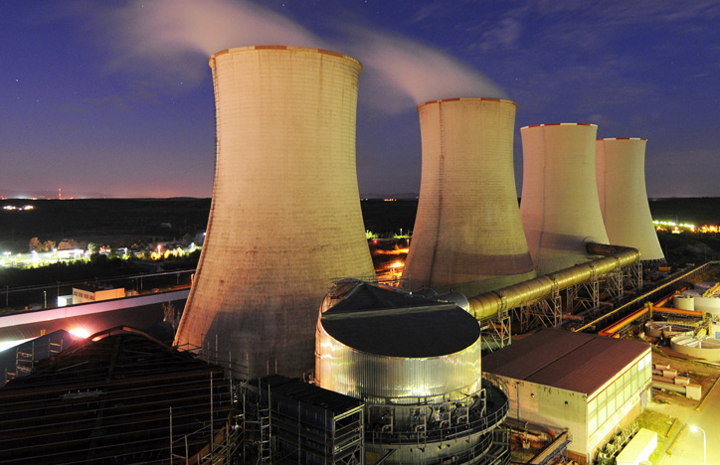
Lincoln Towindo
THE repowering of Hwange Thermal Power Station’s ageing Units 1 to 6 under a partnership between Zesa and Jindal Africa is now awaiting final Cabinet approval, amid growing optimism that Zimbabwe could soon stabilise its electricity supply.
The project, structured as a rehabilitate-operate-and-transfer (ROT) agreement, is expected to boost output from Hwange’s old units from 340 megawatts (MW) to 800MW.
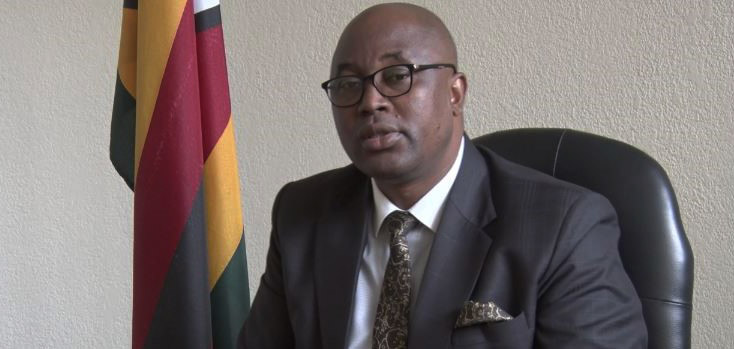
Speaking in an interview, Mutapa Investment Fund chief executive officer Dr John Mangudya said significant progress had been made, with all technical and commercial documentation now complete and under review by the Public-Private Partnership (PPP) Committee, a Cabinet sub-committee chaired by the Minister of Finance.
Once cleared by the committee, the deal will be submitted to full Cabinet for final approval.
ZESA is one of the 20-plus state-owned enterprises placed under the Mutapa Investment Fund – a sovereign wealth fund tasked with managing and unlocking value from strategic state assets.
“Significant progress was made on the agreement between the Zimbabwe Electricity Supply Authority (Zesa) and Jindal Africa for the rehabilitation, operation and transfer of Hwange Units 1 to 6 which is expected to increase the supply of electricity from 340 to 800 MW,” said Dr Mangudya.
“We are at a stage whereby the documents agreed between the two parties are being scrutinised before they go to Cabinet.
“The PPP committee is chaired by the Minister of Finance and the Zimbabwe Investment and Development Agency (ZIDA) is the secretariat.”
Zesa is one of the 20-plus State-owned enterprises placed under the Mutapa Investment Fund — Zimbabwe’s sovereign wealth fund tasked with managing and unlocking value from strategic state assets.
The upgrade of Hwange Units 1 to 6 is expected to complement the recently commissioned Units 7 and 8, which came online in 2023 and are contributing 600MW to the national grid, forming a critical backbone of Zimbabwe’s energy security.
While awaiting final Cabinet approval, Dr Mangudya said, Zesa was already rehabilitating Unit 5 – the most reliable and prolific power generator among the old units at the station – using the power utility’s internal resources.
“What we are also doing now is that before the PPP gets approved we are not stopping,” he said.
“We are already working on Unit 5, which is the one that produces the most electricity. Work is already being done now by Zesa using internal resources.
“This is so that we do not wait for the Jindal Africa deal.”
He said the repowering of Hwange is part of a broader strategies to ensure energy security through both public investment and private sector participation.
These include the rollout of prepaid meters, smart metering and net metering, as well as efforts to accelerate Independent Power Producer (IPP) projects that have stalled for years.
Dr Mangudya said the revision of electricity tariffs had created a viable environment for IPPs to finally take off.
Zimbabwe’s current electricity tariff is now pegged at about US$0,1608 per kilowatt hour, well above the 9 to 10 US cents most IPPs require to operate sustainably.
“It’s a good thing that the issue of the tariff has been sorted… before, when the tariff was lower, that was the issue,” he said. “Now, it’s no longer a question of the tariff.
“That means the many IPPs who have been waiting on the sidelines now have a clear commercial case to kick off their projects.”
To support IPP growth, Dr Mangudya said the Government was working on creating financial structures to de-risk investment, particularly to address repatriation concerns and loan repayment guarantees for both local and international investors.
“Even local investors need to borrow money from outside — for example, to bring in solar panels or build hydro power stations,” he said. “That money needs to be paid back.
“So we are working with the Ministry of Finance (Economic Development and Investment Promotion) to create a structure that gives investors confidence that once they have invested, they will get their money.”
Zimbabwe has long battled chronic power shortages, exacerbated by ageing infrastructure and foreign currency constraints.
The country has an installed generation capacity of about 2 000MW but often produces far less due to breakdowns and underinvestment.
The repowering of Hwange and the renewed push to unlock private sector participation is expected to stabilise electricity supply.


 Bongani Ndlovu