admin
admin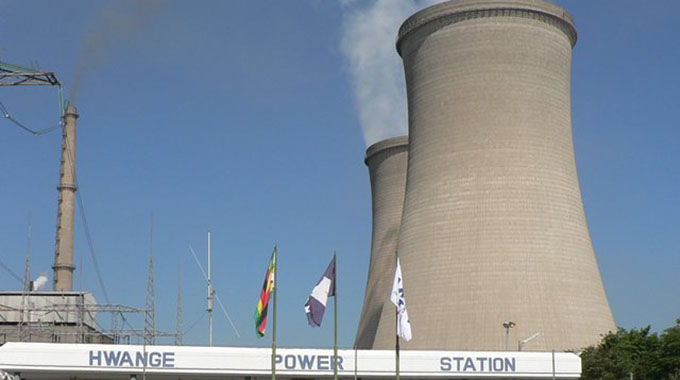
Mashudu Netsianda
Bulawayo Bureau
THE two new units under the US$1,4 billion Hwange Thermal Power Station expansion are nearing completion with a new 250 000 cubic metre reservoir having been constructed, together with an extra water supply, while the necessary reinforcement of the national grid to cope with the extra supply is almost complete.
The relocation of a suburb where people would be breathing too much flue exhaust is in progress while the remaining auxiliary systems are almost ready.
Projected to inject an additional 600 megawatts to the national grid, the first 300MW unit is set for commissioning in November this year, with the other coming on board in the first quarter of 2023.
Commissioning of Unit 7 auxiliary systems is ongoing with systems such as the water supply to the boiler, auxiliary boiler, fire protection system and auxiliary transformers having been commissioned.
When fully commissioned, the project will help Zimbabwe tame electricity imports and drive increased industrial production with guaranteed electricity, which is a key economic enabler.
The Hwange Thermal Power Station Unit 7 and 8 expansion project is one of the flagship projects being implemented under the Second Republic in line with Vision 2030, which aims to transform Zimbabwe into an upper middle-income economy.
The project began in August 2018 following a ground-breaking ceremony by President Mnangagwa while the main construction of two additional coal-fired units of 300MW capacity each was started in March 2019.
The project is funded by China Exim Bank and is being executed by Sinohydro and the Government of Zimbabwe through the Zimbabwe Power Company, a Zesa subsidiary, and is expected to be a game-changer in terms of enhancing power supply in the country.
In an interview, ZPC project manager Engineer Forbes Chanakira said they have completed 345 km of the extra 368km of transmission line meant to take the generated power from the extension to the distribution points. This requirement means the doubling of some major national grid lines to handle the increase in power.
“The commissioning of Unit 7 auxiliary systems is ongoing with the water supply to the boiler, auxiliary boiler, fire protection system and auxiliary transformers having been commissioned.
“The Unit 7 is expected to be started up in November with all systems in place,” he said.
The commissioning of the plant auxiliaries is a pre-requisite to the running of the main units, both of which are expected to be in full operation in February next year.
The water treatment plant is one of the major components in the generation of power as it is responsible for turning the turbines.
Water coming from the treatment plant goes into the boiler and is heated to form steam.
Eng Chanakira said to cope with the daily water demand for Unit 7 and 8 which is 1 860 cubic metres per hour, a new 250 000 cubic metre reservoir to complement the existing one has been constructed as part of the expansion project.
Eng Chanakira said the main challenge that delayed the project was Covid-19 which at its peak affected the design of various systems and manufacturing as most factories were closed across the world.
“Covid-19 also affected us in terms of logistics as we could not get delivery of various equipment and material. We also could not be able to mobilise the original equipment manufacturers as well as experts to support the construction works in Zimbabwe,” he said.
“Notwithstanding these challenges, the contractor Sinohydro remained steadfast and pushed the project despite those Covid-19 related challenges.
“Our ZPC team also continued with the work despite the risk and that is why we managed to cover a lot of ground.”
Eng Chanakira said the project has generated employment for more than 4 000 local people in the area.
“More than 4 000 local people have been employed directly by the project and in excess of 3 000 have been employed indirectly including subcontractors, suppliers of goods and services,” he said.
Eng Chanakira said the project will see more than 400 families from Hwange’s Ingagula suburb situated near Hwange Thermal Power Station being relocated to a safer spot.
“The affected households will be compensated in line with our relocation action plan approved by the Environmental Management Agency (EMA),” he said.
Ingagula is exposed to pollution due to its proximity to the power plant. The suburb has been in existence for decades with residents enduring air and land pollution from flue gas.
“The amount of discharge will be extreme after the completion of Units 7 and 8 hence the need to relocate the families.
“The thrust is to relocate all people from Ingagula to a new housing area where more than 600 houses will be constructed,” said Eng Chanakira.
“We are constructing 74 houses for people who will be affected along the new powerline, and 13 have already been handed over to the beneficiaries in Epping Forest.
“However, the estimated relocation cost is yet to be finalised.”
EMA gave ZPC an ultimatum to relocate Ingagula residents before commissioning the expansion project.



 Online Reporter