admin
admin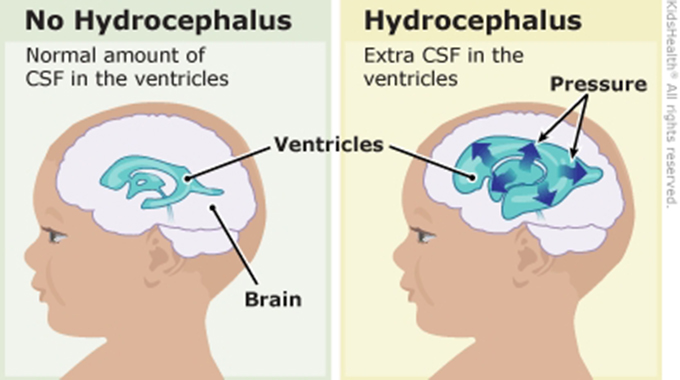
Rumbidzai Zinyuke Senior Health Reporter
When Sinikiwe Mpofu (not her real name) gave birth to her daughter 32 years ago, she was filled with the overpowering love only a mother can have for their child.
She hoped to see her daughter go to school; graduate, become successful and some day give her grandchildren.
She had big dreams. Dreams that fate didn’t deem fit to be fulfilled.
Three weeks after she was born, Precious (also not her real name) suffered from meningitis and was admitted at Mpilo Hospital in Bulawayo. After receiving treatment, she was sent back home and for the first time parents, it meant everything was back to normal.
But that was not to be.
At three months, the little girl’s head started swelling. When they took her back to the hospital, Sinikiwe received news that would forever change her life.
Her baby was diagnosed with post-meningitic hydrocephalus, a condition that causes an abnormal build-up of fluid in the ventricles deep within the brain making the head grow big.
That was the beginning of the most difficult journey a parent can ever walk.
“Since my husband was working in Harare then, I asked for a transfer to the capital city where the only two neurosurgeons in the country were based.
“The doctors faced challenges in inserting the shunt (a tube inserted into the brain to help drain the extra fluid and move it into the abdomen where it is absorbed by the body to lower pressure and swelling in the brain) as it kept blocking. Eventually it was inserted,” Sinikiwe said.
“Over the years, Precious had to endure 10 surgeries. My husband was a teacher and I was a student teacher by then so funds were limited, so we did the best we could.”
With Precious being the couple’s first child, they did not know which stage she was supposed to be at any given point so they missed most signs that the baby was developing at a slower pace than normal.
At age three, Precious could not walk, or sit. She had to be carried around on her mother’s back.
To make matters worse, she had asthma. So each asthma attack brought with it regression in any progress made.
The tiring trips to Harare and back for physio-therapy, the physical exhaustion and the financial burden were too much for Sinikiwe and her husband.
And her husband bailed on her.
“My husband failed to accept that our child had a disability and he asked what would become of such a child. He just left us,” said Sinikiwe.
A little later, a friend whose mother worked at King George Centre, a school for children with physical disabilities, hearing impairments and learning disabilities, helped her get her child into school.
Precious started getting more physio-therapy while her mother got counselling and other services.
But the little progress they had made did not last. In 1998, Precious had a severe asthma attack that almost killed her.
“She had made so much progress through physio-therapy and could even move on her own by that time. But she relapsed as a result of the attack and unfortunately she couldn’t get help on time due to financial challenges and her right hand and leg became paralysed. Her left side lost mobility by 50 percent and she would sometimes have seizures,” said Sinikiwe.
The doctors thought the seizures could be caused by the shunt and decided to have it removed, but the pipe had become stuck in her brain and they failed to remove it.
As a result, Precious partially lost her eyesight.
The burden of infant hydrocephalus in sub-Saharan Africa is estimated at approximately 750 new cases per 100 000 live births.
The incidence of the condition is higher in Africa and Latin America than it is in high-income countries.
The majority is caused by neonatal infection, and should thus be preventable.
However, cases of survival in untreated hydrocephalus are few.
Approximately, 50 percent of the affected patients die before three years of age and approximately 80 percent die before reaching adulthood. With appropriate early treatment, however, many people with hydrocephalus lead normal lives with few limitations.
In Zimbabwe, the incidence of hydrocephalus is estimated at 2 in every 10 000 live births, although the figures might have doubled over the past years.
Due to lack of awareness, most cases go unidentified and untreated. The stigma also associated with the condition makes some parents decide to hide their children away instead of getting them the help they need.
For Sinikiwe and Precious, the journey has been long and difficult.
“People are not merciful, they will say nasty comments about your child, talk about her big head and they don’t even think about the impact of their words on you or the kid.
“I have since learnt to stay in my home with my child. We do not visit people in their homes because I do not want to put her through that. I do not have a social life at all and I prefer it this way,” said Sinikiwe.
At 56, the thought of remarrying has not entered her head.
If Precious’ biological father failed to love her, what other man would accept her?
With no husband or friends to stand by her, her family was her only pillar of strength.
“I thank God I had my parents and siblings for support. They helped me to stay strong for my baby. At one time, my mother took my child and stayed with her in the rural areas. She used her own methods and trained her to sit. My parents were both teachers and they used the little resources they had to help me take care of Precious,” Sinikiwe said.
Unfortunately, Sinikiwe’s father died in 2010 and her mother came to stay with her and the child since she was not feeling well.
Until July this year, when she also died, her mother was the only other caregiver for Precious.
Suddenly, the burden was all hers again.
“My number one supporter was no longer there and I had to cope on my own. Although my siblings help me out, they cannot be here to help me 24/7, so it’s now just me and my child, who is now an adult,” she said.
Although Precious is now an adult, she still needs diapers as she cannot feel when she has to go to the toilet. She needs to be physically lifted to take a bath or go to bed.
Ideally, she would need a nurse to take care of her but Sinikiwe does not have the money to hire one. When she goes to work, she locks Precious in the house and then comes back home to start cleaning her and feeding her.
While Precious is one of the few hydrocephalus patients to survive into adulthood, hers has been a difficult life.
At the time that she was born in 1989, the country had only a few specialist doctors and Bulawayo had none.
Because her parents had to travel to Harare for treatment every month, the financial burden became too heavy for them and she missed some doctors’ visits.
Last month, Mpilo Central Hospital received its first neurosurgeon in over two decades and in partnership with Hydrocephalus Foundation, opened a ward that will provide specialist care for children with hydrocephalus.
This now means, children like Precious who hail from Bulawayo, Masvingo, Matabeleland North, Matabeleland South and Midlands no longer have to travel to Harare for specialist care.
Hydrocephalus Foundation founder Pastor Lynn Ndlovu said the partnership with Mpilo had been a step to close the gap that existed in the provision of healthcare for such children.
“There are a lot of children with hydrocephalus out there who are not getting the help they need to lead normal lives. We wanted to meet halfway with the neurosurgeons at the hospital to offer some of the services that they cannot offer,” she said.
She said some of the children fail to get follow up services after surgery due to the distance factor and the presence of the ward at Mpilo would allow for counselling and assessments to be done.
“Most of these patients die at a very young age. They come from disadvantaged backgrounds and most of their parents are not exposed and will not think that this condition can be treated. Some of the children are neglected and they don’t get proper medical care. For patients like Precious who have lived into adulthood, it is usually because their parents are educated and knew to seek medical attention earlier on,” said Pastor Ndlovu.
Although care for the patients is now available, there is very little in terms of support for the caregivers.
If Sinikiwe had not had her family, it would have been her burden alone to care for her child. And she wishes for other parents whose children have the same condition to get support.
“The mother is really the most affected in such scenarios and they need all the support they can get. On my part I was blessed to have my parents but there are people who have no support system. It is important that the Government comes up with more interventions to help children with this condition and also help the caregivers to deal with it. I feel there is a need for parents with children with this condition to form social support groups that will help them to come together and give each other support.
“When I was training at college I was told that children learn better from their peers and I believe the same goes for parents of children with disabilities. We can learn a lot from each other,” she said.
Pastor Ndlovu said the Foundation was hoping to eventually move towards having such support groups.
For now, they are working towards utilising the 1400 hectare piece of land donated by the Bulawayo City Council.
With the help of partners, the Foundation has plans to build a school, a hospital and start income generating projects that will help children with hydrocephalus get better lives.
“We want these children to be able to go to schools that cater for their needs, be attended to in hospitals which they can afford and we hope this will happen soon. We are hoping to get more partners to come on board so that we can realise this vision sooner than later,” Pastor Ndlovu said.
What they hope to achieve, if successful, will help in the achievement of Sustainable development goals three and four which seek to ensure healthy lives and promote well-being for all at all ages and ensure quality education for all.
Hopefully, others like Precious and her mother will get the help they need to live normal or near-normal lives.



 Online Reporter