Flora Fadzai Sibanda, [email protected]
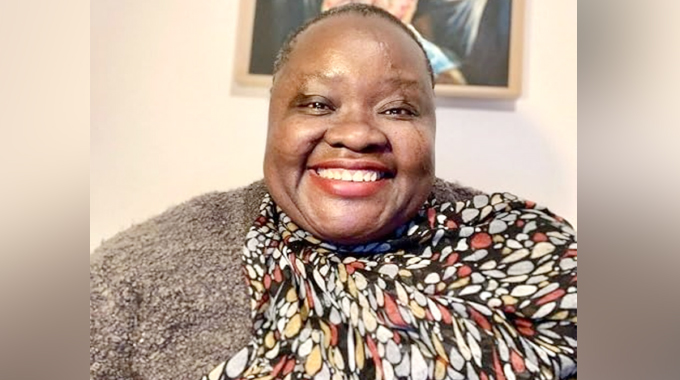
WHEN Ms Wadzanai Garwe went for a routine HIV test at the age of 26 to secure an insurance policy, she never imagined the results would shape the next 33 years of her life.
The year was 1992 and HIV/Aids was widely regarded as a death sentence. For Garwe, a young woman and daughter of the late former Minister of Education, Edmund Garwe, the diagnosis carried more than a medical burden.
It came with fear, stigma, isolation and the possibility of rejection from loved ones and society.
“I had tested for HIV because I wanted to get insurance, which was being sold by a friend. So to get insurance one had to be tested. I went in with my then boyfriend, who later became my husband, to collect my results and was devastated when I learnt that I was HIV positive,” she said.
“Because the virus was just starting out, I think even healthcare workers did not know how to break the news to patients because I never got any counselling. I remember a nurse just saying, ‘I can’t give you insurance because you are HIV positive.’”
Garwe said her boyfriend comforted her and assured her that life would continue.
Overwhelmed by the diagnosis, the couple relocated to Mozambique where they started a new life.
“I stopped attending funerals and visiting people affected by Aids because it made me anxious. I kept wondering if I would also die a horrible death from an opportunistic infection. At that time, the virus was a pandemic and people were dying every day,” she said.
Two years later, Garwe fell pregnant. Instead of joy, the pregnancy brought fear.
“When I discovered I was pregnant, I was devastated because I kept thinking, what if I transmit the virus to my child? I carried to full term and gave birth naturally and at that time we had not informed anyone that I was HIV positive, including my doctor,” she said.
“The doctor only found out eight months after I gave birth when I finally gathered the courage to have my son tested.”
To her relief, her son tested HIV negative. Garwe, a professional economist and humanitarian advocate, said doctors explained that her CD4 count was still high, significantly reducing the risk of mother-to-child transmission.
CD4 cells are white blood cells that fight infection and are the primary cells targeted by HIV. A healthy person typically has a CD4 count of between 500 and 1 500 cells per cubic millimetre of blood.
“After that, I promised myself I would never have another child because I did not want to go through the trauma of wondering if my baby would be infected,” she said.
“However, as destiny would have it, in 1997 I fell pregnant with my second child soon after losing my father.”
By then, antiretroviral (ARVs) therapy to prevent mother-to-child transmission had become available, although it was expensive.
“The doctors told me I would have to deliver by Caesarean section and not breastfeed so that we reduced the risk of infecting the baby,” she said.
“Mind you, my husband was still HIV negative and I still had not shown signs of being ill. Also, none of my family members knew about my status.”
Garwe and her husband were a discordant couple, meaning one partner was HIV positive while the other was negative.
She gave birth to a daughter, who also tested HIV negative.
However, life took a dramatic turn in 2003 when Garwe was involved in a serious accident that weakened her immune system.
“A few months after the accident, I became very ill and was admitted to hospital. I remember the doctor coming to me with a long face and telling me I was HIV positive. I laughed and told him I had known for years,” she said with a smile.
Doctors diagnosed her with pneumonia linked to Aids and immediately started her on antiretroviral therapy.
“My doctor emphasised that once I started taking medication, I should never stop. Although I had begun treatment, they were still not optimistic that I would survive,” she said.
“I remember my doctor asking if I had written my will and if my affairs were in order.”
It was also the first time her family learnt about her status.
“My mother was disappointed that I had not trusted her enough to tell her.”
But Garwe defied the odds.
A year after starting treatment, her health improved and she continued living a productive life.
In 2016, she publicly disclosed her HIV status and dedicated herself to advocacy. In honour of her late father, she established the Edmund Garwe Trust, an organisation that focuses on education and supporting child-headed households affected by HIV.
Today, more than three decades after her diagnosis, Garwe is living proof of how far HIV treatment has come.
“I am happy that 33 years later HIV is no longer a death sentence but a chronic condition that can be managed. As I continue taking my medication, I am among the few people contributing to research on ageing with HIV,” she said.
Reflecting on her journey, Garwe said one decision made all the difference.
“I was diagnosed when HIV was still deadly and killing one in four people, but I chose life. Always seek treatment early, take your medication consistently and listen to your doctor’s advice because HIV is not the end of life,” she said.