Mbulelo Mpofu, [email protected]
Thirteen years after its publication, Sukoluhle “Sue” Nyathi’s The Polygamist has become a global streaming phenomenon, finding a powerful second life on Netflix and igniting worldwide conversations about its gripping characters and emotional depth.
What began as a long, uncertain journey over more than a decade has now culminated in one of the most talked-about African series on the global platform, firmly placing Nyathi’s storytelling on the world stage.
For the Girls College alumna, the moment remains surreal. Watching her fictional world come alive on screen, the award-winning author admits she had to repeatedly remind herself that it was real as her characters stepped off the page and into living, breathing performances.
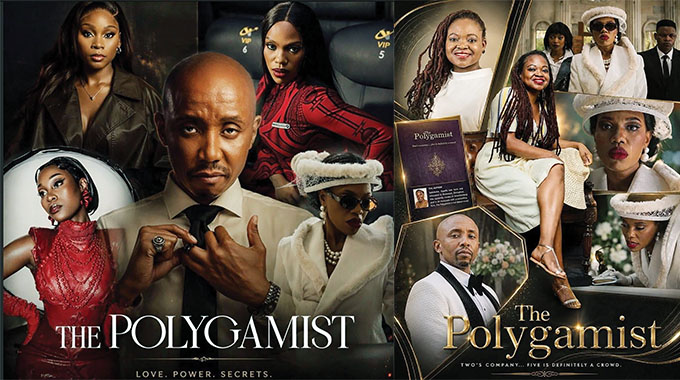
Following the breakout success of the adaptation, Nyathi says she now wants deeper involvement in future screen translations of her work, including titles such as The Golddiggers — a project she believes should be driven by Zimbabwean creatives, whom she says possess the talent and vision to tell their own stories on a global stage.
Zimpapers Arts and Entertainment Hub’s Mbulelo Mpofu (MM) spoke to Sue Nyathi (SN) on Thursday.
Below is the interview.
MM: Thirteen years after its publication, ‘The Polygamist’ has found new life on Netflix. Did you ever imagine the story would reach this scale of global visibility?
SN: No, I don’t think I would have imagined that it would have received this kind of reception, to be honest with you. It has literally surpassed my expectations. And I think not just for me, but for everyone on the production team. We were all amazed at what happened following the premiere. None of us expected it. The production team was confident that it was a brilliant, well-made piece, but we didn’t expect the scale of the response. It’s amazing, absolutely amazing.
I don’t even have the words, and for a writer not to have words to explain it, it just shows what it means. I look at how many times people have tried to adapt it over the past 13 years. It’s not like there weren’t attempts; people were trying. I think the timing just wasn’t right. When we started, there were no streaming platforms. Maybe the book was waiting for such a time as this.

MM: What was your first emotional reaction when you saw your characters fully brought to life on screen by a major streaming platform?
SN: I was in shock. I was like, ‘Did I create that? Wow, I did that.’ It’s one thing having a book in print form, but it’s quite another to actually see it; it’s like a visual representation of your characters coming to life. I was in awe of what I saw. I had to pinch myself and ask, Yimi lo sibili? It was so emotional. Even as the writer, I was on the edge of my seat, anticipating what would happen next,” she said (laughs).
MM: Jonasi Gomora is a deeply complex character. Is he entirely fictional, or is he inspired by people you have encountered or observed in society?
SN: Jonasi is a work of fiction. I have come to realise that he is a narcissist, and I didn’t see him that way when I wrote the story. It’s only now that I understand that’s what he is — his character embodies that. He is not based on anyone. I see people saying he is based on someone in Harare, but that’s not true. The fact that so many people can point to Jonasi is a testament to the strength of the characterisation; it cannot be a single person.
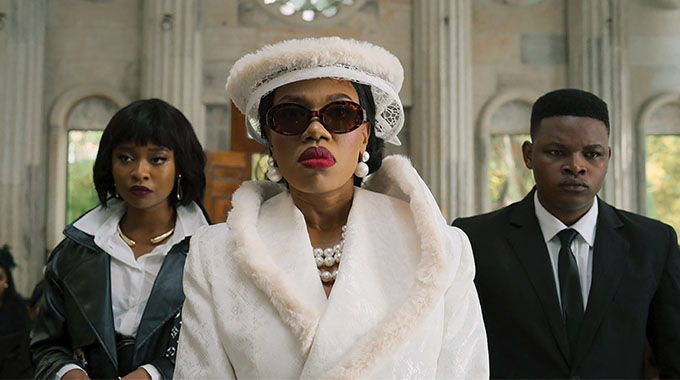
People are now saying, ‘My father, brother, or husband is a Jonasi,’ so it clearly cannot be one individual. As an empathetic writer, I try to write characters that I inhabit. When I write a character, I become that character in the story. That’s why I can write without judging them — I become Lindani, Matipa, and all the other characters.
The series is popular because people can relate to the characters. Although the characters are South African in the series, they are originally Zimbabwean, and the adaptation made that possible. In South Africa, Nigeria, and everywhere else, there are Jonasis.
One more thing, Jonasi didn’t die, he multiplied.
MM: The surname “Gomora”. What informed your choice of the name in the novel, and what deeper meaning, if any, does it hold?
SN: I took it from the Biblical city of Sodom and Gomorrah. That’s the deeper meaning. If you read the Bible and you understand the context of Sodom and Gomorrah, then you’ll understand why I used that surname. Our world is like the Biblical Sodom and Gomorrah now.
MM: How closely were you involved in the Netflix adaptation process? Did you have any influence over how the story was interpreted or reshaped for the screen?
SN: I was not involved in the adaptation process. Thuli Zuma, the renowned executive producer, director and head of story behind The Polygamist, was the driver of the adaptation, together with Gugu Zuma-Ncube, a renowned South African television producer, actress, and businesswoman, and co-founder and executive producer of Stained Glass.
They worked with a writers’ team, with Busisiwe Zwane as head writer. Every episode credits a writer, so it was a collaborative effort — and that’s what film-making is all about.
They made a few changes from the book, and those changes enhanced the story. I could live with that. It’s often difficult to have the author too closely involved when adapting their work. I was happy when I read the scripts, because as I turned the pages, I knew it was going to work.
MM: The Netflix adaptation has introduced your work to a global audience. Do you feel pressure now to write with international appeal in mind?
SN: No, we are not changing. I’m still going to write distinctly African stories. There’s more where that came from. I feel like our stories are not being told enough and haven’t been heard enough for me to now digress. There are a lot of international stories, and I don’t need to write them.
This is what has catapulted me into the limelight, the African stories. So, I’ll stick to what I do best. There’s a danger when you are trying to just follow what others are doing, so I’ll continue writing what is authentic to me.
MM: Do you see yourself transitioning more into screenwriting or film production following this success?
SN: Everything starts with the story. You have to have a solid story. If you have a bad story, even if you have great actors, they will not be able to pull it off. The basis of any film is the story. Unfortunately, writers are always undermined in this ecosystem; people always focus on the people that they see on screen, but if it wasn’t for that dialogue and story, there wouldn’t be any show. I will continue working on stories, and yes, I think I would like to have an active involvement in translating my stories from the page to the screen, especially books like, The Golddiggers. This is a story I would like to see being told by Zimbabweans.
We cannot continue to allow others to tell the stories that we, as Zimbabweans, write. We have a wealth of talent that deserves to be showcased, and that is what I want to see being heavily involved in the adaptation of our own stories.
MM: Looking back at your journey with The Polygamist, you’ve spoken about moments of frustration and persistence. What kept you going during those slow periods?
SN: Looking back at the journey, I did get frustrated at times when things weren’t moving. But because I had a love for writing, I kept going. That’s why I went on to write three other books after The Polygamist.
I’ve always loved writing, and I never gave up. I told myself, ‘It will happen one day,’ and I hope that encourages writers who feel their work is not getting visibility or are writing in obscurity, because for most of us, that’s the reality.