Chronicle Editor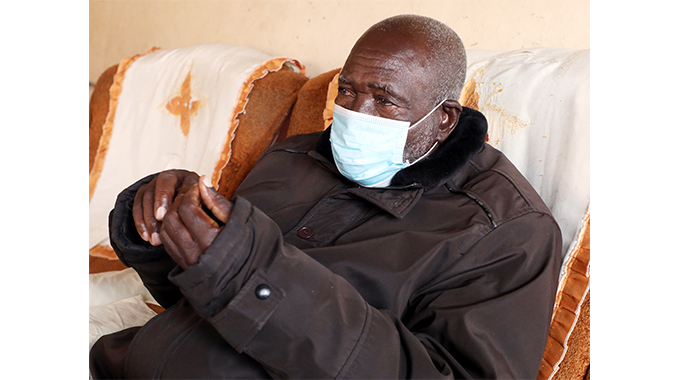
WE round-up our interview with veteran freedom fighter Cde Moffat Hadebe pseudo name Cde Morris Dhlomo. Cde Hadebe a recent recipient of the Grand Officer of the Zimbabwe Order of Merit from President Mnangagwa has through a series of interviews with our Assistant Editor Mkhululi Sibanda (MS) spoken about his early political activities, guerilla training in Zambia, attack on Zidube Ranch in 1964, capture and then escape from Grey Street Prison (Bulawayo Prison), further training in Algeria and being in command for the Sipolilo (Guruve) Campaign in 1968. In this last instalment Cde Hadebe speaks about how he was captured in Mozambique together with his colleague, Cde John Zvandanda. Below are excerpts of the interview:
MS: After being harassed by the Rhodesian forces, what eventually became of you?
Cde Hadebe: We were scattered and our supply group, a number were captured while others including Mbhejelwa Moyo crossed back into Zambia. With the Rhodesians harassing using both ground and air attacks, it became difficult for us to co-ordinate and this was because our communication equipment, the radios were no longer functioning properly like before. Everywhere there were contacts and some comrades slipped through the enemy lines and moved into farms in Mangula (Mhangura).
Schools were forced to close, there was fighting all over. I and the unit I was with we found ourselves in the centre, we had moved from Chewore towards Sipolilo itself, we were in the middle of the game reserve, we were along Angwa River where we had set up makeshift bases. Even issuing of orders became difficult. In the section I was in I had Fanuel, John Zvandanda and Melane.
Then the commissar of the detachment and of the section decided to go to the villages to check or assess the situation, but unfortunately, they fell into a Rhodesian ambush. Melane was killed there while the other comrade was shot and injured on the leg, resulting in his capture. Thina sasala. Now we were heading towards Mozambique, from Kanyemba, Feirra is not that far.
It borders Zimbabwe, Zambia and Mozambique. We were now pushing towards that. All those sporadic contacts were long drawn, imagine playing and cat mouse with the Rhodesians from March up to August. So, the Sipolilo Campaign was not a one-day event, it was a series of battles.
MS: But did you still have ammunition?
Cde Hadebe: As for ammunition we were still okay, maybe some are still hidden there, rotting there. But a comrade who was part of the logistic unit, Natsho Masuku was captured and he revealed where some of the caches were located and that was after heavy torture. We kept on splitting into smaller groups, then I was left with Zvandanda, the two of us.
MS: The two of you were then finally captured, take us through what happened.
Cde Hadebe: We had crossed into the Mozambican side near Feirra and we had put our lives in the hands of the villagers. Language was not a factor because Shona is spoken there as well. Zvandanda was Shona speaking and I also spoke and still speak good Shona as well.
Remember I had stayed and worked in Harare before joining the armed struggle, so we had no problem in Mozambique, we just seamlessly blended with the masses. We were still armed with AK-47s, but when approaching the villagers we will hide our weapons. We will leave them camouflaged somewhere. However, myself l will be having a pistol concealed.
MS: Then how were you captured?
Cde Hadebe: A local man went to a police station in Feirra where he told the police that there were some men he did not understand. He then told them that those men, referring to us are likely to be at such, such place. What I should bring to your attention is that during those days, that is 1968 even Frelimo had not started operating at that place.
Then the Portuguese security personnel swopped on us while we were in the village. They surrounded us after being led by that man and it was in the evening.
MS: What was your story to the villagers, they should have wanted to know why you were there.
Cde Hadebe: We had told them that we were coming from Rhodesia as they could tell by the language, as we spoke to them in Shona. Our story to them was that we had spiritual problems, so we were looking for an inyanga to assist us deal with that problem. We had been told that there was a famous nyanga there commonly known as Short, so we said we were looking for him.
We used that to buy time while we were crafting our next move. Unfortunately, we found ourselves surrounded by the Portuguese. From where we were captured the nearest police station on the Rhodesian (Zimbabwean) side was Kanyemba Police Station. When the Portuguese surrounded us, we did not offer resistance as at first, they were arresting us because we did not have documents.
After saying we did not have travelling documents they demanded our IDs, which also said we did not have. After that they took us to the police station. Since the atmosphere was not that hostile I slipped the pistol to a man, a villager whom we had befriended. Things changed when we got to the police station.
MS: How?
Cde Hadebe: There at their police they had my picture as one of the people who were on the police wanted list because of my escape from Grey Prison (Bulawayo Prison). So, our story that we were looking for an inyanga fell flat and they were very excited with our arrest. The picture sold me out. The Portuguese then called Rhodesia to alert them about our capture. The Rhodesians came on a boat the following afternoon. It was the Rhodesian Special Branch.
MS: How did they react when they saw you?
Cde Hadebe: A white officer said ‘yaa you Hadebe you always escape’ while another said ‘let him go so that we capture him nicely in a battle’. They were mocking me. We were handcuffed and put in leg irons and taken to Kanyemba. They did not subject us to torture as they said they had all the information about me, which they got from the comrades who had been captured before us. They said I had been implicated by many people.
All those captured were saying ‘our commander Hadebe knows everything’. From Kanyemba we were flown in a Dakota to Sinoia (Chinhoyi) where we were kept under heavy guard before being flown to Salisbury (Harare). We were to be thrown into Harare Central Prison where we found others. All members of my group who had fought in the Sipolilo Campaign and had been captured had all been sentenced to death. However, those who were part of us but had been members of the supply unit had been spared the death penalty and sentenced to 20 years in prison each.
Those sentenced to death were about 20 or so. We then appeared before Justice Anthony Gubbay, who until 2001 was the country’s Chief Justice. He sentenced me and Zvandanda to life in prison after we were charged with acts of terrorism. Members of my unit Obrey Mdletshe, Marshal Forster and Hlatshwayo were State witnesses against me.
They had been sentenced to 20 years. In passing sentence Justice Gubbay then described me as a very dangerous person who deserved life in prison, the same sentence was given to Zvandanda. I as the commander had been given life, subordinates death, which was later commuted to life as well because I think they realised they could not kill so many people.
MS: How did you feel when the sentence was read out?
Cde Hadebe: I accepted my fate; I had expected worse. Then one day we were told that all those who had been sentenced to death, those from Sipolilo, Wankie their sentences were reduced to life imprisonment. The same applied to comrades from Zanu. I was later transferred to Khami Maximum Prison where I met the current State President, Cde Emmerson Mnangagwa.
We were later on to serve with the current Vice-President of Zanu-PF Cde Kembo Mohadi who also had been captured. At Khami I was to reunite with Cdes Keyi Nkala and Elliot Ngwabi whom we had escaped together with from Grey Prison. But Clark Mpofu was not there, he should have been in whawha.
MS: It looks like most of you guys, the early guerrillas you were being captured, what do you attribute that to?
Cde Hadebe. The problem was there, but I don’t want to blame anyone. I would rather blame myself. Mina ngingazisola kwesinye isikhathi.
However, the way we were deployed in large numbers was betraying us. At first we were happy that we had moved in large numbers, but we did not realise that the enemy forces would find us easily. We had not assessed the situation carefully.
The other issue is that the masses had not been properly politicised, our people were not yet ready to receive the guerillas and be part of the war.
In fact, in the 1960s very few believed that the colonial regime could be defeated. My only regret is that all these early guerillas who were either killed or captured were very good fighters, well trained and brave. They did their best, we lost part of the cream of our armed struggle. I derive positives from the early battles in that a lot of lessons were drawn from there, we became case studies for future generations of fighters.
MS: After the ceasefire did you go to the Assembly Points like others?
Cde Hadebe: No. When everybody was released from Khami I was left behind. I was not released with others, that’s why I did not go to the APs like others.
MS: Why did you remain behind bars?
Cde Hadebe: Up to now I have not found the answer. What happened is that when all the detainees including captured guerillas were set free, the authorities at Khami chose to keep me and two other guerillas, Cdes Sly Masuku from ZPRA and Lloyd Gundu from ZANLA in prison. Up to now I don’t understand what was happening. Later on
Cdes Masuku and Gundu were released and still I remained behind bars.
When everyone was celebrating the coming of independence I was still at Khami. I remember the process to integrate ZPRA, ZANLA and Rhodesian Army started when I was still behind bars. There was a time when some ZANLA and ZPRA guerillas were thrown into Khami Prison after they had fought, they had not shot at each other, but they had fought physically.
When they got to the prison they were thrown into the cell where I was. They could not believe that I was a guerilla, they said I was a stock thief. But iwewe urimbavha, wakaba mombe. Wena ulisela lenkomo. In that euphoria brought about by the independence everyone had forgotten me I suppose. Then as fate would have it I was finally released, but I had another problem.
MS: What again?
Cde Hadebe: I had no clothes, when I removed the prison garb that was written ‘danger danger’ in red, I found myself without clothes and shoes. I had nothing. So, the prison superintendent gave me a very old uniform belonging to prison wardens. I walked out of Khami Maximum Prison in tatters and barefooted because I had no clothes. I felt sad, very sad. I had been in prison since 1968.
I had left my home as a youngster at around 23 to fight for the independence of my country. Here I had been forgotten by even close comrades, I was no longer a youth, I had spent all my youthful years either in the bush or prison. In 1980 I was 43. I went to my sister’s home in Njube, then later the late Agrippa Madlela invited me to his home in Lobengula West and I stayed there.
I then went to the Christian Care offices in town where I was given money to buy clothes and shoes. I re-united with Sly Masuku who was staying in Makokoba. Later on Tshinga Dube, who had become a member of the Committee responsible for integration, demobilisation and selection to form the Zimbabwe National Army (ZNA) came down to Bulawayo to look for me and Sly Masuku. He took us to Harare where we joined others who were earmarked to be senior officers in the ZNA and were living at the Lundi Flats. We were also given apartments there.
MS: So, you joined the ZNA as an officer?
Cde Hadebe: It did not happen that way. One day we were called to a meeting with senior ZPRA commanders, Dumiso Dabengwa, Enoch Tshangane (Major-General Jevan Maseko) and Joseph Zwangami Dube who became a Colonel in the army. They sat down with me and Sly Masuku and told us that we were not being integrated into the army. We were shocked.
MS: Did they spell out the reasons why you were not joining the army?
Cde Hadebe: They told us that some people whom they did not mention were not comfortable with us being in the army. As for me they said some former Rhodesians were not happy with me because I was a dangerous guerilla who had embarrassed them with my escape from the Grey Prison.
Sly Masuku’s sins were that he had killed some Rhodesians, a certain Rhodesian soldier’s name was mentioned.
There was also the issue of our ages, we were told that we were too old. But if you are to closely analyse some comrades whose names I would not mention were integrated and given senior ranks despite the fact that they were much older than us. We had no choice but to accept our fate.
We were told that we would be accommodated into Nitram which was headed by Dr Isaac Nyathi. Our wish was to leave the army with ranks, we had been soldiers all our life whether we had been in prison. I was to work briefly at Nitram under Sam Mfakazi before Swazini Ndlovu, our former intelligence officer found me a job at Ingwebu where I became a sales clerk.
MS: In conclusion you have been given an award by the President, what are your comments on that?
Cde Hadebe: I have to thank the President for that. We have been asking for such recognition, although it came later on in our lives, it’s better than never. I should mention that I like the way President Mnangagwa is doing his things, there is a great departure from the previous Government.
I hope people from this region are watching. The President should continue with such programmes, angacini ngathi.
We were also treated well, that is myself, Gibson Mayisa and John Maluzo Ndlovu when we went to Harare to receive our medals. Asazi ukuthi kuyini futhi okubuyayo.


 Online Reporter