Online Reporter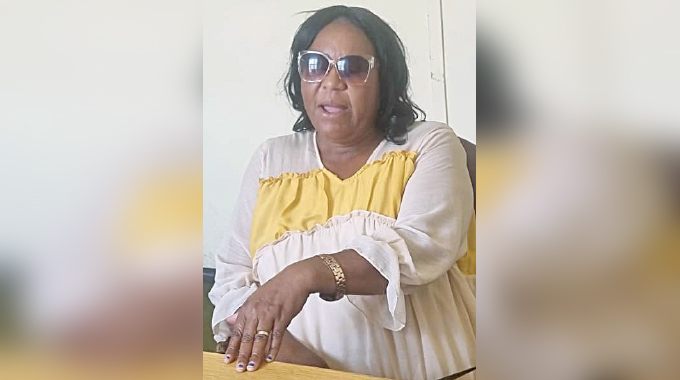
WE continue our interview with former freedom fighter, Cde Neddie Sibanda, whose pseudonym during the liberation struggle was Cde Sithembiso Nxumalo. Cde Sibanda, now a retired nurse after serving for many years at the United Bulawayo Hospitals (UBH), was “recruited” from Manama Mission in Gwanda District, Matabeleland South Province, when a unit of ZPRA guerrillas descended on the Evangelical Lutheran Church institution and led away about 400 pupils, five teachers, two nurses and a clerk to Botswana. The group eventually arrived in Zambia, where ZPRA maintained military camps. There, the pupils — both girls and boys — were transformed into guerrillas.
In last week’s edition, Cde Sibanda told our Assistant Editor Mkhululi Sibanda (MS), how the guerrillas arrived at their school, took them to Botswana, and how they were later flown to Zambia. She now continues her story, recounting their stay at Victory Camp (VC) — a ZPRA women’s transit camp, their selection for military training at Mkushi, and how she survived the aerial and ground assault on Mkushi Camp on 19 October 1978. That raid, supported by helicopter gunships, paratroopers and ground forces, was among the most brutal assaults on ZPRA camps. In his autobiography, Winds of Destruction:
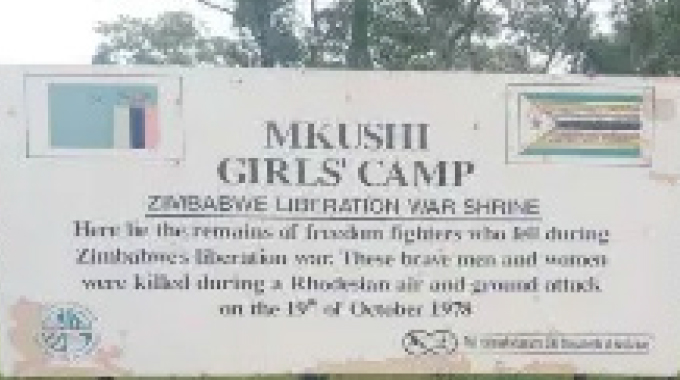
The Autobiography of a Rhodesian Combat Pilot, ex-Rhodesian Air Force officer Peter JH Petter-Bowyer, recalls that on that fateful day, six Dakotas dropped 120 Special Air Service (SAS) paratroopers in a semi-circle around the western and northern flanks of Mkushi Camp, while K-Cars patrolled the Mkushi River, which formed the camp’s eastern and southern boundaries. Forty-four SAS troops were landed by 11 G-Cars under the cover of a small rise in the camp’s eastern corner. Despite being heavily outgunned, the ZPRA female combatants — that golden generation fought back tenaciously. Petter-Bowyer himself admitted:
“The women looked just like men in their camouflage uniforms and bore their weapons with efficiency. Although some attempted to hide and take advantage of grass fires initiated by the air strikes and heavy firing, most fought back. The SAS could not help but be impressed by their aggression and fighting ability, which kept the soldiers busy till late afternoon.”
Below are excerpts from the interview. Read on…
MS: Let’s resume your story with your first days in Zambia, the transformation from a pupil to a soldier.
Cde Sibanda: Although life at VC was manageable at first, it became tougher as more people arrived. We began experiencing food shortages and many basic necessities such as toothpaste — became unavailable.
There was a large hall accommodating many people and the strain on facilities was immense. However, despite these challenges, we faced them head-on. At VC we were introduced to basic military drills, they were preparing us for full military training. Then came the selection process, and I was among the first group chosen to open Mkushi Camp.
MS: Tell us about the military training at Mkushi.
Cde Sibanda: The training was extremely tough, like all ZPRA training programmes. We did political orientation, weapons handling, camouflage and concealment, crawling, rolling and physical fitness. We also trained in obstacle crossing, ambushes, booby traps, demolitions, endurance arches and survival techniques. We did everything the men did at their training camps. It was gruelling, but we endured and completed it.
Our first camp commander was the late National Hero Cde Billy Mzamo, who was later replaced by Cde Phinda (Lawrence Makwarimba). The Chief of Staff was Morgan.The training was no picnic.
MS: Take us through the events of 19 October 1978 when you were attacked by the Rhodesian forces.
Cde Sibanda: It was around 11am when a group of recruits, the second intake after ours was being served food at the kitchen. My group was next in line. Suddenly, the Rhodesian aircraft descended upon the camp. Their first target was the kitchen — we were in the queue waiting to be served when the attack began. Earlier, on the same day the Rhodesians had bombed Freedom Camp (FC).
MS: What was your reaction?
Cde Sibanda: There was pandemonium as people tried to escape the killing zone. The Rhodesians had set fires to drive us in a specific direction, making us easier targets.
I ran with several girls towards the Mkushi River, trying to escape the bombs raining down. We saw a large boulder nearby and rushed towards it, taking cover in a small opening underneath. A number of us hid there. The Rhodesian soldiers came closer, shooting at comrades who were fleeing. I was lying among the bodies of those already killed.
Near me was Mercy, another girl from Manama Mission. She was shot in the neck while we watched helplessly. Another victim was Charity. We pretended to be dead as the enemy used bayonets to poke the bodies. Thinking everyone there was dead, they moved on.
MS: How many of you were there, and how did you react when they were poking the bodies?
Cde Sibanda: Fortunately, they didn’t touch me, I was well hidden among the dead. They thought their job was done. There was napalm in the Mkushi River, and we could see bodies floating. We stayed hidden until about 8 pm before leaving that place. When they saw us moving, they started shooting again, and we used trees for cover. Some were killed as they tried to escape.
We ran until we reached a homestead belonging to a Zambian family. They allowed us in but were terrified the Rhodesians would burn their home if discovered. It was a real Catch-22 situation. They referred us to a nearby police camp, where we finally sought refuge.
MS: How was the situation there?
Cde Sibanda: It was much better, we were finally out of immediate danger. We were later joined by comrades who had been injured. I had wounds on my hands from catridge fragments. I was confused, hysterical even, because of what I had witnessed — comrades being killed and bombs falling all around us. It was a deeply traumatic experience.
We were then taken to Makeni, where we were kept for some time. The Rhodesians may have received intelligence that we survivors were there, because they began making moves towards the area. Fortunately, guerrillas had been deployed to provide security for us.
To be concluded next week, as Cde Sibanda speaks on the aftermath of the Mkushi bombing and the reorganisation of the ZPRA camps.