peter
peter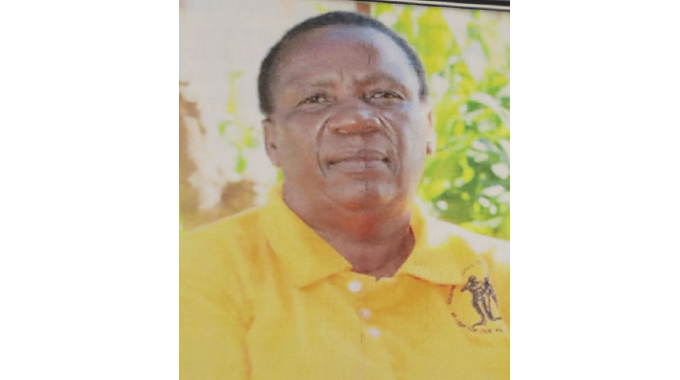
THIS week we conclude the account during the armed struggle of former freedom fighter, Cde Margret Moyo pseudo name Cde Sevi Dlodlo.
We picked Cde Moyo’s narration from a book titled Yithi Laba: Diaries of the role of ZAPU-ZPRA Women Combatants in the liberation struggle of Zimbabwe Volume One.
The book was written by historian Methembe Hillary Hadebe, a graduate of History from Midlands State University.
At Nampundwe, there were no lessons but there were exercises. We would wake up around 5am, and go for exercises, and be told to do general housekeeping duties.

We would go and take a bath in the nearby dam, some would die in the dam because of inexperience to bath in the muddy dam.
We ended up not going there for some time fearing the worst.
Changes came when Dr Joshua Nkomo visited the camp and spoke to Zambian President and our host, Kenneth Kaunda to help in improving facilities at the camp.
The situation improved a lot when Manama Mission recruits came a week or so later.
I remember some came still wearing maroon uniforms.

At that time, there were few blankets so at times we would sit around the bonfire singing. In that setting, guerillas would be with the rest of the recruits making you sing and do whatever they would be demonstrating.
If you failed to comply, you would be punished or get beaten up.
Kaunda visited us accompanied by Dr Nkomo and encouraged us to soldier on and never to deviate.
He underscored that there was a need to liberate our nation.

Dr Kaunda and Dr Nkomo agreed to relocate us to a new camp which was called Victory Camp (VC) together with the new crew that had come from Manama. We left Nampundwe to VC as girls and women and left our male counterparts at Nampundwe.
I ought to state that Nampundwe was the first port of call or a college for recruits to see the difficult side of the war.
From the Manama crew I remember, Keabetswe Dube (KD) who now stays in the United Kingdom, Chiratidzo Mabuwa (the former Minister who held various portfolios), Blondy, Toyi-Toyi, Florence (Sikhumba), Bhunjwa (from Mapate), Sebenzile Mazinyane ( now wife to Brigadier-General (Rtd) Abel Mazinyane), Nompumelelo Moyo whose war name was Gift Tichatonga (wife to Abu-Basutu the current Zimbabwe Ambassador to Japan) and many others I seem to be forgetting.
There was another one that I trained with, she was called Ossie Sibanda. She is now a Colonel and Bulawayo District Commander under Zimbabwe National Army. At VC, life was not so different from what we experienced at Nampundwe.
Morning drills, physical fitness and commissariat lessons were also done there.
I have to emphasize that VC was a refugee camp where in-depth military training was not done extensively.
It was common that in every ZPRA camp, be it a transit or refugee camp, such morning drills and physical training were the order of the day.
I do not remember eating meat at VC.
We would eat isitshwala, fish and other tinned foods.
Because of food shortages at times, others would eat wild foods like umkhuna and other things from the wild.
Remember, we were so diverse and for us coming to the war did not naturally create new characters. Our lifestyle showcased our background.
I am not sure of the month but in 1978, we were moved to Mkushi, I was among the first group of female combatants to be trained there.
The selection had its way.
Early morning, we were called for a parade.
That morning we were told that some of us were to be selected for military training.
For me, they would choose people that they thought would withstand training.
One man who comes to my mind who was present during the selection was Cephas Cele.
I remember he appeared as the man of the moment who had the final say regarding selection.
I was then selected together with other friends and relatives.
I remember Senzeni Mkhonto-Sigoge who was also among our group.
When we reached Mkushi, which was a thick forest, instructors were put in companies.
We began to construct our toilets, pitch tents and indeed the training had started.
Although, we had male instructors like Castro, Amos, Kumbirai, Theodophilus, and Makanyanga, among others.
These people were seasoned and at some point, very rough.
They did not care whether you were female.
I remember Castro, who had come from Somalia, used to say, “We are here to train ZPRA guerillas and not females.”
It was a statement to illustrate that we cannot lower our military standards from [when] we are training women.
That was a big no for him.
We would wake up early morning for physical training.
Depending on the instructor of the day, some would make you run 8km others would take you up to 10km.
Some recruits would faint along the way, and lag.
I remember at some point shortly when we had begun our training, two girls fainted.
They later woke up and followed as instructors would tell us of the stories of the lion that if you lag chances one being eaten by a lion were high.
You would run while making war cries and slogans.
There was a mix of physical drills and indoctrination.
After the run, at times you would do frog jumps, military drills of jumping, crawling, and forward falls, among other things.
I must say they were also female instructors who had trained at Morogoro and some that had completed training at Mwembeshi.
I remember there was Belinda, Phinda, Sithandekile, Jane Ndlovu, and Ingrid, among others.
We looked up to them.
They inspired us in that when we thought we have seen the toughness among the male instructors they were also tougher.
What struck me most was seeing Jane doing a forward fall.
Forward fall is a drill that requires one to jump from one point in a spin and land with your feet.
She was a giant and she did that.
It became an inspiration that upon completing our training I also intended to be doing all those skills.
Coming to military lessons, instructors had their subject which they specialized on.
Remember, those lessons were delivered in our companies.
There were lessons of commissariat which emphasized the objectives of the war, the part’s ideology, and self-determination.
To me, it as a modern history subject.
It taught us not to fight the colonial regime not because they were whites but to fight their system.
Topography which involved map reading was taught as well as logistics which is now called the stores in the modern discipline.
When we completed our training a selection of female instructors was made among the group.
I was chosen to be a military instructor together with others in the group.
I remember there was me, Gift Tichatonga (the wife to Abu Basutu), Sebenzile Mazinyane, Rosemary Maphala-Sigoge, Olie Ngwenya (Ossie Mhandu), and Sithabile Sibanda, Keabetswe Dube, and Netsai Ndebele (Mavis) among others.
These female instructors who were selected from Mkushi were known as the Group of 50.
We were then meant to train recruits.
Some who were not selected were deployed in various departments while others went for further deployment.
So, recruits came in for training and before they were trying to grasp the military concepts we were bombed.
Perhaps before I narrate how that happened, I should state that they had not learned anything to defend themselves nor was there a way in which they could come out from obstacles because they had not learned anything.
I remember it was around 10am and we had come from a tea break.
Helicopters used to pass through the camp and, in most cases, they belonged to Dr Kaunda’s government.
Like I said, we were coming from the tea break and all of a sudden, a bomb was dropped at the kitchen.
As an instructor, I blew my whistle to give a signal to my company to take cover.
That was bad. I took cover with recruits.
The unfortunate ones went to hide in the defence pits so what the enemy did was fire bullets in those pits while they were still in the helicopters and later came out of the helicopter to fire in the ground.
They then followed pit after pit and killed the defenceless recruits using bayonets.
I do not blame the recruits for running to the pits because this what we were teaching them to do in the case of an emergency.
When I think of this I cry.
We ran close to a hundred metres trying to dodge an enemy using the trees.
The movement was made difficult as they attacked using helicopters and also, they had unleashed the ground force on us.
You would spend a good 45 minutes after you had moved 30 metres.
Some were shot in front of me, I remember two girls I knew from Manama were shot in front of me.
I told those that were with me to head to the Mkushi River which was nearby.
We ran to a cave-like stone and went inside it.
I then instructed others to squeeze inside it as it was hollow and cave-like which guaranteed more protection.
This is how I survived the bombardment.
We stayed inside the cave as bullets did not reach out to us but My God, we were seeing everything which was happening.
I remember there were some who had hidden in the grass and bamboo thickets, the enemy would target and shoot the thicket and leave the land clear.
Also, the enemy was pushing us in the direction of the river strategically.
They knew that we would dive into the river.
Some ran and dived into the river only to be eaten by crocodiles, and others drowned and died.
On the other side, they had treated the land and the river with napalm chemicals, those that came across the chemical got hurt by the chemical.
All this happened while I was hiding but also seeing what others were subjected to.
It was painful and when I think of it, I cry.
I can’t say I was clever; it was the Lord that saved me and others.
The bombing lasted until midnight.
The next morning, we came out and there were many causalities.
Some had lost their hands, eyes, legs and had their body parts damaged one way or the other.
Some like me who had not developed scars physically had scars internally.
I had never seen anything like that in all my life.
Many had died due to blood loss, dehydration and pain.
A bullet is poisonous!
We went around to carry the bodies of the deceased for them to be buried in shallow graves.
The defence pits later became graves as some died in those pits.
Others were going to survive but unfortunately there was a delay in them seeking medical attention.
In short, that was Mkushi for you.
We were then moved to Solwezi for some time.
I did not do further training but remained there for some time.
An instruction was came to use those preparations for us to return home [as we] were on course to mobilise for elections.
I was chosen with a group of trained Mkushi cadres, a few male cadres and some members from the LMG choir to accompany Dr Nkomo back to Zimbabwe and we landed in Harare. We were very happy to have been given that opportunity.
Days later we were sent to Bulawayo and given parents to look after us as we were not allowed to go back to our homes.
I was given foster parents in Luveve who welcomed me and took me in like their own child.
While in Luveve, I was responsible for organising and mobilising for the party ahead of the elections.
We would wake up and begin mobilisation and campaigning for the party.
Dr Nkomo had to accept and made us understand how we should embrace the election results as Zapu.
Dr Nkomo was a peacemaker.
Days after, buses were organised to take us back to our homes and also I had to board mine which was going to Gwanda.
When I arrived there, I saw no one at home.
It was locked. I then said maybe they went out.
I went in and opened the hut which was the kitchen and slept inside.
I had nowhere to go, family members came later as they were afraid to approach me.
In some instances, others would be rejected by their family members.
But for me it was different.
I reunited with them.
I later went to Sierra Assembly Point near Gweru and I was integrated into the then newly formed Zimbabwe National Army.
I served until retirement in 2008.
I got married and have children.


 Bongani Ndlovu