admin
admin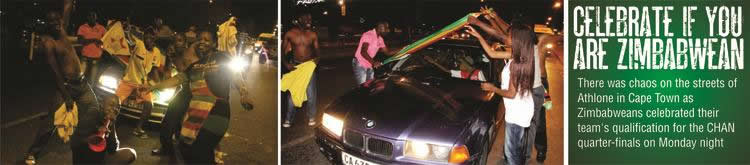
 THERE are some very special moments in sport when time appears to stand still, frozen in the beauty of the occasion, crystalised in the significance of the moment, when nothing else in life seems to matter, that thin line between an explosion of boundless joy or a flood of tears.
Back in the ’90s, when the NBA was a league of superstar basketballers ruled by men like The Admiral, David Robinson, The Dream, Hakeem Olajuwon, Magic Johnson, Karl Marlone, The Mailman who even delivered on Sundays, Reggie Miller, Patrick Ewing, Scottie Pippen and Charles Barkley, I had a team that I followed quite religiously.
Today, Chicago Bulls are a shell of the super team, back in the ’90s, that coach Phil Jackson and Michael Jordan turned into an all-conquering sporting franchise, with immense global appeal, and I was one of their millions of off-shore fans.
On June 14, 1998, in Game Six of the NBA Finals at the Delta Centre in Salt Lake City, Michael Jordan produced one of those very special sporting moments, when time appears to stand still, frozen in the beauty of the occasion, crystallised in the significance of the moment.
The championship showdown between the Bulls and the Utah Jazz, inspired by Marlone, had the highest television ratings of an NBA game in history, 72 million viewers in the United States turned in to watch, and with 5.2 seconds left, with the game in the balance and the hosts Utah leading, the immortal Jordan played one last card.
I will let Neil Funk, commentating the game for the Bulls’ radio network, to describe that golden moment when Jordan hit a fade away jump shot, to complete what has been described as one of the greatest plays in NBA history, to score and give the Bulls an 87-86 victory and their sixth NBA crown in eight years.
“Malone . . . stripped by Michael, to the floor, stolen by MJ! Michael the steal! 16 seconds left, Bulls down one . . . Michael against Russell, 12 seconds . . . 11 . . . 10. Jordan, Jordan, a drive, hangs . . . fires . . . SCORES! HE SCORES! The Bulls lead 87-86 with five and two-tenths left, and now they’re one stop away! Oh my goodness . . . oh, my goodness!”
On June 14, last year, The Salt Lake Tribune revisited that moment, 15 years back, when Jordan made time appear to stand still and, in one unforgettable move and conversion, destroyed the dreams of a city that had believed that this was its date with destiny.
Journalist, James Seaman, wrote an article, centred on a photo captured moments before Jordan flashed his shot into the basket, when Utah Jazz were still in the lead, just before all that they had dreamed of was about to be cruelly taken away from them by a moment of genius.
‘The photo shows the ball at its apex and 6.6 seconds on the clock. A sea of faces stare back in anguish, desperately hoping for a clang off the back of the iron,’ writes Seaman in his article.
‘It is the last instant in which the Utah Jazz led an NBA Finals game, a fleeting moment made timeless by photographers seated along the opposite baseline.
‘Knowing that a split second later Michael Jordan’s shot will splash through the net and clinch the 1998 NBA Finals, the viewer feels almost compelled to climb into the frame and warn the crowd to look away.
“I’ve remembered that every day since,” said Mark Anderson, one of the faces in that crowd. “I don’t remember a single sound. It was like everything you were hoping for was just gone in that instant, and frankly, I think it was 20 000 people feeling the exact same thing at the exact same time.”
‘Anderson, now an attorney in Salt Lake City, was in his late 20s and stared right at Jordan during the shot. With the Finals once again upon us, the image of Jordan’s follow-through haunts Jazz fans as it did that Sunday afternoon 15 years ago.
‘Something greater than just that game and that season was lost. A single shot marked the end of an era for the Utah Jazz and for professional basketball.’
Argentina football fans will never forget that golden moment, on June 22, 1986, when Diego Maradona picks the ball in his own half, deceives Peter Beardsley and Peter Reid leaving the duo in a heap, skips past Terry Butcher, Steve Hodge and Terry Fenwick, using his pace and wizardry, lures ‘keeper Peter Shilton to advance, feigns a shot and then rolls the ball home for his team’s second goal in that World Cup quarter-final against England.
 Maybe Argentina commentator, Victor Hugo Morales, puts that golden moment, voted the greatest World Cup goal in the history of the tournament, into its proper perspective in his immortal live commentary of that move and goal.
“I want to cry! Hold God! Viva football! I want to cry! Please forgive me! Maradona on an unforgettable run, with the best move of all time! What planet did you come from? To leave the British on their way? To make a whole nation cry? Thank you God! Thank you for football! Thank you for Maradona! Thank you for these tears.”
Our Golden Moment When Time Stood Still
It’s something that happened five days ago but such was its impact you get this feeling that it happened yesterday or it has just happened moments ago.
You can see it happening again, the lively Kudakwashe Mahachi trying to shake things up down the left flank in that match against Burkina Faso, being fouled, which was a favourite tool for the West Africans every time our poster boy was in possession, and the move appearing to stall now that the man with the trickery was down.
You can see Kuda looking for help from the referee, the look on his face displaying both the innocence that has made him such a likeable footballer and the disbelief that the call for a foul hadn’t come from the match official, and you get this feeling, well, maybe it’s not going to be our day.
Then the ball breaks to Milton Ncube, who is in a very advanced position, something that he hasn’t done with regularity on this tour of duty with his emphasis being on a religious loyalty to his defensive duties and, suddenly, the Milito that we knew at Highlanders last year, where he played in such advanced roles, comes alive.
The cross is a curling one, good height and lures big goalkeeper, Mohamed Kabore, a 34-year-old veteran who has played for ASEC Mimosas and Stade Malien in a lengthy career and who carries so much weight today he wouldn’t look out of place in a sumo wrestling festival, off his line as he tries to cut it off.
It’s a move that used to be repeated at the Bosso training ground last year, and at Barbourfields now and again, and someone in that Warriors’ attack read it because he used to see Milton curl such balls from that distance, from that angle, and he attacked the ball, rising superbly at the right moment to time his connection to perfection, and as the ball changed direction, on its journey into the nets, poor Kabore was left stranded.
Masimba Mambare had just scored our first goal at the 2014 CHAN finals, it had taken us more than three hours of a lengthy wait for that goal but, when it came, it was priceless and worth every minute that we had groaned and mourned all those chances that we had created and, somehow, blown away in Cape Town.
When Mambare rose, hoping to get the connection ahead of Kabore, time appeared to stand still, frozen in the beauty of the occasion, crystalised in the significance of the moment, nothing else in life seemed to matter, that thin line between an expected explosion of boundless joy or a flood of tears.
One fan texted me, shortly after the game, and said that January 20 was now a special date, which he had marked in his calendar, and will forever remind him of that unforgettable moment, when scores of fans, crammed in a Harare bar on Monday night, erupted into boundless joy, stranger hugging stranger as their Zimbabwean bond united them, as they cheered as the Warriors took a step towards the quarter-finals.
Amid the bedlam that erupted at the Warriors’ bench, as they celebrated this golden and priceless goal that had buried the ghost of their barren run in front of goal, and was likely to buy them a ticket into the quarter-finals, I thought about their coach Ian Gorowa and felt for him, the pain that he had suffered as he watched Simba Sithole (Dynamos) and Donald Ngoma took turns to miss gilt-edged chances in the first two matches.
A lot of people had criticized his decision to carry players whose pedigree many of them had questioned, for fielding strikers that some people had condemned, for his so-called obsession with Dynamos players, which had made him give one of them, Partson Jaure the captaincy, for his so-called obsession with ex-DeMbare players, a number of whom he had recruited into his coaching staff including Callisto Pasuwa and Gift Muzadzi.
I wondered if he could have survived the onslaught, the flood of criticism, and whether this dance at the CHAN finals would signal the end of his romantic flirtation with the Warriors, even against a background where the end of their adventure could have come without losing a match in Cape Town, without conceding a goal at Athlone and, crucially, with Gorowa having not lost a competitive game in charge of the Warriors.
He had impressed me when he abandoned the comforts of his life in South Africa, when he felt that it was time to work for his country, and while his transition into national coach had not sailed smoothly, he had given us hope, by finding a way to stop the team from losing whenever he took charge, that tomorrow could bring better fortunes.
He had embraced our daily struggles, when it comes to the Warriors, because he understood that unlike Bafana Bafana, we were not blessed with the extravagant sponsorship that comes the way of Gordon Igesund and his men, and on one occasion, he had been forced to use his money to buy supper for his boys when they arrived at their lodge, during a training camp last month, to find that their supper hadn’t been paid for.
He might have got some of his decisions wrong, which can happen to any coach, and his decision to try and convert Ngoma into a midfielder who can play on the flanks, something that would be limited by his obvious lack of natural skill, to control the ball and work his way past the markers that flood such channels, was one of those.
But, to his credit, he had got most of his decisions right and when you are building your team, you start from the back, and he deserved credit for picking a goalkeeper that he believed was the best in the country, after the previous coach had overlooked him completely, for getting his defence right and still keep them tight even when they were robbed of the services of Bruce Kangwa, who would have been first-choice leftback, who could not postpone his wedding that clashed with the team’s preparations.
Gorowa’s biggest success story, which he has received very little credit for, was giving Danny Phiri the confidence that he was the best holding midfielder in the Zimbabwe Premiership, the man who could provide the defensive shield that was needed to protect the back four and their ‘keeper, and in the past few months, in national colours, we have seen a real gem emerge out of the man they call Deco.
He has rarely put a foot wrong, playing with added confidence with each passing game, and has been the biggest star of this Warriors’ campaign at the CHAN finals with his gritty performance, which has caught the eye, tackling hard but fair, playing at a high level in every match and putting in shifts that make you wonder if he ever runs out of gas.
When Mambare’s goal went in, it represented more than just a win for the team, it represented joy for an entire nation, it represented reward for a coach who had been betrayed by luck for more than three hours at the tournament, it represented the triumph of a team that had outplayed every opposition it had met, including favourites Morocco with very little rewards, it represented our belated maiden entrance into the knockout stages of a major continental football tournament.
Even Late On Sunday, There Were Some Doubting Voices
THE Sunday News columnist, Phineas Mukwazvo, who is also the Sports Editor of our sister newspaper published in Bulawayo, this week asked whether Ian Gorowa was a coach, who could be trusted to make the Warriors a success story, or just a mere player agent.
On the eve of the Warriors’ tie against Burkina Faso, Mukwazvo justifiably tore into Gorowa for his decision to stick with misfiring forwards, Simba Sithole (Dynamos) and Donald Ngoma, in the first two games, and questioned the wisdom of leaving strikers like Aleck Marime at home.
Mukwazvo also gave a brutal assessment of Gorowa’s decision to use Milton Ncube, whom he described as a natural offensive player, in a fullback role, and that the player spent the entire 2010 domestic season, playing in defence in Motor Action’s title-winning team, didn’t matter at all to the good columnist.
Mukwazvo was also highly critical of the coach’s decision to suggest, in an interview with a South African football website, that six players in his CHAN side had the pedigree to just walk into any Super Diski team.
“Is Gorowa doubling up as a player agent?” screamed the headline in Mukwazvo’s weekly column.
“When somebody in the national team behaves like a player agent, the players will pay allegiance to only that person and, in our case, that person is our coach,” thundered Mukwazvo.
“We might be wrong but, just like the sun rises in the East and sets in the West, one day we should be proved right.”
He then used what he described to be a letter, from an unnamed contributor, in the same column, which tore into Gorowa.
“Gorowa selected his best friends instead of the best soccer players in the country. How can you go to battle and expect to win without firing a single bullet. These guys are more than likely to come back with zero goals. Please here don’t blame Zifa (something that we probably expected) or Government because they tried here. Maybe the money should have gone towards civil servants salaries,” read the letter.
Well, Gorowa and his men needed just one goal, and a defensive performance that no other team could match in the group stages of the 2014 CHAN finals, to provide their answer and trigger celebrations around a country that really loves its national football team and has been waiting for such a success story for a long time.
Take A Bow To The Warriors
The Warriors are the only team from Southern Africa remaining in the 2014 CHAN finals and that’s special because, for some of us, it simply justifies what we have always been saying that, while we might not have the big money like that which flows in South African football, we have genuine raw football talent that is closer to the top of the tree in the region.
To imagine that this team, assembled from a Premiership where every footballer who shines is plucked away by clubs in South Africa they even lost their leading striker, Tendai Ndoro, months before they arrived in Mzansi, can still play so well, having the best defensive record of all the 16 teams in the first round, and be the only one standing from this region, after the group stages, just provides confirmation that we have genuine raw football talent in the country.
To imagine this team, which arrived one night from training last month to find that there was no provision for supper for them in camp, can rise above those challenges and outplay Morocco, fielding the bulk of players who reached the Fifa Club World Cup final recently in Raja Casablanca colours, to such an extent that their goalkeeper is given the man-of-the-match award, just provides the confirmation, if any was needed, that we have special football talent in this country.
Ladies and gentlemen, even if these men do not go on and win the 2014 CHAN finals, although I’m pretty sure they are a match for everyone and will triumph in their game against Mali tonight, take a bow to these Warriors for what they have given us in this adventure, for uniting us as a people, and for giving us something to cheer our spirits.
Don’t call me Prophet Sharuko, please, but something tells me that this compact team, which has perfected the art of not conceding goals, could go places at this tournament.
To God Be The Glory!
Come on Warriors !!!!!!!!!!!!!!!!!!!!!!!!!!!!!!!!!!!!!!!!!!!!!!!!!!!!!!!!!!!!!!!!!!!!!!!!!!!
Mahachiiiiiiiiiiiiiiiiiiiiiiiiiiiiiiiiiiiiiiiiiiiiiiiiiiiiiiiiiiiiiiiiiiiiiiiiiiiiiiiiiiiiiiiiiiiiiiiiiiiiiiiiiiiiiiiiiiiiiiiiiiii!
Text Feedback — 0772545199
WhatsApp Messenger – 0772545199
Email — [email protected]
Skype — sharuko58
Twitter — @Chakariboy
You can also interact with ROBSON SHARUKO on Facebook and Viber or read his material in The Southern Times



 Online Reporter