Online Reporter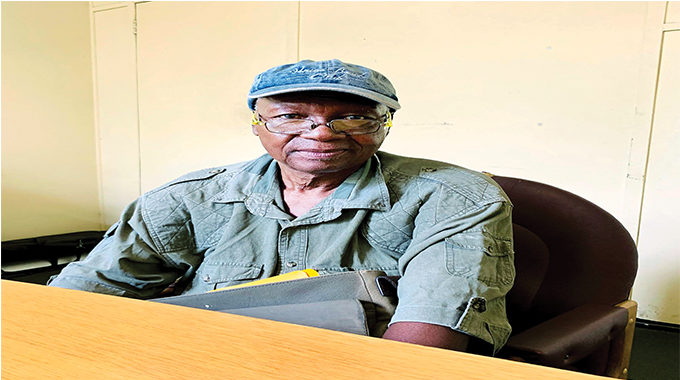
CDE Cecil Banda, real name Dingani Ncube, is one of the former senior commanders during the armed struggle who has gone under the radar after choosing to live a life away from the drama of politics. During the armed struggle, the diminutive and now bespectacled Cde Banda was given crucial assignments such as camp commander of the most populous women’s cantonment, Victory Camp (VC) in Zambia and the responsibility to keep an inventory of the ZPRA war material which covered all types of weapons and ammunition. On Wednesday last week, our Assistant Editor Mkhululi Sibanda (MS) managed to trace Cde Banda to get an account of his war experience and he insisted that he prefers to be called by his pseudo name, arguing that many people identify him with it. After the signing of the ceasefire in 1979 Cde Banda was deployed to Gwayi River Assembly Point near Dete in Matabeleland North Province which housed a well-armed ZPRA conventional brigade. He served at Gwayi AP as the Brigade’s Chief of Logistics. When ZPRA moved all its war material from Zambia to Gwayi the responsibility to look after all that was left in the hands of Cde Banda. In this week’s interview, Cde Banda talks about his early life and how he left the country to join the armed struggle in Zambia via Botswana. Below are excerpts from the interview. Read on . . .
MS: As usual with our interviews, please let us start by giving us your background.
Cde Banda: I was born Dingani Ncube although I would prefer to be called by my pseudo name, Cecil Banda. The reason is that many people know me by that name and I still use it despite the fact we have been independent for the past 44 years.
MS: When and where were you born?
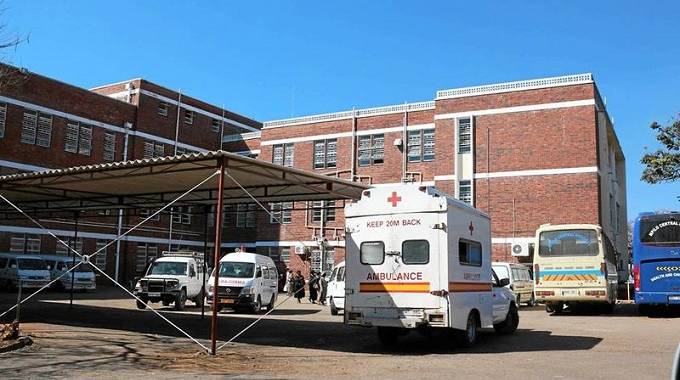
Cde Banda: I was born on 10 September 1952 at the Bulawayo Memorial Hospital, the precursor to Mpilo Central Hospital. However, I lost my mother, Idah Mhlanga when I was still very young. My uncle, my mother’s brother is said to have approached my father, Mboniswa Ncube who came from Lupane to hand me over to my maternal relatives and my father acceded to that request. I was then taken to Kezi, Silahwa area where I was raised by my uncle. I started my education at Silahwa Primary School where I was until Grade Six. My elder brother then came and told my uncle that he was taking me to a boarding school. I then found myself going to Chipinge District in Manicaland Province at a school that was situated within tea estates. There were also others from Matabeleland, five or six guys as well as a teacher called Mr Ncube.
MS: How was the situation at that school?
Cde Banda: It was a bit tough as before attending classes we would go and work at the tea fields, a place called koReeds. We were near the border with Mozambique. There was also an arrangement that during the holidays we would alternate going home, if you went home during the first term holiday then the following one you would not go. Instead, you will remain working in the tea fields. However, I went home during the first term and second in the process violating the rules. When I reported back to school I found myself in trouble with the authorities for that. I was also accused of having been at the forefront of a protest against the frequent serving of beans at the dining hall. I was then expelled. I was in a fix as I did not have money for bus fare back to Bulawayo. I then sold an extra pair of shoes for 30 cents and managed to reach Chipinge Town. When I went there I started asking for help and someone at the market told me that there was a farm that was looking for workers in Inyanga and some people from there were around recruiting. I managed to locate them and that is how I ended up in Inyanga where I worked for three months before I left for Bulawayo.

MS: When did you start getting involved in politics?
Cde Banda: After my return to Bulawayo I got a job at De Bella Bakeries where the popular Haefelis is located. My job involved baking buns. The owner was everything, manager, accountant, you name it. Whenever workers made a mistake he did not hesitate to give them a beating, a thorough one for that matter. He was very abusive, so that is where I came face-to-face with racism and that changed the way I saw things in Rhodesia. One day, I still remember it was on a Wednesday when I failed to properly bake the buns. I burnt them. The white man confronted me seething with rage. Sensing danger I threw the apron at him and took to my heels. He chased me up to where the OK Stores branch along Jason Moyo Street is situated. When plain-clothes police officers saw me running they intercepted me and got hold of me, thinking I was a thief.
MS: How did you react to such a situation?
Cde Banda: I tried to explain to the police what had happened, but they did not believe me. They led me back to the bakery. When we got there the white man threw an envelope with money at me and that was the end of my stint at De Bella. However, soon after that I got a job at Downings Bakery, but I lost it again when I refused to go and watch a match where the company’s team, a lower division side was playing. Instead, I travelled to Gweru to go and watch Highlanders.
MS: When was that?
Cde Banda: That was in 1972. After losing my job at Downings I started taking politics seriously and vowed to cross the border and take up arms. I was staying in Njube and as youths, we usually met in Pelandaba at the shopping centre to strategise on our moves, which included joining the armed struggle. Then one day on a Friday, we left in a group of six for Botswana on our way to Zambia.
MS: Do you remember some of the people you travelled with and which route did you take?
Cde Banda: There was Nicholas Nkomo aka Cde Gilbert Khumalo, the former ZPRA deputy commander for the Northern Front. After independence, he commanded St Paul’s Assembly Point and Entumbane. Besides Gilbert there was also Simbarashe Hungwe whom we called Cde Magwaza during the war, Themba Moyo, Marufu who was killed in combat during the struggle and Khanda. We boarded a bus to Kezi’s Tshelanyemba area. After crossing into Botswana we took the wrong route, as instead of heading towards Francistown we moved towards Selibe-Phikwe. We were lucky that we had Gilbert who spoke Setswana, so it was easy to communicate with the locals. However, we finally arrived in Francistown.
MS: That was in 1972 and how were the numbers of recruits joining the armed struggle at that time?
Cde Banda: The numbers were very low as when we got to Francistown we were only six and when we left after a week we had not been joined by anyone. In Francistown we moved to a place that was called the White House, it was a facility for refugees. That facility housed both ZPRA and ZANLA recruits. We were lucky in that we found intelligence officers, Dumiso Dabengwa and Ethan Dube. Dabengwa advised us to be vigilant as Rhodesian security forces could raid the place and abduct us. He then took us to a police station for screening. Dabengwa told us not to give the Botswana police officers our real names, addresses, village heads and districts. He said we should conceal our real identities as much as possible. That is how I became Cecil Banda, a name that has stuck with me from 1972 to date. Everyone knows me as Cecil Banda.
MS: What was the next move after going through the screening process?
Cde Banda: We were detained at Francistown Prison where we were at the mercy of lice (intwala). Dabengwa at times will bring us food. After a week we were taken to the airport from where we were flown to Lusaka. On our arrival in Lusaka, we were met by the ZPRA Chief of Personnel, now national hero, Cde Cephas Cele and Cde Elliot Masengo (Colonel Harold Mtandwa Chirenda), who also was declared a national hero when he died in 2014. Cde Masengo is the one who was driving the vehicle that was used to pick us up. When he started the car he said we had to hurry so that we could catch some films which we were supposed to watch. He did not tell us where the films were playing and being recruits we believed him. However, we were surprised when we travelled for about four hours without reaching the destination. So the talk by Masengo about the films was just a joke.
MS: Where were you taken to?
Cde Banda: We were taken to Mwembeshi and we were taken aback to hear someone shouting ‘hold’ when Masengo started slowing down. We had arrived at the camp. Among the people we found there was Dingane, one of the cadres who rose to become a senior intelligence officer in the ZPRA’s Military Intelligence Department(MID).
MS: Take us through your experiences at Mwembeshi.
Cde Banda: I had problems with the diet there. I remember us being served with some strange-looking meat and when I asked what type of animal it was, Dingane said it was an animal found only in Zambia called ingugama. When I tried to eat it I was put off by its smell. The following day I stumbled on the head of a zebra within the vicinity of the camp and it was obvious that we had been served with zebra meat. I also struggled to eat elephant meat. During our time at Mwembeshi we started preparing for training at Morogoro in Tanzania. However, when Jason Ziyapapa Moyo visited the camp, he picked me and two others, Musonda and Bhubhudla Junior and said we should not go for military training because we were too young. JZ told us that the party would arrange scholarships for us. We summoned all the courage and told JZ Moyo that we had come to receive military training, not to go to school. Seeing how determined we were he acceded to our request to go for military training.
To be continued next week with Cde Banda talking about his training at Morogoro, and deployment to the front where he served directly under the late Vice-President Phelekezela “Report” Mphoko.