Online Reporter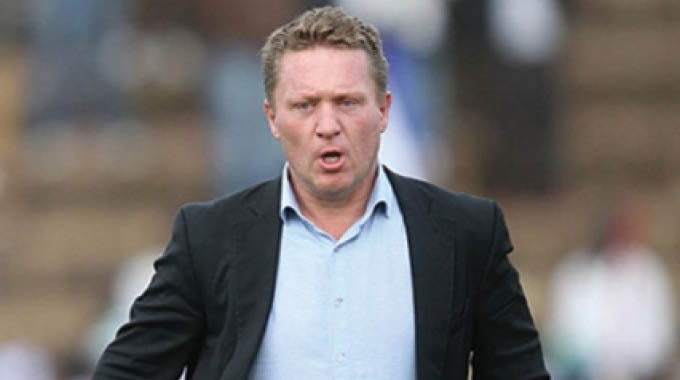
Stanford Chiwanga, Quality Editor
SOME things in football just feel wrong from the start, no matter how much hope people try to pour into them.
That’s how this whole Pieter de Jongh-Highlanders reunion looked: a shaky idea dressed up as a second chance. And now, with the coach pushing his dispute to Fifa over prize money and unpaid bills, the story has unravelled exactly the way many expected — painfully, predictably, and without any real surprise. This was a romance that should have remained a memory, one resurrected against better judgment.
When Bosso brought back the Dutchman, some of us shouted from the rooftops. Others whispered warnings into the wind. But the club, perhaps seduced by nostalgia or blinded by desperation, chose not to listen. They returned to a man who had once left them without looking back, a man whose coaching journey reads less like a career and more like a succession of hurried farewells. And today, Highlanders stand exactly where they were always destined to stand — embarrassed, litigated against, and asking themselves how they allowed history to repeat itself with such devastating symmetry.
From the outset, this was never a question of De Jongh’s tactical brain. His coaching acumen has moments of genuine craft — the kind of disciplined, percentage driven football that can steady a sinking ship or grind out vital points. But football clubs, especially ones with the emotional weight of Highlanders, do not thrive on tactics alone.
They thrive on character, loyalty, and the intangible spiritual bond between the man on the touchline and the badge on his chest. And in that crucial department, De Jongh has always been an unreliable narrator.
His first departure from Highlanders — a swift, almost opportunistic exit to FC Platinum — should have been a lesson carved in stone. It was not the leave taking of a man torn between two loves, but of a traveller who had spotted a shinier destination on the horizon and sprinted towards it. Clubs that value their identity, their continuity, their dignity, do not easily forget such desertions. But Highlanders, in a moment of wounded hope, chose amnesia. They reopened a door that had already slammed shut once before, believing somehow that the breeze from the past would not chill them again.
Yet football, with its merciless gift for repetition, delivered the sequel no one needed. De Jongh returned with his suitcase of itinerant habits and his history of short term attachments, and Bosso welcomed him with open arms — a gesture of faith not supported by evidence. They entrusted him with their club, despite the first marriage ending in emotional disorder.
They entrusted him with their dressing room, despite knowing he walks through clubs the way a man walks through airports — quickly, lightly, always with an eye on the next flight.
Now the Dutchman has taken his grievances to Fifa, alleging unpaid prize money and medical bills, reigniting the same contractual dramas that foreign coaches have repeatedly left on Bosso’s doorstep in recent years. The facts are documented: an official case has been filed, processes underway, with the club once again cast in the shadow of international scrutiny. This dispute, whether over percentages, policies, or principles, is no shock. It is simply the final chapter in a story whose plot was visible long before the pen began to write.
What Highlanders must confront — painfully, honestly — is that they did this to themselves. They walked back into the fire and are now gasping at the smoke. If the man’s departure to FC Platinum was not enough of a warning, his peripatetic CV should have been. If his past disputes were not a red flag, then the recurring pattern of his exits ought to have been. But the club chose hope over caution, sentiment over scrutiny, and now stand bruised by an outcome they themselves invited.
Football has a cruel saying: If you make the same mistake twice, the second time isn’t a mistake — it’s a choice. Highlanders chose this. They chose to re-enter a relationship whose fault lines had never been repaired. They chose to gamble on a character who has never been known for permanence. And as the dispute escalates towards Fifa’s judgement seat, the shame is not just in being fooled again — it is in allowing themselves to be fooled again.
But perhaps, buried in this mess, there is a lesson worth preserving. For a club of Highlanders’ stature, heritage and emotional power, the tender heart must be guarded with iron gates.
Not every coach who flashes tactical promise deserves a seat at Barbourfields. Not every foreign CV should be romanticised. And certainly, not every return should be welcomed.
Because football, like life, demands memory. And Highlanders must remember this saga — not as a tragedy, but as a lesson written in bold ink: Never return to a man who once walked away without remorse.
De Jongh was never fit for Bosso’s soul — not because he cannot coach, but because his character was always an incompatible script. His legacy will not be trophies or saving Highlanders from relegation, but an expensive reminder that character matters more than touchline theatrics.
And the next time Highlanders look for a coach, they must seek more than tactics. They must seek a man who sees Bosso not as a transit lounge, but as a home.
— @plainstan