admin
admin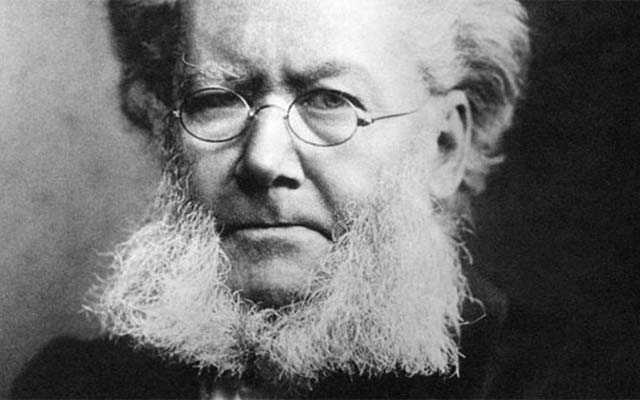
Stanely Mushava Literature Today
Henrik Ibsen may be the master builder of the modern theatre but he is a vandal in polite society.
“A Doll’s House”, his establishing feat for modernist drama, ends in typically insurgent fashion: family is under threat, religion is questioned and compromise ruled out.
In his anxiety to detach female automatons from an exclusively male control room, Ibsen takes no prisoners.
He writes to send structures up in flames. Nothing is to be redeemed.
His insistence on sending conservatism to the devil scandalised contemporaries and set the tone for 20th century iconoclasm.
Now one of the world’s most staged plays and a recurring Zimsec text, “A Doll’s House” was a headache for censorship boards during the dramatist’s time.
In this dawn of solutions journalism, Ibsen may have passed for an arsonist without alternative blueprints, thanks to his insistence on making tradition the victim of dark tragedies.
But the Norwegian dissident’s refusal to append a conciliatory ending to the play at the risk of a public outcry, only yielding under duress for the German performance, helped pin up to the agenda an idea whose time was overdue.
Disfigured to live up to the male gaze, strong women finally finding their poise are the heroines of Ibsen’s theatre.
The insurgent pitch would be scaled up in latter-day feminist drama such as Tsitsi Dangarembga’s “She No Longer Weeps”.
Here, business is even less conciliatory, with the good man judged for the sins of his kind and the bad man silenced a little too drastically.
“A Doll’s House” is not entirely overtaken by progress in its design to open discussion about the place of women in society.
“A woman cannot be herself in contemporary society; it is an exclusively male society with laws drafted by men, and with counsel and judges feminine conduct from a male point of view,” Ibsen remarked around the writing of “A Doll’s House”.
Power estates and professional spaces have been opened up for equal participation but, away from the public square, self-determination remains elusive as women still saddle retrogressive cultural baggage.
Perhaps that is why, to show the discrepancies of office and home, the play has one woman scaling higher professional rungs, while another is going to pieces under matrimonial tyranny.
In subsequent titles, particularly “Ghosts”, Ibsen would haul the carpet further, confronting polite society with things it was not quite ready talk about.
Ibsen’s work is relatively mild against subsequent exercises in subversion, but the extent of his dare can be historically determined.
It is his stubborn insistence on going against conventional morality, without the comfort of populism, that forced him into exile.
The title “A Doll’s House” could not have been more appropriate. A doll may have human form but it has no life, voice, mind or feelings of its own. It is neither upwardly mobile nor self-determining.
That turns out to be the case of Nora, Ibsen’s heroine and the matriarch of modernist theatre, who graduates from being her father’s to her husband’s doll.
Living scarcely more than a cosmetic function in the house, Nora is not so much in her wedding gown as she is in her swaddling bands. And when she finds her real voice, the transformation is too much for her husband to process.
The invasive fashion of gender insensitivity has no regard even for the middle class setting. Apparently, there is no automated correspondence between the economic status and the social emancipation of women.
Widely credited as the father of realism, Ibsen’s major plays are in prose, cutting away from his apprenticeship in verse drama. But in the apparent simplicity of domestic life are defining symbols of a woman’s position in the home.
The recurring Christmas tree, for example, represents the decorative function of Nora in the house. Just as she is constantly fidgeting with it, anxious that it should not seen before it is decorated so it is with her.
Her decorative function involves inhibiting herself so she can appear petty in contrast to her self-important husband; concealing the heroic deeds of saving her husband and protecting her father so she does not hurt her husband’s pride, and premeditating how he likes her to look.
This is not unlike the lengths women go to play along with the male gaze, and cede their being to patriarchal power levers, all for cultural imperatives and commercial incentives.
But Ibsen is not blind to love as a motive for kindness and self-denial, a beauty sometimes erroneously painted with the patriarchal brush in feminist iconoclasm’s reduction of life to a power struggle.
Lack of reciprocity, however, is the source of worry.
Nora’s impassioned swing as she rehearses the tarantella, stepping out of her husband’s chalk circles, as it were, prefigures her transformation.
Just before the curtain, Ibsen turns the whole structure on its head. When it is finally apparent that Nora’s husband, Torvald, lives for public opinion and the former is only accessory to that end, she threatens to walk out on him.
Ibsen explained his mission in neutral terms, claiming to level questions rather than attempt answers, but a disruptive thread is evident in his plays and was passionately contested during their initial reception.
“A Doll’s House” and “Ghosts” unravel at the source rotten fibre that is the culturally legitimated oppression of women.
“These women of the modern age, mistreated as daughters, as sisters, as wives, not educated in accordance with their talents, debarred from their real mission, deprived of their inheritance – these are the ones who supply the mothers of the next generation.
“What will result from this?” the question, asked around the time Ibsen wrote “Ghosts” shows the author’s straddling distaste both for the subjugation of women and the forfeiture of youths’ opportunities .
Transgenerational moral deterioration is a ghastly thread in both plays. Inherited venereal diseases destroy the children, same way today’s mistakes cost forthcoming generations their destiny.
“It is not only what we have inherited from our father and mother that ‘walks’ in us. It is all sorts of dead ideas, and lifeless old beliefs, and so forth,” Mrs Alving laments the costly immutability of the past in “Ghosts”.
“They have no vitality, but they cling to us all the same, and we cannot shake them off. Whenever I take up a newspaper, I seem to see ghosts gliding between the lines.
“There must be ghosts all the country over, as thick as the sands of the sea. And then we are, one and all, so pitifully afraid of the light,” she says.
The drama expands the interface between religion and gender. It seems, though, hypocrisy, consisting in inordinate regard for public opinion, rather than religion in its pure essence, facilitates subjugation in “Ghosts”.
While the action is economical in Ibsen’s theatre, his supplanting of the layers of innocence with experience is timed just right.
Feedback: [email protected] <mailto:[email protected]>



 Online Reporter