Online Reporter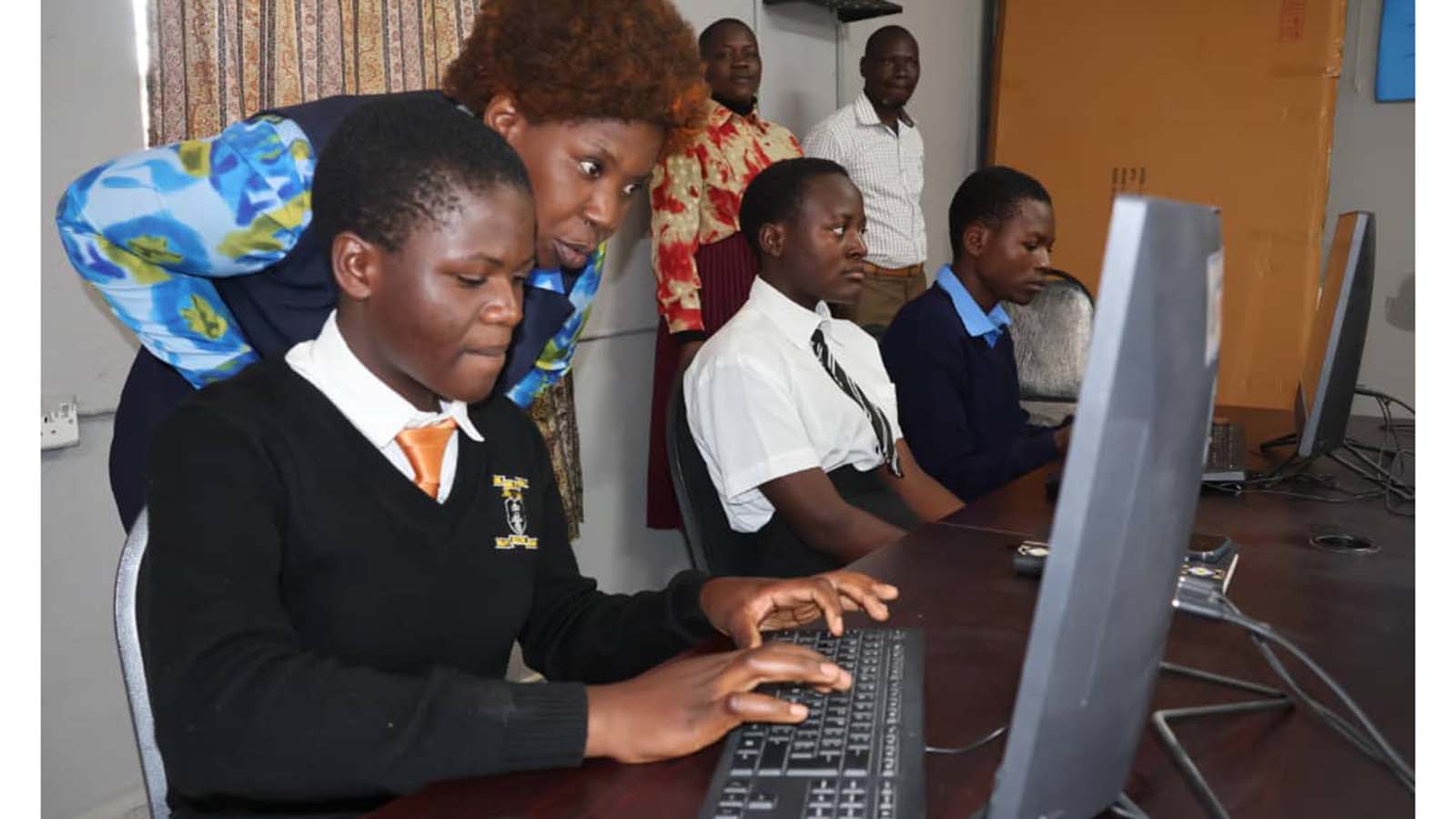
Theseus Mauruki Shambare
A US$20 000 Information and Communication Technology (ICT) hub established at Madziwa Mine High School is reshaping the aspirations of learners in the mining community, opening pathways to careers in the digital economy while steering young people away from the long-held belief that mining is their only route to success.
The ICT laboratory, established in 2025 with support from SOS Children’s Villages Zimbabwe, has replaced outdated computers that had been in use since 1995, giving learners access to modern technology for the first time.
The intervention also includes support for 15 vulnerable learners who are receiving 50 percent school fees assistance and stationery for five years under the organisation’s family-strengthening programme.
Madziwa Mine Secondary School headmaster Mr Gilbert Marufu said the investment had transformed both teaching and learning.
“For years we relied on computers that dated back to 1995. They could no longer meet the demands of today’s curriculum or the expectations of our learners,” he said.
“This ICT hub has completely changed the learning environment. Our learners are now exploring careers in software development, engineering, cyber security and other technology-related fields. They are beginning to realise that their future does not have to be confined to mining.”
Mr Marufu said the project had also helped bridge the digital divide between rural and urban schools.
“Our learners can now compete with their counterparts elsewhere because they have access to the same digital learning tools. We are grateful to SOS Children’s Villages for investing in the future of our children,” he said.
Computer Operations and Packages teacher Mrs Sylvia Chikwanda, who has been teaching at the school since 2018, said practical lessons had improved significantly following the installation of the new equipment.
“Previously we worked with obsolete computers, making it difficult to expose learners to current software and digital applications,” she said.
“Today our learners are gaining practical skills that prepare them for examinations and the world of work.”
The school, which has an enrolment of 634 learners, continues to record an 80 percent pass rate in HEXCO Computer Operations and Packages, while Computer Science has also been introduced from Form One under the Heritage-Based Curriculum.
Form three learner Ruvimbo Vakisai said the ICT hub had changed how many learners viewed their future.
“Growing up here, many people think the only future is mining because that is what we see every day. But these computers have opened our eyes to many other careers in technology,” she said.
“I now dream of pursuing a career in ICT because I have realised that technology can take me anywhere in the world. This laboratory has given us confidence that we can compete with learners from anywhere in Zimbabwe.”
SOS Children’s Villages family-strengthening programme coordinator Mr Malven Manyeza said the organisation viewed education and digital inclusion as critical pillars of child protection.
“We cannot support a child without strengthening the family, and we cannot strengthen the family without strengthening institutions such as schools,” he said.
“That is why we are investing in ICT infrastructure, vocational skills development and community livelihood projects that empower children and young people to realise their full potential.”
Beyond the ICT hub, SOS Children’s Villages is implementing horticulture, piggery and vocational training projects across the district in partnership with Government and other development partners.
For Madziwa Mine Secondary School, the new laboratory represents more than a room filled with computers.