Online Reporter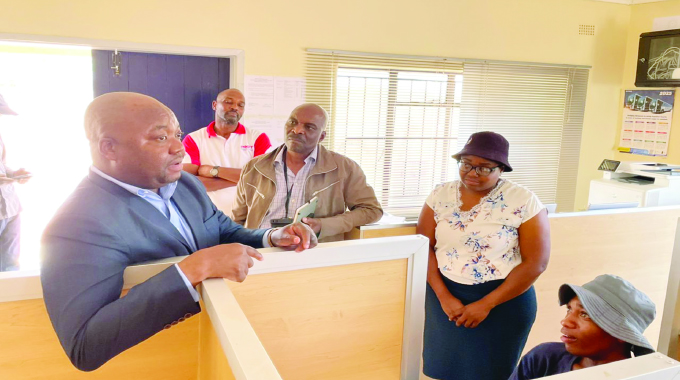
Mthabisi Tshuma recently in Masendu, Bulilima
THE Ministry of Information Communication Technology (ICT), Postal and Courier Services is intensifying efforts to close the digital divide by promoting the optimal use of the country’s Digital Centres.
In a bid to maximise efficiency and harness technological advancements, Community Information Centres (CICs) are being rebranded as Digital Centres. This marks a shift from providing basic internet access to establishing hubs of innovation and empowerment.
ICT Deputy Minister Dingumuzi Phuti on Friday toured the Masendu CIC in Bulilima District, Matabeleland South Province, which is also undergoing rebranding to become a Digital Centre.
Speaking on the sidelines of the tour, Deputy Minister Phuti said the ministry will conduct training for various community committees to equip them with skills that support effective development.
“We first of all want to target local leadership. We are looking at School Development Committees (SDCs) for the three local schools — Mazwaligwe Secondary School and the two primary schools, Masendu and Muke.
“We also want to target the Health Committee of the clinic, our village health workers, and senior Zanu-PF party leadership.
They should form a group that will undergo intensive training for about seven days, after which they will be issued with certificates.

This is to motivate the youth by showing that their elders understand the importance of the Digital Centre,” said Deputy Minister Phuti.
He added that young people will also be given the opportunity to develop digital skills and explore opportunities in the digital space.
“So, we are going to make a second leg of bringing together young people. We will give them intensive training in digital skills, and this group should be larger than the first. As they graduate, this will ensure optimal utilisation of the Digital Centre and justify its presence in the heart of the rural community,” he said.
Deputy Minister Phuti described the initiative as a major milestone, allowing rural communities to access services previously only available in urban areas.
“This time, the post office is in the rural areas to provide digital services that were once exclusive to towns. One might ask about power supply — yes, most rural areas are not connected to the Zesa grid, but the world has gone green.
Today we are using solar, and the facility is equipped with a 5KVA solar system, which is sufficient for all its operations.
There is nothing lacking in that Digital Centre.”
Looking ahead, said the ministry plans to bring children to the centres for lessons while also offering additional services.
“As a result, we must ensure extensive utilisation.
We will ask schools to bring their younger pupils, especially from primary schools, to spend time learning the importance of digital skills. At the same time, we will enhance services such as issuing insurance, licences, and selling stationery.
We will also offer affordable smartphones to improve the penetration of smart devices in the country — a key indicator of digital literacy and access,” said Deputy Minister Phuti.



 Bongani Ndlovu