

 admin
admin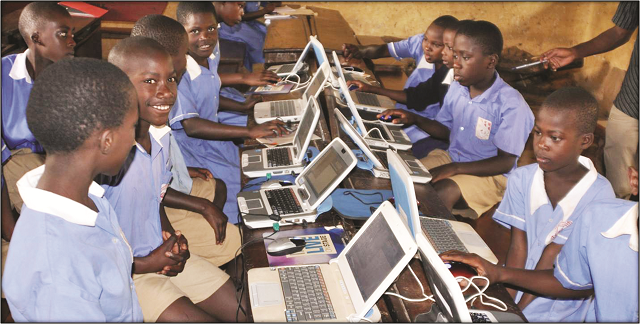

Gibson Mhaka
INFORMATION as an important resource is essential for the progress of an individual in particular and that of a nation at large.
According to Information Communication Technologies (ICTs) experts, new technologies play a significant role in removing the hurdles of development and lack of them deprives poor people their rights to development while at the same time widening the urban-rural digital divide.
The term digital divide refers to the gap between the “technology empowered” and the “technology excluded” communities.
It has become a popular phrase to describe the perceived disadvantages of those who are either unable, or do not choose to use ICT in their day-to-day activities, decision-making, learning and pleasure.
It is with that in mind that many developing countries like Zimbabwe have initiated policy measures and instituted interventions to harness the new technology as a shortcut to prosperity.
This is because ICTs are no doubt a significant enabler of successful governance and vehicles to bridge the urban-rural digital divide.
They can also go a long way in touching the lives of the common man and bridge the perceived disadvantages between the urban and rural communities.
According to studies ICTs benefits the poor by removing social, economic and geographic isolation and by also enabling them to participate in decision-making processes.
It is against this background that the Government embarked on a countrywide programme to establish Community Information Centres (CICs) at growth points and business centres to enhance dissemination of developmental information to rural communities.
The facilities are meant to act as a platform that brings ICTs and related services such as photocopying, printing, gaming and internet services within affordable reach for the marginalised or disadvantaged communities.
It is also intended to bridge the rural-urban information divide by ensuring that every Zimbabwean has access to information regardless of whether one is in the urban or rural areas.
The move is also in line with UN Sustainable Development Goals (SDGs), under which world leaders committed themselves to strive for universal and affordable access to basic services, including technology, in least developed countries by 2020. Resultantly, the Government has declared ICTs as one of its priorities for national development.
Launching the country’s ICT policy which is set to guide Zimbabwe’s economic development through a coordinated use of ICTs recently, President Mnangagwa said it was the duty of the Government to crack the technology barrier between rural and urban areas.
“This policy will undoubtedly provide strategic direction and guidance for sustainable national economic development through systematic and coordinated application of ICTs.
“The ICT policy is thus aimed at transformation, growth, inclusiveness, sustainability, innovation and partnerships in the mainstream economy and puts in place institutional, legal and regulatory frameworks in order to achieve its intended goals.
“It is therefore envisaged that all sectors of the economy and society at large will harness the power of ICTs for the development of our nation,” said President Mnangagwa.
He maintained that the Government was committed to speeding up the implementation of e-governance which will enhance communication and services between Government and its citizens.
From President Mnangagwa’s pledge, it is clear that closing the rural-urban information divide is one of government’s top most goals such that all stakeholders in the ICTs industry should be mandated to ensure that the gap is bridged.
This is because this barrier has created a divide between the “haves” and the “have-nots” in the form of a gap between the “technology empowered” and the “technology excluded” communities.
It is also in this context that the Government approved a $25 million package with the aim of supporting budding ICT innovators in the country.
The fund is being managed by Postal and Telecommunications Regulatory Authority of Zimbabwe (Potraz) which has since called on ICT innovators to submit proposals to obtain funding for viable business projects.
Addressing the second meeting of the African Telecommunications Union (ATU) preparatory working groups, recently hosted by Zimbabwe in Victoria Falls ahead of the 2019 World Radio Conference (WRC) scheduled for Egypt, Permanent Secretary in the ICT ministry, Engineer Sam Kundishora, said Zimbabwe was committed to Africa’s quest to enhance the continent’s ICT systems, as these were necessary to achieve sustainable development in all sectors of the economy.
“Africa needs to set its priority right in the allocation of spectrum resources in order to avoid being left behind. But what makes the situation complex is the fact that our continent has the highest number of unconnected people. It is, therefore, incumbent upon ICT experts to ensure that Africa’s aspirations for an inclusive digital future are secured,” said Engineer Kundishora.
Media lecturer and director for the Centre for Innovation and Technology (CITE) Mr Zenzele Ndebele said access to ICTs was confined mainly to the urban centres and the rural areas remain beyond the ambit of new technology.
“When it comes to technology the biggest challenge is access,” he said.
“Many people do not afford the data and gadgets to be connected especially those in rural areas and in poor communities hence things like information centres can go a long way in bridging that digital divide.
“ICTs should be taught in schools so that kids who are less privileged are not left behind. Just like science subjects, our kids should be introduced to ICTs at an early stage. Schools should have well equipped computer labs and connectivity.”
Mr Ndebele who is also convinced technology can have a transformative impact on Zimbabwe’s education and healthcare sector said connecting rural areas was a bigger challenge, because subscribers are geographically dispersed, sparsely populated and economically weak.
Another ICT expert Mr Godfrey Tshabangu believes the digital divide does not emerge out of technology, but is due to inequitable distribution of technology
“The digital divide results from not only differences in access to ICT resources between rural and urban areas, but also the differences in access that arise from the rich/poor divide and the developed/underdeveloped nation divide.
“It is also important to note that these new technologies while improving our life in many ways have created or widened the gap between the ‘technology empowered’ and the ‘technology excluded’ communities,” said Mr Tshabangu.
Hence, it is imperative that any benefits of ICTs should be shared equitably by all sections of society.
Another ICT expert Dr Tinashe Manzungu said although the Government was doing enough in its current capacity to bridge the urban-rural digital divide by donating computers to schools and opening ICT centres at post offices in various communities, it should introduce incentives for local people or companies who are championing the use of ICTs in rural areas so as to motivate other villagers to get onboard.
“Besides rewarding companies or individuals who would have improved or influenced the use of ICTs in rural areas, Government must also make sure that service providers develop and deliver content in local languages so as to make that the rural folks understand better.
“In addition, the private sector, that is championing the advancement of new technologies, must look beyond the profit motive and realise that it is in their interest, and the world’s, to help to bridge the divides that have existed in the past,” said Dr Manzungu.
He added that libraries that long-held value of people’s universal access to information should be equipped to provide access to relevant information with good online content, information databases specifically designed for the rural masses.
But while ICTs are a significant enabler or vehicle to bridge the urban-rural digital divide, another ICT guru Mr Henry Moyo said there were still a number of challenges that need to be attended to including providing necessary content for education, literacy, equitable access opportunities for all, enhancing libraries, particularly rural libraries and community centres role.
“The challenge that we face in ICT for development is designing and building technologies and networks that are suited for the needs of our citizens.
“Despite the growth of Internet, the Government has to provide a robust telecommunication infrastructure with suitable, sufficient and reliable bandwidth for Internet connections along with necessary hardware and software,” said Mr Moyo.



 derick.khumalo