Moffat Mungazi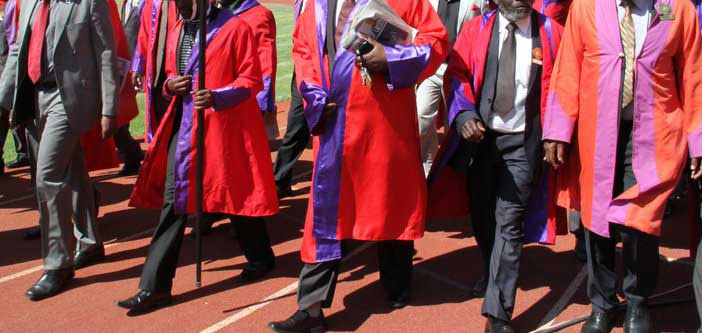
Rodgers Irimayi
Cultural Perspectives
ZIMBABWE is home to a rich cultural heritage, with numerous tangible and intangible heritage that showcase the country’s history, art and traditions. Traditional leaders play a crucial role in identifying and protecting these national heritage sites as their involvement ensures the preservation of cultural heritage for future generations.
Addressing the challenges faced by traditional leaders and providing opportunities for capacity building and collaboration can enhance their effectiveness. Many cultural heritage sites are being destroyed because societies are not aware of their importance.
Traditional leaders and their communities need to be aware about existing cultural heritage sites in their areas, and they must take part in the cultural heritage preservation programme.
What needs to be understood about cultural heritage sites is that they are important in the historical, cultural, architectural, or archaeological significance. It is essential to note that these sites are central when it comes to preserving identity and traditions of the community and the nation. They also play a vital role in the education, tourism, and community pride, while also contributing to local economies through heritage tourism initiatives.
Cultural heritage sites in Zimbabwe include a wide range of places such as monuments which are structures that commemorate significant people or events. Statues such as that of spirit medium, Mbuya Nehanda at the intersection of Samora Machel and Julius Nyerere in Harare, and Father Zimbabwe, Dr Joshua Nkomo Bulawayo, as well as memorials such as Great Zimbabwe National Monument and Khami Ruins, are archaeological locations where remnants or ruins of ancient cities of past civilisations can be found.
Some of these sites also include cultural landscapes such as terraced fields or traditional farming areas shaped by human activity that reflect the interaction between people and their environment.
In order to identify cultural heritage sites, certain characteristics need to be considered. These include physical characteristics such as the existence of ancient structures which look like ancient buildings, walls or monuments. Rock art is common in many areas across the country like Matobo Hills as well as in Magondo Village near Ruwombwe Secondary School in Nyazura.
Ruwombwe Mountain was a battlefield where many fighters from both sides of the war lost their lives. Up to now there are many remains of fallen heroes buried in shallow graves. The Ruwombwe area is just, but an example where a lot of undocumented heritage sites are found.
The traditional leadership needs to identify areas of historical significance such as battlefields sites where historical battles were fought, such as the Battle of Sinoia (Chinhoyi). The liberation struggle experienced so many battles, and if such battlefields remain undocumented, the history of the struggle for Zimbabwe ends up fading in oblivion.
In some areas, there are missionary sites which can be documented in recognition of early missionary activity, such as Traishill, Old Mutare, Nyazura Mission and Old Mission Station in Chimanimani. There are numerous such sites which can become part of the country’s rich and diverse cultural heritage.
Colonial-era buildings can also be identified and build on the colonial era history, such as the Bulawayo Railway Museum.
Some detention camps need to be identified and remain as part of the country’s history. A detention camp at Chiwetu near Rusape, known as a place where the Rhodesian regime used to carryout notorious torture activities and all sorts of inhuman treatment, have to go into the history books.
As part of the intangible cultural heritage which encompasses non-physical aspects, there are traditions and oral histories which include stories passed down through generations that convey history or moral lessons.
The Ministry of Information, Publicity and Broadcasting Services need to capture through film and record such oral tradition.
Traditional ceremonies and celebrations were events that marked significant occasions or seasonal changes within a culture, and these also bear cultural significance. Performing arts such as music, dance forms, theatre performances that reflect cultural expressions included the Mbende or Jerusarema in Murehwa and Muchongoyo around Chipinge and Chimanimani areas, were used during ceremonies.
In fact, all societies used to have their own unique ceremonies, and all such rich history, with the assistance of traditional leaders, can become part of the history that provides bearing for the future generations.
Through the National Archives, all cultural heritage documents are stored as records for future reference. It becomes easy for those in need to consult the National Archives of Zimbabwe for records of historical events and cultural practices.
There are also art galleries and museums where the National Art Gallery and the National Museums and Monuments collects artifacts on cultural heritage for exhibitions. Some artifacts from the villages can be documented and become part of these displays, rather leaving them being destroyed through ignorance.
By documenting cultural heritage sites, historical facts remain significant to communities and are not distorted. The significance of cultural icons such as Mbuya Nehanda, Sekuru Kaguvi, Mapondera and Chingaira are not forgotten because they were documented.
Facts such as the capture and subsequent execution of Chief Chingaira-Makoni in 1896, and the repatriation of his skull to Britain are kept as the country’s history. Chief Chingaira’s skull has been taken to represent the resistance and bravery of the Zimbabwean people against colonial oppression, and such important history need to be kept alive.
The participation of traditional leaders in the preservation of cultural heritage in Zimbabwe has seen Zimbabwe Chiefs Council being instrumental in promoting the preservation of cultural heritage sites.
Chief Makoni, a prominent traditional leader in Manicaland Province, has worked tirelessly to protect and promote the cultural heritage of his community, including the preservation of traditional artifacts and historical sites. There are challenges that traditional leaders face which include limited resources in protecting heritage sites where there are no funds and personnel. Traditional leaders also need to be enhanced through capacity building programmes to enhance their skills and knowledge in heritage management and conservation.
Another area that requires consideration is that of collaboration and partnerships to enable traditional leaders to benefit from Government agencies, development partners, and other stakeholders in order to leverage resources and expertise.
To promote the preservation of cultural heritage sites in Zimbabwe, there is need to ensure that traditional leaders as the custodians of, both the intangible as well as tangible heritage, lead in identifying the heritage sites. They can recognise their importance and foster understanding among cultures while promoting respect.
It is them who are capable of promoting communities to provide security and protect the sites. Government through the National Museums and Monuments should use various initiatives including safeguarding measures set forth by organisations such as UNESCO under its 2003 Convention for the Safeguarding of Intangible Cultural Heritage.
Feedback from Readers:
Reader 1: Sir, your column is informative. Some ward councillors do not respect long held traditions in some wards. Traditional leaders are the backbone of our culture.
Reader 2: We need to adhere to our culture, no matter what.
Rodgers Irimayi is the Ministry of Information, Publicity and Broadcasting Services Masvingo Provincial Information Officer. He writes in his personal capacity and can be contacted on +263778246098 or [email protected]


 Online Reporter