admin
admin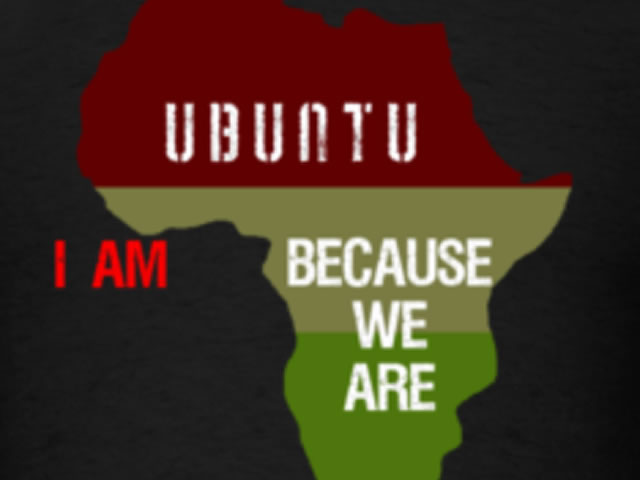
Literature Today With Stanely Mushava
Book: African Philosophy and the Future of Africa
Editor: Gerard Walmsley
Publisher: The Council for Research in Values and Philosophy (2011).The keynote attributes of traditional African philosophy are community, morality, fraternity and humanity.
While it inheres in varied matrices and modes of discourse, African philosophy fundamentally frames the world in terms of mutual responsibilities.
Henry Odera Oruka identifies six divisions of African philosophy, namely ethnic, sage, ideological, professional, literary and hermeneutic.
There is a notable difference of outlook between African thought and trending Western world views, which detach the individual from wider community and amplifies self-interest above common good.
Ubuntu, being a concept of humanity towards others, is the principal framing point of Southern African philosophy.
Its social significance and universal utility are not in question. It explains the individual’s relationship to society in terms of an inseparable bond and assigns inestimable value on virtue.
As Michael Onyebuchi Eze articulates, humanity is a quality we owe to each other since we belong to and depend on each other.
However, a cursory assessment of post-colonial Africa shows that the continent has, by and large, been departing from the tradition of wisdom.
Africa, being assailed by the roughshod implements of globalisation, is drifting down to dysfunction, disorientation, dislocation and disintegration.
Family values which formed the indispensable pivot of the African society are being rendered anachronistic as a web-captive, sex-centric ferment degenerates the continent.
The concept of sharing as the basis of society has been undermined by institutionalised kleptomania.
Impenitently corrupt post-colonial administrations are perpetuating the atrocities of colonialism at the peril of millions at the base of the class pyramid.
Contemporary strivings in philosophy have largely shirked responsibility from the future and reverted to egocentrism and nihilism, being incapacitated by Western-oriented post-nationalism.
“African Philosophy and the Future of Africa,” a compendium of papers on African philosophy edited by Gerard Walmsley, sets out to touch base and engage concrete issues, in light of the philosopher’s mandate to respond to the issues of their day instead of oscillating around indeterminate and inaccessible theses.
The volume concurs with Joseph Margolis in its aversion of methods which detach professional work in philosophy from personal commitment and social and cultural contexts — an indiscretion the editor deems inexcusable in a world of grim atrocities.
Rather, a conceptual continuity is idealised between the examination of knowledge and the direction of life.
Philosophers must be seen to pursue socially significant endeavours which enhance the sum of human welfare instead of contrived sophistry.
“Philosophy has its origin, not just simply in a desire to understand more clearly or deeply or systematically, but also in the philosophers felt awareness of and resistance to the disorder in his surrounding culture or society — an awareness that threatens the philosopher’s s own soul,” Eric Voegelin is tagged in.
Walmsley characterises passionate thinking and deep concern for concrete issues as the essential attributes of African philosophy, hence requisite preoccupation with ethics, socio-political and cultural philosophy.
Normative is the quest for the pertinent and the durable hence Steve Biko’s assertion: “It is better to die for an idea that will live than live for an idea that will die.”
Walmsley solicited entries which would “both demonstrate the relevance of philosophy for life in the African context and also the importance of philosophy from Africa for the wider world context.”
Under deliberation are the relatable spectra: “African Epistemology: Culture and Truth,” “Ubuntu: Individual and Community,” “African Identity” and “Development and African Culture.”
Bert Olivier’s “Truth, Power, Intellectuals and Universities” faults higher education in Africa for merely producing labourers instead of cultivating quality leaders and politically conscious citizens.
Olivier is up against the double diversion of popular entertainment and bureaucracy which for him incapacitate civic consciousness and bemoans universities’ inability to counter the phenomena.
“It is probably the case that few people ever go beyond the switching of television channels, or texting one another by (aptly named) cellphone to combat boredom, and besides, the more people are bored, the more capitalism flourishes by providing instant ‘interest,’ from ‘reality shows’ and professional sport to pornography; at a price, of course,” writes Olivier.
The African intellectual is urged out of prevailing convention, resist the constrictions of corporatisation and bureaucratisation.
However, the paper is inordinately allusive to Michel Foucault to an extent whereby it is hard to distinguish the writer’s original thoughts from the protracted rendition of the former.
Bernard Matolino explores whether the concept of ubuntu holds fast in the face of HIV and AIDS in his paper “Abantu and their ethic in the face of AIDS.”
Matolino notes the efficacy of ubuntu in taking care of the infected and the affected.
“Even in cases where a person has pursued patently errant ways and has no-one to blame but herself for her status, the community goes a long way in forgiving and embracing the individual to give her the care that is due to her.”
However, Matolino questions the adequacy of the community-based moral philosophy of ubuntu in response to the more private area of sexual morality in which the virus is situated.
“Ubuntu appears to be designed to deal with matters that are very public.
“HIV and AIDS issues are left to the discretion of the infected person.
“She is not compelled to disclose her status and her status is hidden from her community because they cannot see it,” Matolino observes.
“She may even choose to actively spread the virus or not. Her relatives are not able to offer her help or be with her in the experience of having the virus.
“It is only when she has full-blown AIDS and is dying that people around her become aware of her condition.
“This makes it extremely difficult for the ethic because the virus operates and multiplies in secrecy, only showing itself when it is too late to offer any help to the infected person,” notes Matolino.
In my opinion, there is need for ubuntuist educators to be up to the minute with information as to why youths are increasingly averse to abstinence and why fewer couples still value fidelity so as to respond with relevant messages without necessarily ceding moral ground.
Ubuntu, when reconfigured to medical realities and the complexities of a degenerate information age, will be a more potent troubleshooter, instead of the domineering absurdity irony of medically capable but morally deficient solutions.
“To BEE or not to BEE,” currently a topical issue in Africa, with Zimbabwe as a sterling, albeit internationally persecuted, example, is the question Gampi Matheba explores in “Black Economic Empowerment.”
Matheba defends Black Economic Empowerment (BEE) and Affirmative Action (AA) policies on which liberals have heaped scorn and tags of racism, nepotism and the brain-drain.
Matheba argues against liberals’ suggestions that South Africa should abandon the policies, pointing out that shape-shifters are up against a problem created over centuries.
“Centuries of racial discrimination and structural socio-economic problems inherited from the past simply militate against that course of action,” Matheba says.
“In fact, these malignant problems call for the intensification of AA and BEE programs, instead of their abandonment. The government cannot abandon its responsibility of transforming South African society in all respects,” she says.
Thaddeus Metz’s “African Values and Capital Punishment” maintains that the death penalty is morally unjustified and should be abolished because it undermines human dignity and degrades people’s special capacity for communal relationships.
In “Identity Issues amongst South African Pentecostal Charismatic Christians,” Maria Frahm-Arp seeks to establish how life enhancement theology is impacting its recipients and whether it is sustainable.
Frahm-Arp notes a new accent whereby the previously disadvantaged are urged to actualise their potential, make their mark on the global corporate world and engage with technology and modernity and to become successful.
On the whole, the volume is a significant undertaking as it explores ways by which Africa can tap into its rich traditions of wisdom to maximise its welfare in the face formidable counter-forces.



 Online Reporter