admin
admin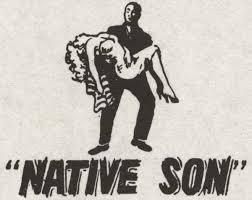
Lovemore Ranga Mataire The Reader
THE need for self-definition and identity seem to be the overarching themes in Richard Wright’s “Native Son” (1940) through Bigger, who throughout the text is an unsettled figure longing for a sense of belonging in an America that degrades black people. Self-definition is the capacity for self-reflection or awareness of one’s unique attributes in terms of value system, customs, traditions, skin colour ultimately shapes one’s identity.
In “Native Son”, however, the attempt by Bigger — the protagonist — to find a better expression of his identity is constrained by several factors inherent in the cultural, economic and political fabric of the American system.
One of the obstacles that litter his path to self-definition is the fear most black people have of doing anything in white America.
Given America’s history of slavery and racism, a fatalist fear seems ingrained in Bigger from childhood.
He is obsessed with the fear of possible arrest and fear of stigmatisation, which demobilise him.
The black person in America, according to Richard Wright, is denied the power of choice and is consequently driven to an obvious destiny.
Issues of race, racism and race relations loom large in “Native Son”, as these have carved out an undeserved identity for blacks as belonging to the lower caste going by Social Darwinism theory.
The definition of one’s identity based on one’s skin has stigmatised blacks to a point where they are regarded as being intellectually inferior. They are depicted as a people with brawn but without brains.
The racism is exemplified by the way the murder trial of Bigger is conducted where the presiding judge seems to have already condemned Bigger to the gallows even before hearing his side of the story.
Besides racism, the issue of power, ownership and deprivation also contribute to hindering one’s search for self-definition and identity as the system relegates blacks to be perennially on the fringes of mainstream decision-making processes.
Bigger feels brutally alienated from a system that has already branded him as worthless.
Without power — be it political or economic — one’s search for identity becomes stunted as those with the levers of power determine the national discourses and ultimately determine what is right or wrong.
It is for this reason that attempts by Bigger to establish his own independent space prove an unenviable task as he does not control the levers of power which are skewed in favour of whites.
The American system has been structured in such a way that any attempts by people to aspire for any social mobility is limited due to very few opportunities and lack of access to a proper education for blacks.
Gripped by the basic need to survive, Bigger and his fellows resort to crime as some kind of escape but this in turn condemns them to fit within the stereotypical labels attached to them of having a criminal mentality.
Even though the killing of Mary, a white girl, is accidental, Bigger is condemned as a murderer just like all the other niggers. Another factor highlighted in the text as hindering self-definition and identity is religion.
Religion plays a major role in the lives of black people in “Native Son”. Bigger’s mother uses religion as some kind of therapy to sooth her degraded soul, and she encourages her son to be resilient in the face of adversity for the Kingdom of God is reserved for those who suffer and are poor on Earth.
Religion, therefore, is used to teach black people to be submissive and not challenge the status quo.
Bigger finds religion to be a vehicle that enhances the exploitation of black people and he is ultimately an outsider within his family and within broader American society.
While issues of spirituality are supposed to uplift one’s individual sense of worthiness, Bigger feels differently as he is failing to relate to the Christian doctrine of equality with what is playing out in the society he lives in.
More than anything, the family, which is the basic unit of any society, is the foundational basis upon which one can derive his or her identity as illustrated in the book, albeit in a negative way.
Bigger’s family is dysfunctional and has the gaping hole left by the absence of a father figure.


 Online Reporter