

 Chronicle Editor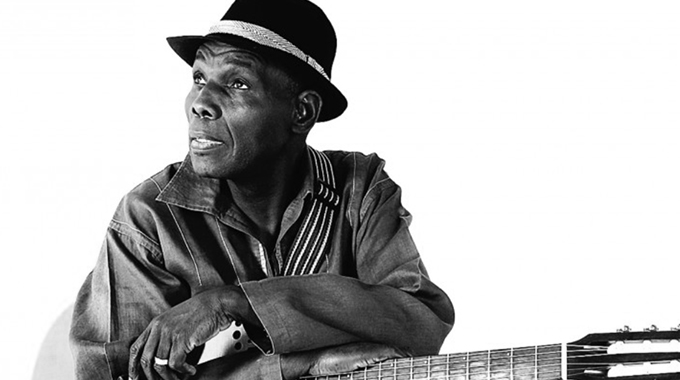
Lenox Lizwi Mhlanga on Saturday
Those of us who studied William Shakespeare at high school, and hated it, will remember that timeless line from The Twelfth Night. If music was the food of love, then play on! It fitted well with the times, when our hormones were playing havoc.
We used to note down the lyrics of love songs of the day, just to reproduce them in endless missives dripping with desire.
They were posted to unsuspecting damsels at boarding schools scattered throughout the country. Hoping that one of them, at least would take the bait.
But that’s a story for another day. A fellow scribe was to take that famous Shakespearean quote and redraft it to say: “If music be the food for the soul, then play on!” It is with this very intimation, that I write about the devastating passing, in short succession of each other, of two music icons.
Oliver Mtukudzi and Dan Tshanda, most definitely two sides of the same coin left us to join that great band in the sky. They left us with a plethora of memories that evoke all sorts of emotions when their music is being played.
Bra Dan, as I used to call him, was one of the most prolific producers the region has ever had. I was introduced to his music, just as that of Ray Phiri and Stimela, as well as Sankomota by erstwhile friend Lloyd Ncube.
Now based in the United Kingdom, he and another close buddy of ours, and homeboy, Freedom ‘Fritz’ Dube, formed a trio of base morals.
Lloyd had the advantage of having a number of relatives based in South Africa.
He would pay them regular visits and would come back to regale us with tales fit for an action movie.
‘Indaminya’ was a place of contrasts, but it is the music that really found root in the shebeens in the western suburbs.
By now you would have guessed that we were regular patrons, unbeknown to our parents.
Well, at least our mothers were.
We were the life of the party. Singing along to all the tunes as if we were injiva.
The dances caused everyone else to sit down to watch. Be it pantsula of Ray Phiri’s wiggle.
I had the added advantage of having worked at a music shop in my spare time. So I would get all the free samples that the salesmen touted around. My music collection was to die for.
So there at the centre of it all, Dan Tshanda’s stable dominated. Be it Splash, Dalom Kids, Patricia Majalisa, Matshikos or By 4.
Their music was infectious and highly entertaining. And that was the same for their live performances.
At the centre was my other friend Dave ‘Madamara’ Ncube, whose skills as music promoter were honed by the late J J Chavunduka. Madamara had the uncanny ability to lure the best performers of the time to our backyard.
My last live show featuring Dan Tshanda and his stable was by accident. The family had moved to neighbouring Botswana, and I was on one of my irregular visits.
After arriving late in Bulawayo, I woke up in the early hours to the unmistakable sounds of Dalom Music rising out of Hartsfield Rugby Ground.
Taking a short walk from our nearby flat I was confronted with a full blown show, with a potbellied and sweaty Dan Tshanda commanding the crowded stage.
He was pacing up and down chanting Rhofolela, with the Dalom Kids and the crowd responding in unison.
Too tired to dance along I sat on the terraces and watched with awe as the Big Husband performed for another two hours non-stop to the break of dawn. Sprawled on one of rugby’s hallowed grounds were tired revellers too tired even to lift a finger, wailing, ‘Oh Rhofolela Woooo!’
I never got to see another live Dalom Music show, even when he paid Botswana numerous visits.
Oliver Mtukudzi on the other hand formed the backdrop of what to me has been a tumultuous existence.
From pre-independence days when we would strain our ears to pick up the subtle political messages in his music. For many a time the radio stations would give the tunes of the Black Spirits a wide berth for that very reason.
I was exposed to full blown Tuku and Thomas Mapfumo at Fletcher High where I was a border.
My schoolmates from the northern and eastern parts of the country would impress with their accurate rendition of the lyrics, so heavy with political innuendo.
I remember vividly one particular impromptu music contest at Speke Hostel, where one Lawrence Dowo mesmerised all of us with a spirited drum rendition of ‘Ziwere’ from his album Ndipeiwo Zano.
The rest of the audience would shout unison with ‘Kakano kakadzi, Awugeba, Awugeba!’ while prancing around like banshees.
It was as if they were all possessed.
When I was to later host an Afro Jazz programme on Radio One, I made it a point to pay homage to Zimbabwean music at a time when it wasn’t that popular on that formerly elitist station.
The programme itself drew a lot of criticism from conservative white listeners.
But it marked an indelible about turn in post-independence broadcasting. A sure sign, as they would put it, that we the ‘terrorists’ were now in control.
Tuku’s star internationally would continue to rise to uncharted levels for a Zimbabwean artiste such that when his health began to slowly fail him, it was already undisputed that on taking the final bow, he would be the hero that he deserved to be.


 Online Reporter