

 admin
admin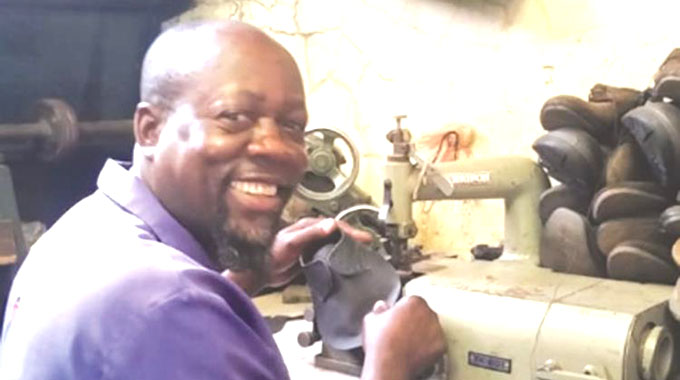
Tanaka Mahanya Features Writer
After graduating from university or college, most people think of applying for job vacancies in companies, organisations and institutions to sustain themselves.
However, job hunting is increasingly becoming a challenge, because the formal industry is too flooded to accommodate more people.
Graduates end up roaming the streets, instead of thinking of other ways of eraning a living. What most people do not realise is that Western forms of education are not the only key to success, as loads of money lie idle in the informal sector.
The informal sector plays an important role in providing employment to youths and women, hence empowering them and leading to the development of the country.
The perception that the formal sector is the primary source of job creation is completely out of step with reality. A lot of people have lost jobs in recent years through retrenchments, therefore, the informal sector could work as a remedy and improve the livelihoods of citizens.
As a World Bank report notes the informal sector in many countries has filled a gap left by the formal wage sector as a principal source of job creation.
While a lot of people think office work is the only way of making money, some have managed to acquire large sums through investing in the informal sector.
A number of people have found hustling a success in the world of buying and selling shoes.
One of such person is Givemore Swerakwenda, who is in the shoemaking business, which has helped him in sending his children to school as well as sustaining a decent living.
His job ranges from making and repairing all kinds of shoes, belts, wallets, sandals to men’s and ladies’ wear.
Losing his father at a tender age forced Swerakwenda to drop out of school at Ordinary Level, due to financial problems, as his mother could not carry the responsibility alone.
He started repairing shoes in 1993 as an employee for others in the business, and later learnt to make new shoes from some of his benevolent employers, which opened new avenues for him.
His business took shape in 2000 when he developed a trade name of his own, and he has not looked back since then. In a busy week, he makes the equivalent of US$200 (wholesale) from selling the shoes he makes at his workshop along Harare’s Kaguvi Street.
He can even make more if he sells to individual customers.
When he gets large orders, Swerakwenda hires extra hands to assist him, as he no longer has his own employees due to the economic challenges.
For someone who didn’t complete his Ordinary Levels, the enterprising shoemaker believes that only the sky is the limit. From humble beginnings, he manages to get income which far exceeds the salaries of some people working in the formal sector.
The International Labour Organisation (ILO), estimates that the informal sector — represented by small and household businesses — accounts for more than 66 percent of total employment in Sub-Saharan Africa, an indication that people have started investing in the lucrative businesses outside the formal sector.
Government and non-governmental organisations should recognise that a well-structured informal sector can absorb people laid off from formal sector jobs.
Training programmes aimed at giving people more options on securing employment not only in the official sector, should be spearheaded to ensure that people in the informal sector, like Swerakwenda, acquire skills to develop their businesses.
Transport costs can be avoided by those who have their businesses located in the residential areas they live in.
Rather than running to relatives, or crying foul when faced with retrenchment or failure to acquire a job, there is need to reflect and consider other options, for self-employment may be the way to go.
You may be that employer others are waiting for!



 Online Reporter