Chronicle Editor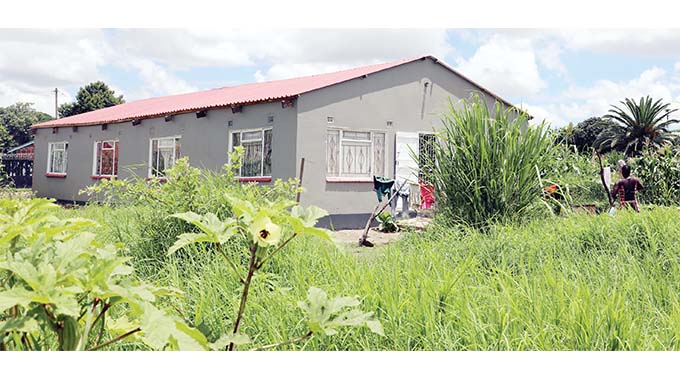
Vincent Gono, Features Editor
A FORMER senior government official once made an ecologically reckless remark when there was a tiff with stakeholders in the environmental conservation sector over the construction of a complex on a well-known wetland in Harare some years ago.
He said something to the effect that there was no need to stop an investment because people wanted to protect two bullfrogs. With that remark the construction went ahead with murmurs of disappointment and disapproval from environmentalists who felt that the environment and the wetland in particular was being violated – it was being sacrificed on the altar of economic and personal expediency.
The particular wetland in Harare has a lot of historical and sentimental value to the country. It is one where a number of visiting dignitaries, statesman and diplomats planted trees. But with that remark, construction on wetlands became commonplace in the country with slow but perfunctory steps being taken to stop those that were doing so while revocation of statutes that prohibit the erection of buildings on wetlands seemed painful.
This year however, nature decided to correct the recklessness of town planners, local authorities, individual land barons, property developers and companies as rain water claimed its traditional space and routes much to the shock and suffering of those that are complicit or who innocently stood in its way.
To the farming community, the rains are a good pointer to a fruitful agricultural season but beneath the veneer of positivity in agriculture lies an exposé on the dangerous planning that often disregards these important ecological sites such as wetlands. This has been so because the culture of conservation of water and its sources in the country has been limited to lakes, dams, tanks and other man-made water reservoirs.
Little attention has been paid to the natural sources of so many rivers and perennial streams that feed into the various creations of man — the wetlands, while their many ecological functions have equally been ignored.
In fact, people have taken it upon themselves to disturb these ecological sites with reckless abandon.
This is despite the fact that the country has a rich and clear legislative ammunition on wetlands provided in Section 113 of the Environmental Management Act (Chapter 20:27), Statutory Instrument 7 of 2007 of the Environment Impact Assessment (EIA and the Ecosystems Protection Regulations) which provides for the minister to declare any wetland to be an ecologically sensitive area and gives him/her the power to impose limitations on development in or around such an area.
Local authorities have continued to ignore calls by central government not to build on wetlands and have failed to move people whose houses are in wetlands and flood plains, who have become perennial victims of floods each time the country receives above average rainfall, to higher ground.
And apart from a comprehensive and often not followed legislative framework the country is a member of the Convention on Wetlands of International Importance, called the Ramsar Convention – an inter-governmental treaty that provides the framework for national action and international co-operation for the conservation and wise use of wetlands and their resources.
The Ramsar Convention is the only global environmental treaty that deals with a particular ecosystem. The treaty was adopted in the Iranian city of Ramsar in 1971 and the Convention’s member countries cover all geographic regions of the planet.
By definition a wetland is an area that is seasonally or permanently covered by shallow water or an area where the water table is close to or at the surface where there are water saturated soils and water tolerant plants.
Commemorating the World Wetlands Day on Tuesday, Environment, Climate, Tourism and Hospitality Industry Minister Mangaliso Ndlovu bemoaned the destruction of wetlands, saying they should be preserved as they play a critical role in the prevention of floods, droughts and other natural disasters.
He said those who have chosen to erect buildings on wetlands were either misinformed or ignorant of the social, economic and political importance of wetlands saying they see in wetlands open spaces which they were not.
“Wetlands should be considered as solution providers within an urban and peri-urban context, which can mitigate risks from a changing climate, support food production for a growing population, supply water and generate income through tourism and recreation. Too often the benefits which wetlands provide within urban and peri-urban environments are not fully recognised as they compete against urban development. Instead wetlands should be integrated into planning and decision-making thus becoming part of the development agenda.
“The country is commemorating this day when nature is fighting back human encroachment into wetlands by responding to developmental and human activities on these sensitive ecosystems.
This has been observed by the current flooding of residential areas in major urban centres and even rural areas in the country. That is a true testimony of the vengeance of nature, like we have never seen before in recent history,” he said.
Wetlands, according to EMA, provide an important habitat for a wide variety of wildlife, trap moderate amounts of soil from running off nearby uplands before they enter lakes and streams. They maintain and improve water quality by filtering contaminants and excessive nutrients as well as renew ground water supplies.
Wetlands also help control flooding and reduce flood damage and further support recreational activities including fishing, hunting, nature appreciation, and bird watching and are a source of economically valuable products such as wild rice and commercial fishing.
They prevent flooding by holding water much like a sponge and help keep river levels normal and filter and purify surface water. Research has shown that wetlands accept water during storms and whenever water levels are high. When water levels are low, wetlands slowly release water. Wetlands also release vegetative matter into rivers, which helps feed fish in the rivers.
Wetlands help to counter balance the human effect on rivers by rejuvenating them and surrounding ecosystems. Many animals that live in other habitats use wetlands for migration or reproduction. Some birds nest in large old trees, but need shallow areas in order to wade for fish and aquatic life. Amphibians often forage in upland areas but return to the water to mate and reproduce.
An environmentalist who requested anonymity said wetlands were important in that they regulate hydrological processes apart from them being home to a number of animal and plant species.
He added that they have a socio-cultural value attached to them and tampering with them negatively affect their cultural value because in some areas they were deemed sacred where people attach a strong cultural significance on them.
“Wetlands are important in that they regulate hydrological processes such as evapo-transpiration and run-off. Tampering with them therefore causes the effects of climate change to be more apparent.
“Economically, the situation that we have where local authorities use more than eight chemicals to purify water is evidence that wetlands that help purify water have been destroyed and the costs are usually borne by people.
He added that an Environmental Impact Assessment (EIA) should always be carried out before any developments could be done on wetlands and EMA should always ensure that due processes were followed.
Renowned property developer Mrs Smelly Dube urged other property developers in the country to be cognitive of environmental issues when parcelling out stands in urban set-ups.
“What we are seeing where houses are being built in wetlands is a violation of environmental statutes and a clear disregard of people’s investments by property developers while a number of local authorities are complicity in it all. Giving people land in wetlands is clearly lack of empathy.
People should draw lessons from the exposure in poor planning that has been made apparent while government should take decisive action on those that have been breaking the law,” she said.



 Online Reporter