Online Reporter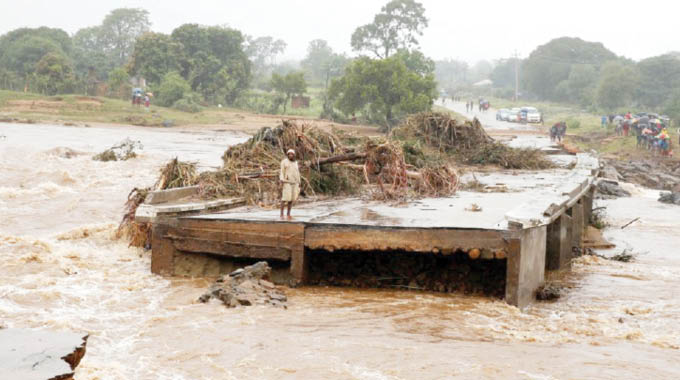
Ray Bande
Senior Reporter
STUDYING ant movement, especially noticing ants moving their eggs to higher ground, serves as a traditional warning sign for heavy rains and potential floods.
Heavy fruiting, marked by large amounts of wild fruit on specific trees, warn of a good rainy season ahead.
Unusual movements of wild animals or changes in domestic animal behaviour warn of approaching extreme weather events.
Early flowering characterised by trees blooming at unusual times can signal a shifting or disrupted rainfall calendar.
Leaf shedding that is usually perceived through retaining or dropping leaves in specific patterns warns of coming dry spells or extreme heat.
Continuous crying of birds or the persistent calling of the haya (cuckoo bird) serves as an early warning sign for drought or delayed rains.
Bird migration that is observed through the arrival, absence, or unusual nesting height of swallows (nyenga-nyenga or izinkonjane) helps predict the onset and quality of the rainy season.
Caterpillar emergence see through the appearance of specific soil worms or mopane worms at atypical times indicates changes in seasonal quality.
These are examples of practical Indigenous Knowledge Systems (IKS) patterns or behaviour, and the list is just long.
Ideally, IKS refer to the traditional beliefs and experiences, ecological insights, and survival practices passed down across generations through oral history, observation, and communal practices.
IKS in Zimbabwe use signals from plants, animals, birds, and the atmosphere to warn rural communities about droughts, delayed rains, or severe weather.
Why do they matter?
Climate change remains one of the greatest development challenges of our time.
Zimbabwe continues to experience rising temperatures, prolonged and recurrent droughts, increasingly erratic rainfall, devastating tropical cyclones, floods, and widespread land degradation.
These climate-induced hazards are placing unprecedented pressure on our ecosystems, agriculture, water resources, infrastructure, biodiversity and public health, while threatening livelihoods as well as food security.
Responding to these challenges requires bold, innovative and cost-effective adaptation measures, and it needs no rocket scientist to decipher the relevance of IKS.
Speaking during the technical foundation of Zimbabwe’s Early Warning for All Initiative recent workshop in Mutare, Meteorological Services Department Director and Permanent Representative of the World Meteorological Organisation in Zimbabwe, Mrs Rebecca Manzou, revealed that in the past 50 years, between 1975 and 2026, Zimbabwe’s disaster profile has been shaped by three recurring threats: droughts, floods and storms, and epidemics.
Out of this record, droughts have had the biggest human impact; even though they occur less often, a single dry season can affect millions.
The 2007-2008 drought impacted over six million people, and the 2024 El-Niño crisis followed the same pattern of widespread food insecurity.
Given such a background, even the blind can see that flooding, for example, is a serious climate challenge that poses substantial economic, social and environmental challenges across several communities across Zimbabwe.
Documented data from experiences over decades has shown that the northern and southern low-lying areas of Zimbabwe experience significant flooding, with low lying areas such as Chibuwe in Chipinge District and other districts such as Muzarabani and Guruve in the Zambezi Valley highly vulnerable to flooding.
The Save catchment area, including Chimanimani and Chipinge districts, are highly exposed to cyclones that also have a tendency of resulting in flash flooding.
The same also applies to the Mazowe Catchment as it is more prone to floods which continue to pose serious problems.
In Midlands Province, Gweru District recently experienced flooding where settlements have expanded into areas susceptible to seasonal flooding.
In the Runde Catchment, areas surrounding major reservoirs like the Tokwe-Mukorsi Dam, carry seasonal flood risks.
The threats get worse with each passing year.
Floods and tropical storms are the deadliest; they strike fast and cause sudden spikes in fatalities and displacement.
Cyclone Idai in 2019 remains the worst on record, with more than 400 confirmed deaths and more than 60 000 people displaced, plus major damage to homes, roads, and crops.
Epidemics after flood events are the most frequent; with cholera and malaria outbreaks often following heavy rains and flooding, more so when water systems are damaged. These health crises hit both rural and urban communities hard and drive up mortality in localised areas.
Overall, the past 50 years have shown epidemics and floods as the most frequent events, while droughts affect the largest number of people.
No wonder Mrs Manzou concedes: “Our country sits at the crossroads of climate vulnerability. The transboundary Zambezi, Limpopo, and Save rivers; majestic as they are, bring, not only life, but also the threat of floods.
“Our semi-arid regions, the lifeblood of our agriculture, are haunted by the spectre of drought. These are not abstract threats. They are our lived reality.”
Faced with such sad realities, IKS, a low hanging fruit in disaster management for a country like Zimbabwe, becomes much more relevant than ever before.
It is about people.
It is about the grandmother in Chimanimani who knows that when the ants move to higher ground, the rains will flood.
It is about the farmer in Chipinge who observes the behaviour of birds before a storm.
It is about the village elder in Chendambuya who reads the clouds and knows a drought is coming.
Mrs Manzou noted: “We are not replacing indigenous knowledge; we are integrating it with modern science. Because the wisdom of our elders, passed down through generations, is itself an early warning system.”
Mrs Manzou commendably concede that while the Government is working overtime to improve the country’s ability to forecast severe weather conditions, use of IKS can go a long way in helping the strained weather forecasting resource base.
Mrs Manzou said: “Let me be frank about our current reality. We have only 47 synoptic stations for the entire country. Fewer than 120 automatic weather stations. Our forecasting equipment is outdated. Our capacity is stretched thin.
“But we are changing that. We are expanding our observation network; deploying automatic weather stations to achieve 5km grid coverage. We are installing flood level gauges and lightning detection systems. We are upgrading our numerical weather prediction models.
“And most importantly, we are moving towards impact-based forecasting. This is a fundamental shift. We will no longer just tell people what the weather will be. We will tell them what the weather will do.”
Read more on www.heraldonline.co.zw
Tied to the use of IKS, is the promotion of Nature Based Solutions to climate change espoused in Zimbabwe’s Nature-based Strategy for Climate Adaptation.
The Acting Permanent Secretary for Environment, Climate and Wildlife, Mr Washington Zhakata, at a recent validation workshop for Nature Based Solution for Climate Change Adaptation, said: “It is within this context that Nature-based Solutions present a transformative opportunity.
“By protecting, restoring and sustainably managing our forests, wetlands, grasslands, rivers, catchments and other critical ecosystems, we can reduce climate risks while conserving biodiversity, strengthening water security, improving agricultural productivity, creating green jobs, supporting sustainable livelihoods and enhancing the well-being of our communities.
“Healthy ecosystems provide natural buffers against climate extremes and are among the most effective and affordable tools available for building long-term resilience. Simply put, nature itself holds many of the solutions to the climate crisis we face today.”
Clearly, the development of the Nature-based Strategy for Climate Adaptation reflects Zimbabwe’s continued commitment to implementing its National Climate Change Adaptation Plan (NAP), Nationally Determined Contribution, National Climate Policy, National Development Strategy 2 (NDS2) and other national development priorities.
It also advances our commitments under the Paris Agreement, the Convention on Biological Diversity, the Kunming-Montreal Global Biodiversity Framework, the Sustainable Development Goals, and other relevant international environmental agreements.
Mr Zhakata said: “Importantly, the Strategy contributes to our national aspiration of achieving an empowered and prosperous upper-middle-income economy by 2030 through sustainable environmental management and climate-resilient development.
“As we look beyond the development of this Strategy towards its implementation, we must recognise that success will depend on sustained collaboration and shared responsibility. Government alone cannot achieve this transformation.
“Strong partnerships among Government institutions, local authorities, communities, traditional leaders, the private sector, academia, civil society organisations and development partners will be essential in mobilising the knowledge, innovation, technical expertise and financial resources required to mainstream and scale up Nature-based Solutions throughout Zimbabwe.”
Catholic University of Zimbabwe lecturer and Disaster Management expert, Mr Onsimo Mgarabha, summed up the relevance and importance of IKS, saying: “This is a concept that comes at minimal, if any, cost to the State.
“Communities just observe local environmental changes – a such as the behaviour of specific animal species, bird movements, tree flowering patterns, and cloud formation to predict imminent hazards like floods and droughts.
“In short, indigenous practices foster long-term community resilience by guiding and promoting sustainable resource management and locally adapted recovery plans.”