Chronicle Editor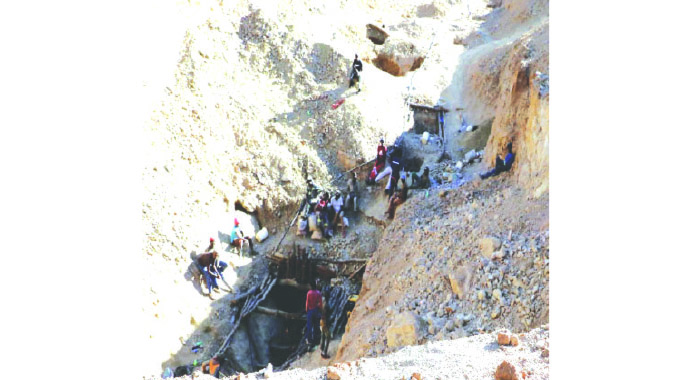
Yoliswa Dube-Moyo, Mat South Bureau Chief
HUFFING, winded and almost completely breathless from walking up the pit where some illegal gold miners hoping to strike it rich are hard at work, Mrs Pretty Zulu is carrying a bag of clothes to sell.
Beads of sweat drip down her forehead as she hurriedly unpacks a few things for the miners to see.
Their attention is hard to hold for long so she has to be quick and convincing.
Mrs Zulu has come to Colleen Bawn in Gwanda District, Matabeleland South Province, all the way from Masvingo to sell her wares.
Here, she hopes to make a killing and go back home richer than she was when she came.
The illegal gold miners are hasty spenders who never dither to part with a few dollars and Mrs Zulu is taking advantage of that.
“When I come here, I know at least half of my things will be bought. If I come early enough, I go back home with no stock most times.
These guys are always willing to buy.
I don’t even have to sleep over because I know they’ll buy,” said Mrs Zulu who had already managed to sell some clothing items within a few minutes.
She said besides clothes, she sells shoes and groceries.
“This kind of business needs you to be strategic.
If you bring what the people want, you won’t go wrong.
Sometimes I bring certain things and they ask for something different so next time I bring what they would have asked for,” said Mrs Zulu.
Gwanda sits on the Greenstone gold belt which hosts notable gold producers including Blanket, Vubachikwe, Jersey, Freda and Horn mines.
Illegal gold miners have however, sprouted all over as they seek the precious metal.
Mineral output is a source of foreign currency and mining is a source of employment for many.
The only problem is some illegal gold miners have left a trail of destruction in communities.
In other areas, crime rates have risen because of the influx of the illegal gold miners.
Natives say illegal gold miners have altered the DNA of Colleen Bawn which was formerly a peaceful area where armed robberies were unheard of.
“Now we hear a lot about people stabbing each other over one fight or the other. Armed robberies involving thousands of dollars are now common occurrence.
We now live in fear, unlike before when we knew our area was safe, even at night,” said Mr Pride Dubani who has lived in Colleen Bawn all his life.
He said the illegal mining activities in the area had in recent times caused a lot of mistrust among families.
“We live with a lot of the illegal gold miners here in Khayelitsha.
They park their big cars and renovate their houses, we know them but for some all this money is causing problems among their families.
They accuse each other of witchcraft and all sorts of things because of the money they’re getting.
You find them stealing from each other because within their circles, they know who has money and who doesn’t,” said Mr Dubani.
Commercial sex workers, he said, were now frequenting the area hoping to make some hard cash from some of the liquid illegal gold miners.
“This used to be a very quiet and peaceful place but not anymore.
The nights at the bars here are busy.
Commercial sex workers flock the bars and the guys are always ready to spend,” said Mr Dubani.
Earlier this year, gold panners reportedly unleashed a reign of terror in Malungwane Village in Umzingwane District, Matabeleland South province, attacking villagers with axes, machetes and knobkerries.
The development saw community members sleeping in maize fields fearing being attacked at their homes while asleep.
In Umguza District, illegal gold miners were said to be putting the lives of villagers and livestock in danger by using prohibited lethal chemicals such as mercury in search of the precious mineral.
According to research mercury is detrimental to human health as exposure can lead to skin disease, infertility and birth defects.
When inhaled, the chemical can also cause lung cancer.
Mercury is used for gold amalgamation in artisanal mining.
The chemicals pose a threat to the health of animals, humans and aquatic life.
Their faces spattered with mud and mine dust, the artisanal miners were suspicious.
They wanted to know who the new figure at their site was.
Tensions were rising and someone shouted: “Who is that? Why are they taking pictures?”
It was difficult to persuade them to talk. But Mr Mqondisi Moyo who was too curious to let it slide, came closer.
“This is hard work. I live in Khayelitsha and come here in search of gold.
When I’m not working here, I take piece jobs to work on people’s yards because sometimes you work here for a long while and not get anything,” said Mr Moyo.
He said he works in the tunnels at night mostly.
“In order to operate, we pay the police a fee of $20, and another $20 when we get out of the mine pits.
Sometimes our ancestors smile on us and we get the ore that gives good money.
It’s hard work in the shafts and a lot happens there, but what else can we do? We need money; we have families to take care of,” said Mr Moyo.
On a good day, Mr Moyo said he makes up to $200 but the big money goes somewhere else.
“Most of us have handlers; the big guys who get the real gold. Sometimes we sleep in the bush for a couple of days in a row in search of the ore.
What a lot of people don’t know is that this is a game of time and chance. Patience is also very important.
Some people visit inyanga who give them luck charms so they can get to the gold,” said Mr Moyo.
In the 2018 gold rush, more than 100 000 artisanal miners from all over the country scraped the earth for any sign of the precious metal and have not stopped since then.
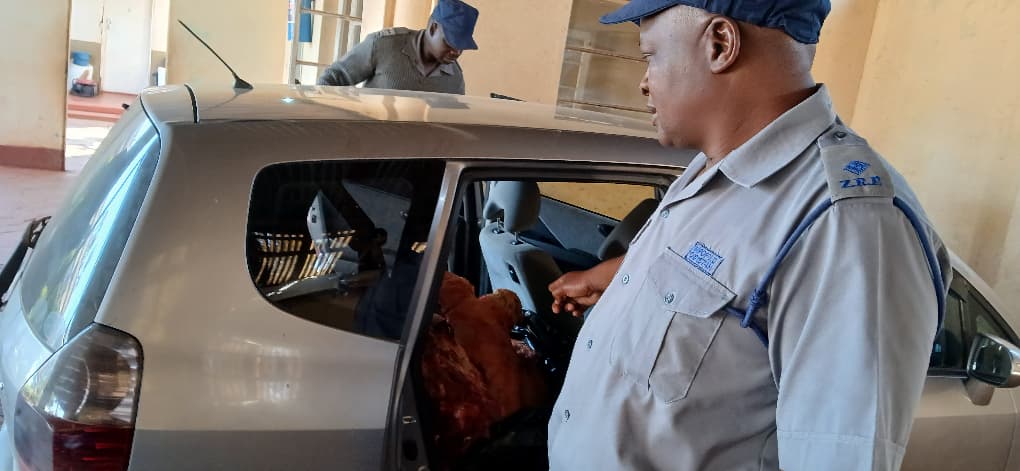
Police say they have arrested 62 739 people for illegal mining activities across the country since January this year under an operation targeting illegal miners and people carrying dangerous weapons.
In January, police launched Isitsheketsha Kasiphele/Chikorokoza Ngachipere/No To Machete Gangs which saw 130 miners being arrested under the operation last Sunday.
National police spokesperson Assistant Commissioner Paul Nyathi said the police blitz had netted 62 739 people since January this year.
“On December 12, 130 people were arrested under operation “Isitsheketsha Kasiphele/Chikorokoza Ngachipere/No To Machete Gangs bringing the cumulative arrests to 62 739,” said Asst Comm Nyathi. — @Yolisswa


 Online Reporter