daniel chigunwe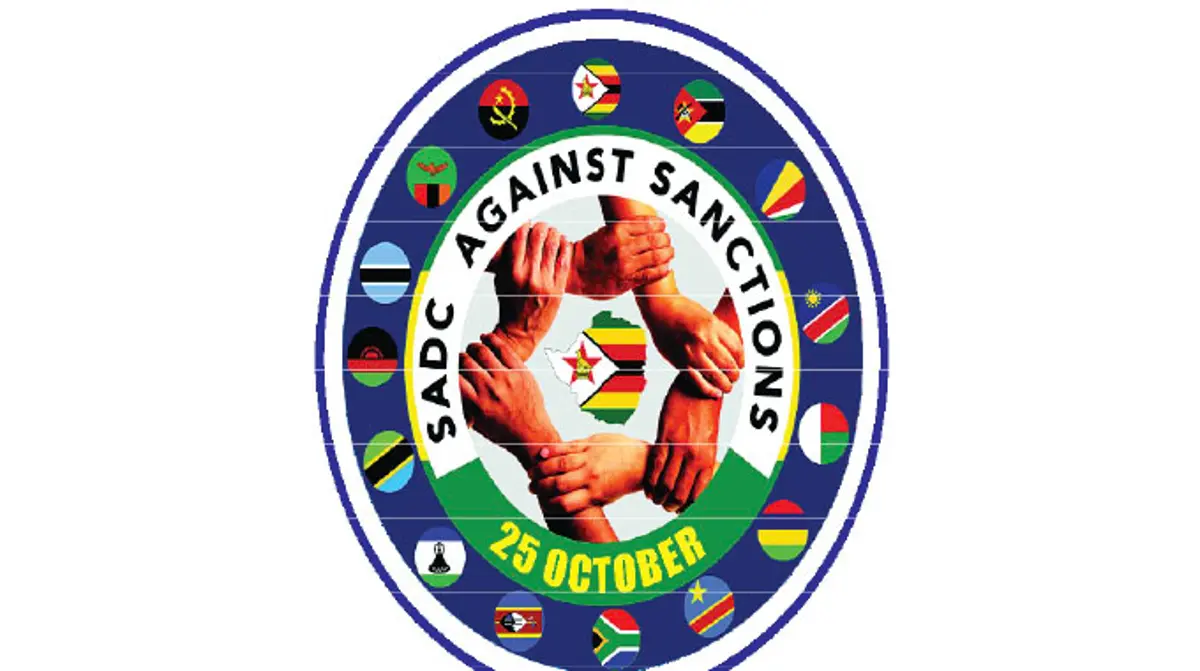
Nobleman Runyanga
It is almost 22 years since the then President of the United States assented to the Zimbabwe Democracy and Economic Recovery Bill (ZIDERA) on 21 December 2021.
This is the legislation which the US uses to administer its illegal sanctions regime against innocent Zimbabweans.
It is the law that the former super power uses to violate the rights of the people of Zimbabwe.
It is interesting to note that the vile law was named the Zimbabwe Democracy and Economic Recovery Act as if it meant well for the people of Zimbabwe.
Those who are familiar with the US’ political ways know that the Western power does nothing for anyone except for its own benefit and good.
It is only benighted people like Nelson Chamisa and his supporters who childishly think that the US has anyone’s interests at heart.
The US enacted the law in response to the land reform which Zimbabweans embarked on in 2000 after the International Donors’ Conference on Land Reform and Resettlement in Zimbabwe of September 1998 failed to reach a funding agreement.
This was despite the fact that the funding of the land reform was one of the major sticking points during the Lancaster House Conference in 1979.
Britain, then under the late Margaret Thatcher, was unwilling to commit to funding the land reform and the US chipped in and assured that it would assist.
However, Britain under the then Tony Blair-led Labour Party refused to finance the land reform arguing that it could not be bound by agreements made by the Conservative Party.
Following the advent of the Second Republic in 2017, the United Kingdom has relented on its anti-Zimbabwe position and is responding warmly to Harare’s engagement and re-engagement programme. But not so with the US, which continues to maintain its illegal and punitive sanctions regime.
This left Zimbabweans with no choice except to embark on the land reform programme in 2000 without compensating the white former farmers.
Fearing the contagion effect of the precedent set by Zimbabweans in the region, especially in South Africa, Britain imposed sanctions on Zimbabweans.
Although this was a bilateral matter between Zimbabwe and Britain, the US and other countries such as Australia entered the fray and imposed their own sanction regimes against innocent Zimbabweans.
Apart from the land reform programme, the US was also irked by Zimbabwe’s military assistance to the people of the Democratic Republic of Congo (DRC) between 1998 and 2002.
Many will remember that the first Prime Minister of the DRC, the late Patrice Lumumba was assassinated by the US’ Central Intelligence Agency (CIA) so that it could replace him with the late Joseph Mobutu (also known as Mobutu Sese Seko), who would allow America’s continued and unfettered access to the country’s mineral resources like cobalt.
The US viewed the late former DRC revolutionary President Laurent Kabila, who was fighting to liberate the country from the hands of US-backed rebel groups, as another Lumumba who stood in the way of its access to the DRC’s minerals. By fighting from the corner of the Congolese, Zimbabwe also became another Lumumba and target of the US.
Although ZIDERA was couched as a law which was intended to assist Zimbabweans to recover economically and enhance their democracy, as shown in the foregoing paragraphs, the sanctions had nothing to do with the seemingly good intentions.
They had everything to do with removing the former President, the late Robert Mugabe and ZANU PF from power and replacing them with the then nascent Movement for Democratic Change (MDC) then under the late Morgan Tsvangirai.
Although the naming and reasons for ZIDERA were diplomatic and euphemistic, former US Assistant Secretary for African Affairs, Chester Crocker explained the reasons for the sanctions when he told Congress that “to separate Zimbabwean people from ZANU PF, we are going to make their economy scream.”
It is evident that the US-hoped that the economic effects of the sanctions would force ordinary Zimbabweans led by Tsvangirai and the MDC to replicate the January 1998 food riots and unseat ZANU PF.
Therefore, some of Tsvangirai’s initiative such as the Final Push protest of June 2003 were not out of his brilliance of mind, but directives from the CIA in pursuit of its quest to remove ZANU PF from power.
Despite the sophistication of the well-resourced CIA, the US underestimated the political chemistry between ZANU PF and Zimbabweans which was born of the 1970s liberation struggle era night meetings (pungwes).
This is why 22 years later and in spite of the countless millions sunk into the MDC project, its various factions and formations by the West, ZANU PF continues to be voted back into power every five years.
Despite its dismal failure in Zimbabwe and elsewhere on the globe, the US continues to tout itself as a champion of democracy, good governance and human rights.
What good governance is there in coming up with a law targeting the innocent Zimbabweans in the name of democracy and economic recovery?
What good governance is there in enacting a law to target a small and harmless southern African country with sanctions outside of the United Nations (UN) framework?
When Rhodesia’s Ian Smith regime declared itself independent of Britain in 1965, the country was sanctioned under UN Security Council Resolution 253 of 29 May 1968 to whip it into line and deter other colonial regimes from emulating its example.
Can Washington tell the world which Security Council resolution underpins its sanctions against Zimbabweans? The sanctions are, therefore, a global illegality.
As of 2020, Zimbabwe had lost over US$42 billion in revenue due to the sanctions. This included lost bilateral donor support estimated at US$4.5 billion annually since 2001, US$12 billion in loans from the International Monetary Fund (IMF), the World Bank (WB) and the African Development Bank (AfDB), commercial loans of US$18 billion and a GDP reduction of US$21 billion.
This, in the US’ warped understanding, is economic recovery.
An Institute for Security Studies (ISS) research in 2019 and 2020 established that investors were put off by the high risk premium placed on Zimbabwe because of the sanctions. Many international banks have cut ties with Zimbabwean banks because of the need to comply with US Office of Foreign Assets Control (OFAC) regulations.
OFAC is the US Treasury’s sanctions implementation arm that monitors sanctions adherence and penalises any US company or individual who does business with a sanctioned individual, entity or country.
In August 2021, the Reserve Bank of Zimbabwe (RBZ) indicated that Zimbabwe had lost 102 correspondent bank relationships since 2011 due to sanctions.
In 2017, OFAC imposed a US$385 million penalty on CBZ Bank in 2017 for processing transactions on behalf of ZB Bank, which was under American sanctions. ZB Bank was placed under sanctions in 2008 until 2018.
OFAC cleared CBZ Bank of the penalty in June this year and issued a warning instead.
In April 2019, OFAC fined Standard Chartered Bank Zimbabwe US$18 million for processing transaction for individuals and entities under sanctions between 2009 and 2013.
This was despite the then US Ambassador to Zimbabwe, Brian Nichols insisting that the sanctions had no impact on Zimbabwe’s economy.
The listing of Chemplex Corporation and the Zimbabwe Fertiliser Company, which are wholly or partly owned by Government through the Industrial Development Corporation (IDC) has hampered the country’s efforts at attaining self-sufficiency in fertiliser availability.
This has, in turn, affected its quest for food security. And this is the US’ idea of economic recovery.
The Office of the High Commissioner of the United Nations Human Rights dispatched its Special Rapporteur on the negative impact of the unilateral coercive measures on the enjoyment of human rights, Professor Alena Douhan in 2021 to Zimbabwe to establish the effects of the illegal sanctions imposed on Zimbabweans by the US and other Western countries.
The major finding of her mission was that the sanctions imposed on Zimbabweans hampered them from enjoying human rights such as access to jobs and economic freedom.
So much from the US that wishes the world to believe its propaganda that it is a paragon of championing for and respecting human rights — a point that Julian Assange would laugh at. Assange is being persecuted by the US for publishing some of its diplomatic cables military logs.
As the Southern African Development Community (SADC) Anti-Sanctions Day, the October 25, beckons Zimbabweans, especially those from the opposition camp, should know that ZIDERA is not in place for the benefit of any Zimbabwean.
It is an imperialistic tool crafted to advance the US’ regime change machinations.
The CCC should understand that the push to remove ZANU PF from power is part of a way grander design beyond merely catapulting Chamisa into power.
As the Anti-Sanctions Day approaches, Zimbabweans from across the political divide should close ranks and fight the illegal punitive measures. Chamisa should disabuse himself of the childish fallacy that the measures will be removed the minute he gets into power.
He and his supporters should see the bigger picture, denounce the measures and, for once, demonstrate to the US and Zimbabweans that he is not another Joseph Mobutu if he is really not.


 Online Reporter