admin
admin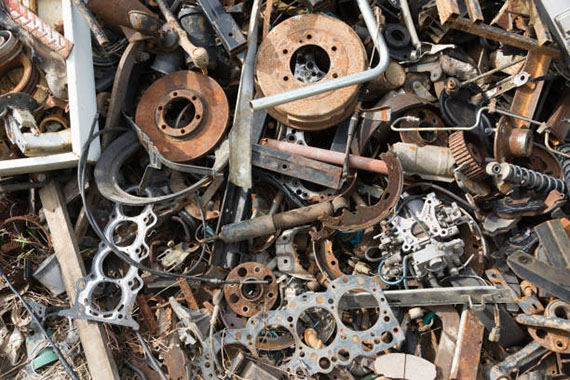
Bulawayo Bureau
ILLEGAL scrap metal exports are bleeding the economy of potential foreign currency earnings amid indications that an estimated US$5 billion worth of scrap material has been traded to neighbouring countries in the last 20 years.
Scrap metal is a valuable waste product that can be recycled to make a wide range of products including the metal itself, for industrial processes.
In an interview after a familiarisation tour of foundry companies in Gweru on Monday, Zimbabwe Institute of Foundries (ZIF) chief operations officer, Mr Dosman Mangisi, urged the Government to ban scrap metal exports.
“The foundry industry in the country is facing many challenges chief among them being lack of scrap metals. The problem is that scrap metal vendors are selling to unscrupulous agents or companies who them illegally export the scrap metal to countries like South Africa,” he said.
“For the past 20 years, Zimbabwe has lost about US$5 billion potential revenue from scrap metal to illegal exports. Illegal scrap metal exports are bleeding our economy,” said Mr Mangisi.
He estimated that on a day, about four to five trucks carrying scrap metal were finding their way out of the country into South Africa much to the detriment of the local industry.
Mr Mangisi called on the Government to consider banning scrap metal exports as a matter of urgency saying the illegal export of the commodity has also contributed to loss of employment through closure of local companies.
“The foundry business used to employ over 30 000 people but now there are about 5 000 people employed. We need the scrap metal for our companies to remain viable,” he said.
Mr Mangisi also said there was a need for value addition and beneficiation of scrap metal in line with Vision 2030 of transforming Zimbabwe into an upper middle income economy. Value addition and beneficiation of metals is critical to the turnaround of any economy in the world.
As such, Mr Mangisi said the scrap metal and chrome, which is used in the production of other metals were in abundance in the country.
Hence the need for investments in furnaces and equipment for locals to do value addition so that the country earns more foreign currency.
“We are advocating for value addition and beneficiation, 30 tonnes of scrap metal cost US$7 500 and if we do value addition, which we are supposed to be doing, that load will bring US$120 000, which should feed directly into the economy,” said Mr Mangisi.
“But that’s not happening, the scrap metal is being illegally exported. That is why we are pushing for investments in new furnaces, new technology from small foundry companies, which will tape into the main industry so that we turn around the fortunes of the economy.”
He said ZIF has already engaged the Minerals Marketing Corporation of Zimbabwe as an agent for the selling and marketing of all minerals produced in Zimbabwe to bring sanity in the industry as well as the Standards Association of Zimbabwe (SAZ) to make sure that the industry produces goods that meet international standards.
Mr Mangisi said his organisation was excited about the surge in indigenous foundry players in Gweru.
“People have been used to Zimcast and Jacks Engineering in Gweru, but now we have the like of Midlands Metals, Springs Centre and Isotech in Gweru. All these need support in terms of new technology so that they improve in terms of value addition and beneficiation,” he said.
Metal casting is a key sector in Zimbabwe – credited for supplying a significant percentage to mining, agriculture, construction and other sectors.
Metal foundries also support non-manufacturing jobs up and down the supply chain, from mining to warehousing, as well as engineering, financial and legal services.


 Online Reporter